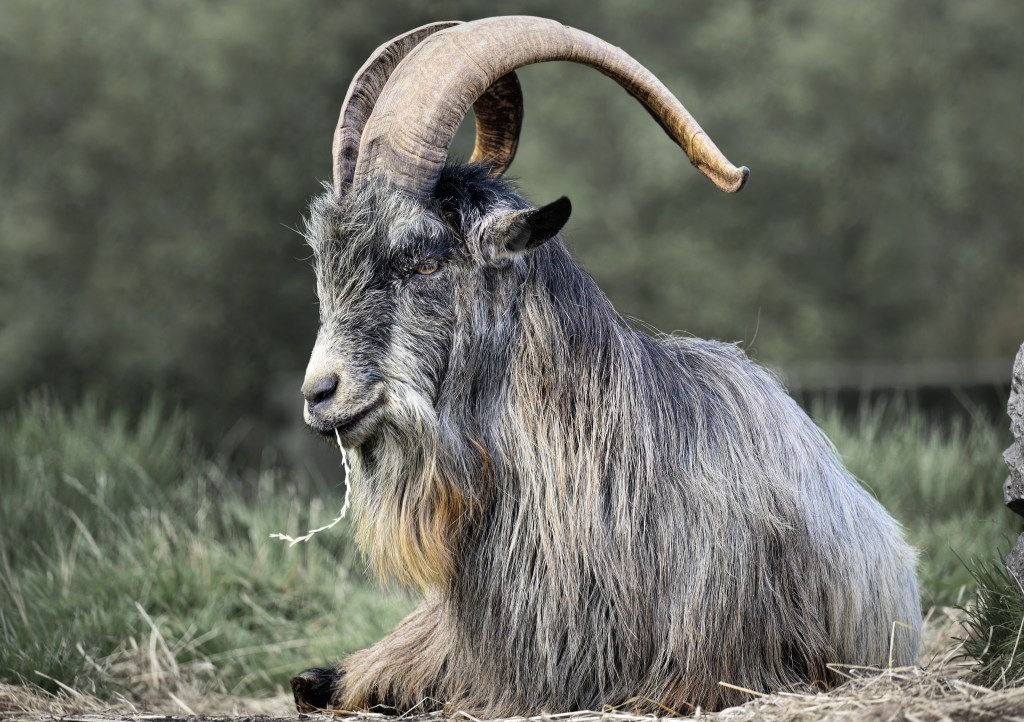
The naming of Horny Goat Weed may be my favorite of all-time. A goat herder noticed that his goats, after grazing on the plant, got very frisky!
The plant has been used over 2,000+ years as a reliable sexual tonic in addition to bone and joint health (osteoporosis, rheumatism). While Western science is classically less enthusiastic about its efficacy (very few human clinical trials) epimedium has grown in popularity in recent years due to its libido-boosting reputation.
In fact, Elliot was the one who brought this herb to my attention after hearing Ronnie Mund talk about it on The Howard Stern Show.
Botanical Name
Epimedium spp.
Family: Berberidaceae,
Other common names: horny goat weed, yin yang huo (aka “weed for licentious goat”), barrenwort, bishop’s cap, fairy wings
Did you know? Approximately 50 species exist, with more exciting cross-breeds and cultivars emerging. Different varieties have been used for different purposes (TCM vs gardening and cultivation vs high-potency extracts) and feature varying levels of icariin.
Tip: Be sure to check the Latin name when sourcing for intake. Rosemary Gladstar recommends: E. sagittatum and E. grandiflorum, from reliable sources. My source, Mountain Rose Herbs, sells E. koreanum.
TCM recognizes the following species for use: E. brevicornu, sagittatum, pubescens, koreanum (4)
Origin and Growing
Epimedium is perennial, ivy-like ground shrub native to China, Japan, Korea, and the Mediterranean. Gardening sources describe it as a carpeting groundcover, 8 to 12 inches tall and 12 to 36 inches wide, spreading slowly by woody rhizomes without taking over the garden (9).
This plant enjoys shade and moisture. It enjoys a forest understory and thrives in damp spaces and mountain slopes. In gardens, epimedium prefers part to full shade and moist, well-drained soil. It is described as drought-tolerant and hardy in US zones five to eight. (9)
Horny Goat Weed blooms in spring, usually mid-March into April or May, in red, pink, orange, yellow, purple, or white (6, 9). The four-petaled flowers appear to hover above the plant, with some plants sporting spiky flowers and others more round (9).
The plant is described as easy to care for, but a growing note: Seed-grown plants may differ from the parent. Root division is recommended for “matching” plants.
Epimedium seems to grow well in containers with good drainage, and is bothered by few pests (namely rabbits and slugs). It can be prone to root rot if drainage is poor.
Funny name note: The moniker “barrenwort” reportedly comes from an old belief that long-term use of the roots caused infertility in women, an ironic contrast with horny goat weed’s traditional uses. (7)
According to Mountain Rose Herbs, the first recorded use was around 200 BCE.
Parts Used
Leaves
Taste, Actions, and Energetics
Taste: Pungent and “sweet.” Mild in taste overall!
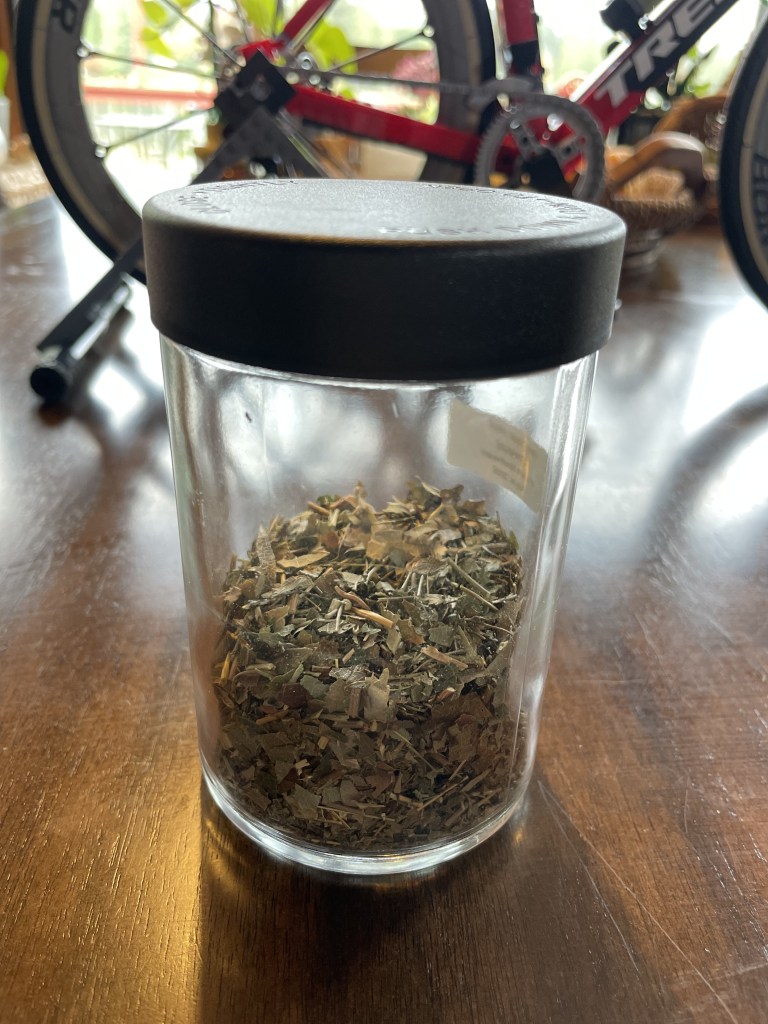
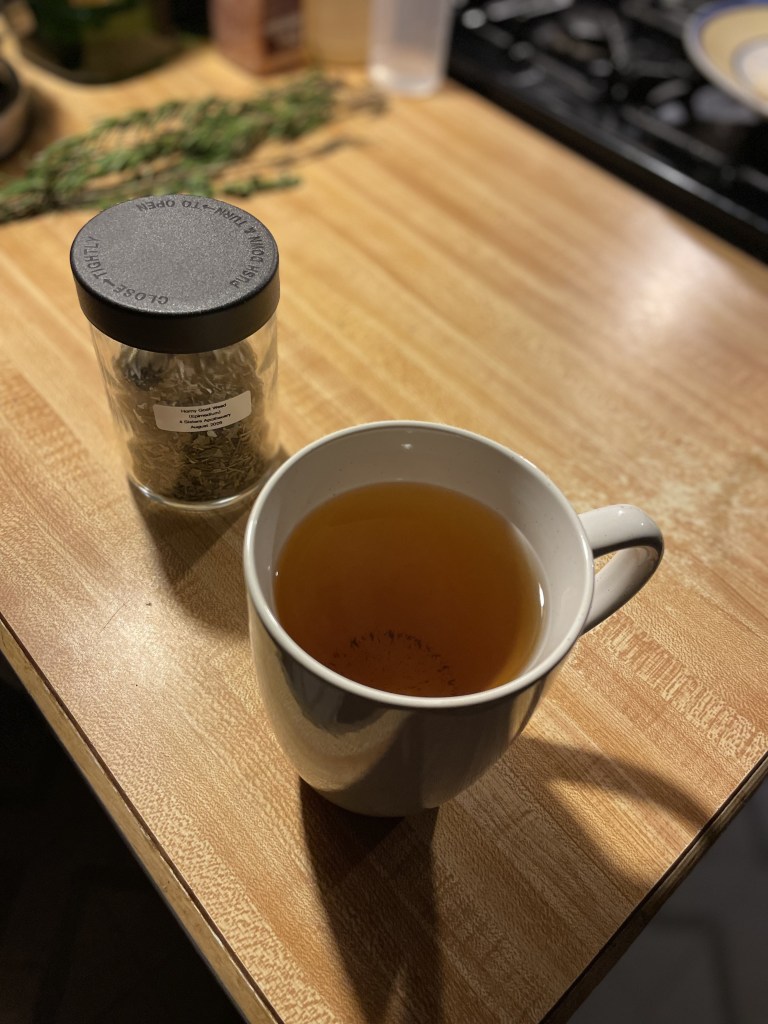
Our tasting notes: We did two different tastings of Horny Goat Weed infusion. In order to get a feel for its taste, we didn’t blend it with any other herbs! I steeped a heaping teaspoon in 8-10 oz hot water for 30 to 40 minutes. Both my husband and I found it mild and earthy, reminiscent of betony and green tea.
Energetics: Warming and drying
Actions:
- In TCM: Kidney yang tonic
- Hypotensive
- Circulatory stimulant
- Supports musculoskeletal system
- Aphrodisiac & sexual tonic
- Bitter tonic (mild)
Traditional Uses
- Infertility, erectile dysfunction, frequent or excessive urination
- Libido tonic for men and women. Prized as a sexual tonic in China for 2,000+ years.
- Lower back pain, numbness, osteoarthritis and joint aches, and rheumatism. Epimedium is described as a warming, diffusive tonic that helps balance states of weakness or deficiency and depletion.
- Traditionally prepared with herbs such as rehmannia (Chinese foxglove), goji, and curculigo (a sweet tonic herb of the asparagacea family) to support the endocrine system, boost vitality, and improve sexual/reproductive health.
Current Uses
Libido and sexual function. Icariin is a naturally occurring flavonoid in epimedium. Some would call it this herb’s star constituent!
Icariin helps stimulate nitric oxide signaling pathways, thereby relaxing smooth muscle tissue and dilating blood vessels to improve circulation to the pelvis.
Icariin also appears to inhibit PDE5, which helps relax smooth muscle tissue and increase blood flow.
In the lab, icariin is less than half as potent as sildenafil (aka Viagra), and its metabolite icariside II is about half as potent. This is mostly cell and animal research.
Improved bone health. Most of the research is in rodents, but one small trial of icariin in postmenopausal women showed promising results.
A 24-month randomized, double-blind, placebo-controlled clinical trial found that icariin effectively prevented postmenopausal osteoporosis with low side effects, suggesting it could be used as a bone-promoting treatment. (9)
Potential hormone-modulating effects. Epimedium’s potential impact on testosterone and estrogen pathways has been studied in vitro and in animals. (4) Research is limited overall, but my hot take: even if it’s partly placebo, why not? It’s a fun ingredient in libido and aphrodisiac tea blends and extracts!
Lastly, from an athlete perspective: there is some promising research on epimedium and cardiovascular health, with emerging evidence that the herb has several notable atheroprotective functions. (8)
Preparation and Dose
A safe clinical dose has not been established for this herb (that I could find) so I follow the general herbal guidelines: 1 serving= ½-1 teaspoon of dried herb per 8-10 oz water. Consume one (up to three) times per day.
Per Rosemary Gladstar, Horny Goat Weed can be consumed as a tea, tincture or capsule.
If using a capsule, she recommends a dose of 500 mg, 2 to 4 times a day. Start low and work up. Look for products standardized to 10% icariin.
Cautions & Contraindications
- Epimedium is hypotensive. Do not use if you have low blood pressure.
- Not for use in pregnancy or lactation.
- Not for use alongside anticoagulants, since it may slow clotting.
- Because of its actions on the reproductive system, not advised in the case of hormone-sensitive cancers.
- Liver: some reports of liver injury from epimedium-based patent medicines, and a rat study showed liver and adrenal damage. Contraindications are described as unclear.
- Check with a qualified practitioner, especially with medications or liver, blood pressure, or hormone-sensitive conditions.
Elemental and Planetary Associations
The word that comes to mind for me is duality.
Planetary Associations: Mars and Venus
Elements: Fire and water.
Why both? At first I thought this herb was certainly Venusian. Horny Goat Weed’s appearance is delicate, with beautiful “fairy wing” flowers in a variety of colors ranging from white to ruby red to yellow to lilac (Venus, water). However, it also features some notable Mars signatures with its tough, spreading woody rhizomes that thrive with root competition, and some varieties have spiky flower petals.
In terms of actions and energetics, Mars and fire are often associated with the pungent taste, stimulating actions, warming energetics and circulatory “drive.” Vitality screams Mars, and its hard to mention Horny Goat Weed without noting its impact on vitality! Venus and water are associated with the sweet tastes, reproductive system affinity, libido and aphrodisiac-boosting tonic qualities, desire, and pleasure. While this herb doesn’t taste overwhelmingly sweet, like licorice root, it appears to have a nourishing effect on depleted systems.
Also worth noting: in the TCM five-element system, the kidneys belongs to water. “Kidney yang” in TCM refers to the energy and metabolism of the whole body, essentially someone’s “fire.” Fitting for the fire and water duality of Horny Goat Weed!
Recipe of the Week
Adapted from Rosemary’s Famed “Boner Toner,” enjoy this blend of tonic heart-supportive herbs and aphrodisiacs to boost libido and vitality.
Use ½ – 1 teaspoon of each of the following dried herbs:
- Horny Goat Weed (epimedium)
- Nettle root and/or eleuthero root
- Damiana
- Rose petal
- Licorice root (or stevia if you have high blood pressure)
- Hawthorn leaf, flower, or berry
- Pau d’arco bark
- Optional add-in: 1 squirt of Kava kava tincture
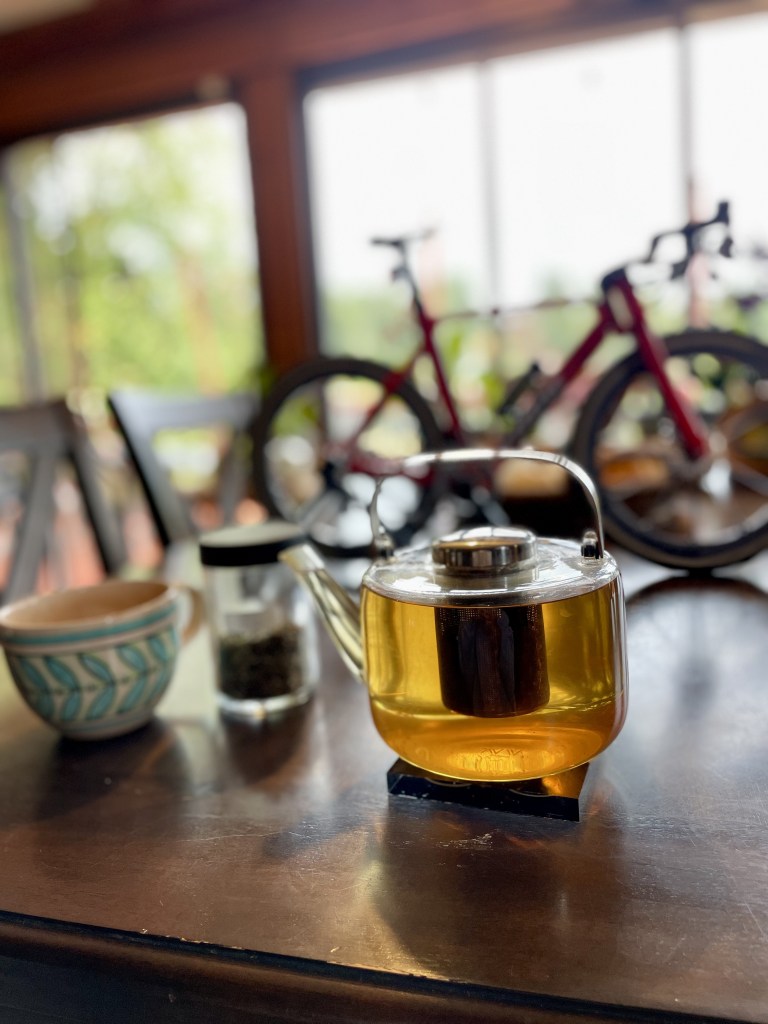
Directions: Combine herbs in an infuser pot. Cover with 12-16 oz hot water and infuse for 15-25 minutes. Strain and pour into two mugs. Enjoy with your partner!
.
References
- Gladstar, Rosemary. Herbal Healing for Men. Storey Publishing; 2017. p. 182.
- Mountain Rose Herbs. Epimedium (horny goat weed) product and herb description. https://mountainroseherbs.com/epimedium. Accessed October 2026.
- Gaia Herbs. “Horny Goat Weed.” Herb Reference Guide. https://www.gaiaherbs.com/blogs/herbs/horny-goat-weed. Accessed October 24, 2026.
- Cui J, Lin L, Hao F, et al. Comprehensive review of the traditional uses and the potential benefits of epimedium folium. Frontiers in Pharmacology. 2024;15:1415265. doi: 10.3389/fphar.2024.1415265. Accessed October 24, 2026. (Review)
- Puisis E. How to Grow and Care for Epimedium. The Spruce. Updated July 4, 2024. https://www.thespruce.com/epimedium-growing-guide-5211581. Accessed October 26, 2026. (Spruce)
- Reyes, Riz. April 2010 Plant Profile: Epimedium. University of Washington Botanic Gardens blog. April 1, 2010. https://botanicgardens.uw.edu/about/blog/2010/04/01/april-2010-plant-profile-epimedium/. Accessed October 26, 2026. (UW)
- Gardener’s Path. How to Grow and Care for Barrenwort. https://gardenerspath.com/plants/flowers/grow-barrenwort/. Accessed October 26, 2026. (Gardener’s Path)
- Fang J, Zhang Y. Icariin, an Anti-atherosclerotic Drug from Chinese Medicinal Herb Horny Goat Weed. Front Pharmacol. 2017 Oct 12;8:734. doi: 10.3389/fphar.2017.00734. PMID: 29075193; PMCID: PMC5644024.
- The Spruce: Epimedium Growing Guide: A beginner-friendly guide to growing epimedium (barrenwort), covering light, soil, pruning, division, and common problems.
- The effect of icariin on bone metabolism and its potential clinical application: A 2018 review (Wang et al., Osteoporosis International) of research on icariin, the key compound in epimedium, and bone health, including its potential for postmenopausal osteoporosis.


Leave a Reply