Immuni-Tea 2.0: Formulating for Cold & Flu Season
Preparing for Cold & Flu Season
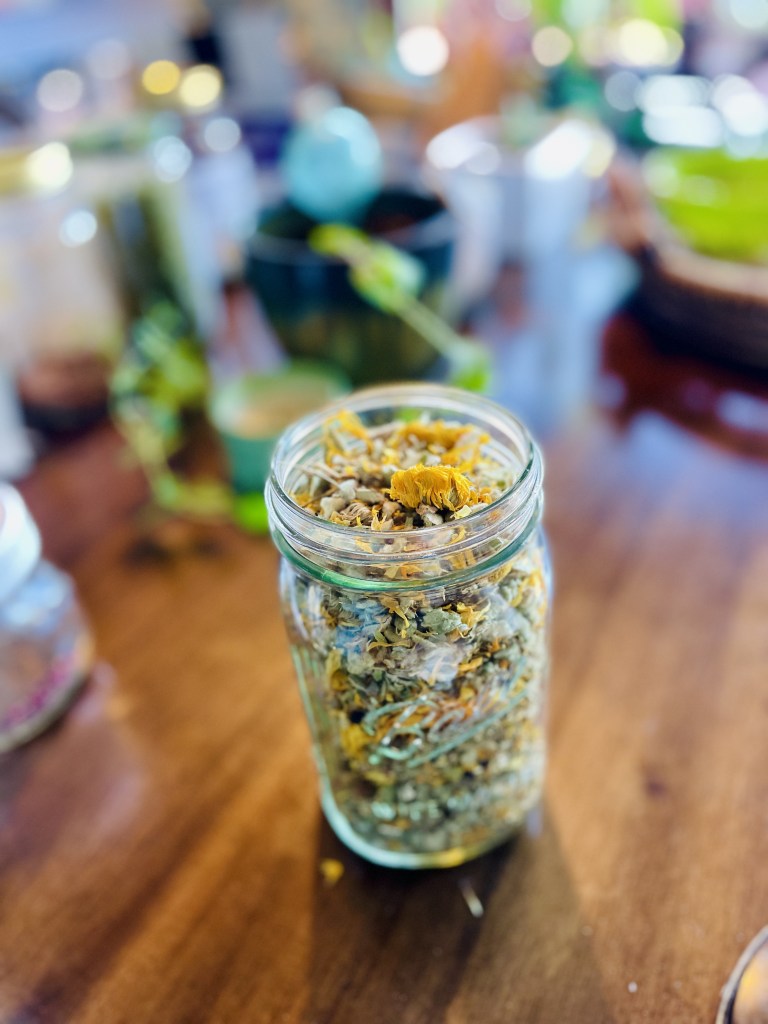
Cold and flu season’s around the corner, and I’ve got something new to share: an updated version of my Immuni-Tea blend. This isn’t the same recipe I put out last year — Immuni-Tea 2.0 has new herbs and some new features in the formula.
This isn’t just “here are ten herbs that are good for colds.” I built this formula with herbs that have a plethora of herbal actions and work together to support the immune response, respiratory, circulatory and digestive systems.
Today I’m breaking down every herb in the formula through the herbal action lens: ginger, mullein, calendula, echinacea flower, elderberry, licorice root, elecampane, cinnamon, wild cherry bark, and yarrow.
Immune System Support
Echinacea Echinacea is a cooling immune stimulant — traditionally used as an alterative, meaning it helps the body process and clear things out over time. I reach for it right at the onset of symptoms, when I want to kick the immune response into gear early. In this blend I’m using the aerial portions (I prefer the dried root in my tinctures). The evidence on cutting symptom severity and duration is pretty widely known at this point, so I’ll spare you droning on about clinical trials.
Elderberry Elderberry’s another cooling immune stimulant, but it’s best known for its antiviral qualities — helpful both for preventing infections and shortening how long they last. Per Juliet Blankespoor in her book, The Healing Garden: “In one randomized, double-blind, placebo-controlled study on elderberry and influenza, participants took a tablespoon of elderberry syrup four times a day for five days, and their symptoms cleared on average four days earlier than the placebo group. In vitro studies have also shown elderberry to be active against several strains of influenza.”
I reach for elderberry right at the first sign of symptoms, same as echinacea!
Calendula One of my go-to herbs! It’s a lovely gentle immune — supportive rather than stimulating herb, and it lends quiet lymphatic support, too. I appreciate this buttery-yellow flower during the cooler months — there’s no scientific studies on this, but it’s reminiscent of the sun and uplifting emotionally. I wanted a quieter, “day-to-day” herb in the mix alongside the more active immune players.
An acute respiratory infection isn’t just an immune event, though. Once symptoms show up, we also have to think about what’s happening in the respiratory tract itself.
The Cough Isn’t the Same Every Time
Before I reach for anything to support the lungs, I’m asking one question: is this cough dry or productive?
Dry, nonproductive cough — A scratchy or irritated throat, that hacking, persistent cough with little to no mucus that keeps irritating the tissue further. Here, I’m thinking soothe, moisten, calm the irritation. That’s mullein, a relaxant expectorant, and licorice, a demulcent expectorant.
Productive cough — Phlegmy + rattling. Mucus is present, and the cough is actually doing its job, clearing the respiratory tract. The goal isn’t to suppress it; it’s to support clearance. This is where an herb like elecampane comes in. It’s warm and drying, a stimulant expectorant that helps move mucus that’s stuck.
This is exactly why a wet cough doesn’t need slippery elm or marshmallow — moistening, demulcent herbs aren’t what a productive cough needs. And if someone’s presenting dry and irritated, I’m not reaching for warming, drying expectorant. I have a not-so-funny personal story on that!
Expectorants — They’re Not All the Same
Expectorant is a broad category, and it’s worth breaking apart, because the word on its own doesn’t tell you much about how an herb actually works.
Stimulating expectorants move things along — ginger and elecampane, both warming and drying, help mucus that’s stuck get moving.
Relaxant expectorants work differently — they ease tension and spasm in the respiratory tract. Mullein leaf is a fantastic cooling relaxant expectorant for the respiratory system.
Demulcent expectorants moisten, coat, and protect irritated tissue — that’s licorice root!
Wild cherry bark and licorice are also pulling double duty here as antitussives, meaning they don’t just support the respiratory tract’s ability to clear mucus, they can also calm the cough reflex itself when a cough’s gotten irritated, persistent, or just plain exhausting.
I use all three types of expectorants in this formula for a synergistic, cohesive action on the respiratory system. That way we’re clearing mucus, soothing irritation, and protecting the mucosa, all at once — not just leaning on one action and hoping it covers everything. That’s a core idea in herbalism: one herb can carry multiple actions, and one action can show up in multiple herbs. I’m not trying to give every herb exactly one job. I’m building a formula based on cohesion and synergy.
Diaphoretics & Supporting the Natural Fever Process
Let’s talk fevers.
A diaphoretic is a traditional herbal action that supports perspiration during illness — herbalists have used these herbs for fevers tied to colds, flu, and other short-term infections for a long time. Fever is a part of the body’s natural response to infection, and while I don’t think of Immuni-Tea 2.0 as a “fever remedy,” I do feel these herbs offer supportive care through a cold or flu and that includes a mild, low-grade fever if one shows up.
Yarrow is a classic relaxant diaphoretic and circulatory stimulant — it’s a little dualistic, both warming and cooling depending on the pattern in front of you. In this formula, it’s really doing both jobs: stimulating circulation and relaxing surface tension to help trapped heat escape. That dual action is key; with a bulk blend I don’t know exactly what pattern someone’s in when they reach for this tea, so having an herb that can meet either presentation gives the formula some built-in flexibility. Yarrow is traditionally used to support the body’s natural fever process by encouraging perspiration and, like most diaphoretics, it fits mild-to-moderate fevers better than severe, high ones. It also has a long history with congestion and excess mucus.
Ginger is a classic stimulating diaphoretic — warming, circulatory, aromatic. I reach for it when someone’s chilled, cold, clammy, can’t seem to warm up. It also supports digestion, which matters when illness comes with digestive discomfort too, like diarrhea.
Here’s the thing about diaphoretic herbs: they’re not just “herbs that makes you sweat.” There are two different mechanisms at play:
- Stimulant Diaphoretic — stimulates internal circulation, driving warmth to the surface and venting it outward. Sajah Popham, one of my teachers, talks a lot about venting heat this way — and another instructor I studied with framed it as letting the fever do its work, rather than shutting it down the way over-the-counter medication often does, which can actually prolong illness in some cases.
- Relaxant Diaphoretic — dilates the superficial blood vessels near the skin and eases constriction, letting trapped heat release through the surface.
We’re not choosing herbs off the symptom alone — we’re choosing off the pattern. Someone cold, stagnant, and unable to warm up does better with a stimulating diaphoretic like ginger. Someone hot, tense, and struggling to release heat is better matched to a relaxant diaphoretic like yarrow.
In this formula, I’m leaning heavier on the stimulating side — there’s more ginger than yarrow in the blend, so the overall diaphoretic action skews toward building and venting heat. Yarrow’s role is more like a supportive synergist: because it can work through either mechanism depending on what the body needs, it doesn’t lock the formula into one pattern. It rounds out the ginger-forward stimulation with the option of relaxant, surface-opening action too, so the tea can meet someone whether they’re presenting cold and sluggish or hot and tense, without needing an entirely different formula for each.
Ginger & Cinnamon — The Warming Digestive Side
Ginger is doing a lot in this formula — warming, diaphoretic, carminative and digestive, aromatic. Especially useful when illness is knocking out someone’s appetite or digestion too.
Cinnamon is warming, a diffusive aromatic that helps “drive” the formula, and it’s carminative and digestive as well — genuinely wonderful for digestive issues on either end, whether that’s diarrhea or constipation. It’s also traditionally indicated for a pattern of excess or spontaneous perspiration paired with diarrhea and cold limbs — a distinct picture from the cold, clammy, can’t-warm-up presentation that points to ginger. Cinnamon is a classic cold-weather, acute-illness herb, and it also helps balance the flavor of some of the stronger-tasting herbs in the blend. It’s a traditional cold-weather, acute-illness herb, and it also helps balance the flavor of some of the stronger-tasting herbs in the blend. It also supports the heart and circulatory system!
Again — herbs don’t have just one job.
Pulling Immuni-Tea 2.0 Together
| Herbal role | Herbs |
| Immune-stimulating / antiviral | Echinacea, elderberry |
| Lymphatic/immune support | Calendula |
| Stimulating expectorant | Elecampane, ginger |
| Relaxant expectorant | Mullein |
| Demulcent expectorant | Licorice, mullein |
| Antitussive | Wild cherry bark, licorice |
| Diaphoretic (relaxant/stimulating) | Yarrow (relaxant), ginger (stimulant) |
| Carminative/Digestive Support | Ginger, cinnamon |
When I formulated Immuni-Tea 2.0, I wasn’t trying to find ten herbs that all do the same thing. I wanted herbs with different, complementary actions that harmonize to support the immune response, lymphatic function, the respiratory tract, different types of coughs, the body’s natural fever process, and aid in digestion.
When This Formula Makes Sense
Preventative prior to travel or germ exposure. Early cold or flu symptoms. General acute respiratory support. Cough and respiratory congestion. Mild, low-grade fever as part of a broader cold/flu picture. This is a supportive tea — not a cure, and not a replacement for medical care. And, of course, these aren’t the only herbs/the only formula that works.
When to seek medical care: difficulty breathing, chest pain, severe or persistent fever, dehydration, symptoms significantly worsening or not improving, anything that feels concerning.
And a note — every individual herb here can carry its own contraindications or medication interactions. Licorice in particular: if you have high blood pressure, don’t consume it in high amounts for a prolonged amount of time.
Learn the Herbal Actions, Not Just the Herbs
The goal was never to memorize “this herb is good for a cold.” It’s to understand what the herb actually does, and match that to what’s happening in the body.
A dry cough isn’t the same as a productive cough. An expectorant isn’t automatically interchangeable with another expectorant. A diaphoretic isn’t just “an herb that makes you sweat.” One herb can carry multiple actions. And a good formula doesn’t need ten herbs all doing the same thing.
That’s what I wanted to show with Immuni-Tea 2.0 — it’s not a random pile of “herbs good for colds.” It’s a thoughtful combination of complementary actions built to support the whole picture.
If you’d like to order Immuni-Tea 2.0, or want me to create a custom tisane for you, email me at becca@kawaoka-coaching.com.


Leave a comment