Malvaceae (Mallow family)
Hibiscus, a vibrant crimson flower long celebrated in Egypt, has a fascinating history. In traditional lore, it’s linked to the sacred ibis — the bird of Thoth — and some herbals even interpret its name as ‘plant consecrated to the ibis,’ a detail noted by herbalists like Andrew Chevallier and Rosalee de la Forêt.
History & Growing
- Hibiscus sabdriffa has likely been cultivated and prepared by humans for 6,000 years! [3]
- Origin: Northern Africa & Southeast Asia [2]
- Brought to the Caribbean in the 1700s by enslaved people [1]
- Now cultivated around the world
- Short-lived, frost-tender perennial (grown as an annual in colder climates)
- Thrives in full sun and warm, tropical climates
- Many varieties exist – similar to roses, not all species are medicinal or edible
Harvesting Notes (from Juliet Blankespoor)
- Harvest in fall when the plant is in flower
- Petals fall away, leaving the flower base + calyx (medicinal part)
- Remove the green ovary before use/drying. Juliet also recommends chopping the calyx before drying.
Actions
- Diuretic
- Hypotensive
- Anti-inflammatory
- Cardiotonic
- Astringent
- Cholesterol-lowering
- Antioxidant
- Antimicrobial
- Demulcent
- Nutritive
[1, 2]
Taste & Energetics
- Taste: Tart/Sour & fruity
- Energetics: Cooling & Demulcent
Preparation & Parts Used
Part used: Primarily the calyx, though the leaves are sometimes used as well – often as topical applications for wound healing
Preparations:
- Tea (infusion)
- Honey
- Syrup
- Powder
- Capsules
Culinary uses:
- Vinegar
- Wine
- Popsicles
- Jam
- Fire cider
- Margaritas
- Salads
Organs & Organ Systems
- Heart & Cardiovascular system
- Liver
- Kidneys
- Urinary system
Traditional & Current Uses
Traditional Uses:
- Food, medicine, and fiber crop
- Colds, sore throats, chest complications
- Kidney & liver tonic
- Support digestion and stimulate appetite
- Helps staunch excess menstrual flow
- Ornamental plant
- “Karkadeh” is often said to have been enjoyed in ancient Egypt, with traditions linking it to the courts of the pharaohs. While exact historical records are limited, hibiscus has long been associated with cooling, vitality, and heart support, making it a fitting drink in Egypt’s hot, arid climate
- In India and Northern Africa, uses for hibiscus include circulatory support, urinary and digestive health, soothing coughs, skin inflammation, and fevers; leaves may also be used for antimicrobial, diuretic, and mild sedative effects [3]
Current Uses:
- Popular in tea blends (color, tart flavor, vitamin & mineral content)
- Widely used for:
- Heart health
- Blood pressure support
- Supporting blood sugar levels
- Respiratory health
- Rich in:
- Vitamin C
- Minerals
- Antioxidants
- Soluble fiber
- Key constituents: polyphenols – anthocyanins and protocatechuic acid, polysaccharides and organic acids
[1, 2]
The Active Herbalist Note: I often combine hibiscus in heart‑supportive blends with rooibos, hawthorn, and cinnamon, or in sensual/adaptogenic blends with rose, damiana, shatavari, and ashwagandha. I also use it in cooling blends for my herb clients living in hot regions. Lastly, I use it in my Age-Defying blend for its taste and health benefits!
Research Highlights
- Studies (animal + human) show hibiscus can be as effective as captopril in lowering blood pressure
- Supports improved lipid profiles:
- ↓ Cholesterol
- ↓ LDL
- ↓ Triglycerides
- ↑ HDL
- Research shows hibiscus also helps to lower raised blood sugar
[1, 2]
Dosage & Special Considerations
Dosage:
- 2 teaspoons dried herb per 8 oz water (tea/infusion)
Hibiscus is also widely used as a food herb, so it can be enjoyed in relatively generous amounts.
Preparation note:
- Tinctures are not ideal, as alcohol can degrade its vitamin and mineral content
- Like many demulcent herbs, hibiscus is best used as a tea or food
Safety considerations:
- Generally very safe
- As a diuretic, it may increase the excretion of certain medications (such as acetaminophen)
- May enhance the effects of medications with similar actions
- Can reduce absorption of chloroquine
Pregnancy & lactation:
- Guidance is mixed
- Some herbalists consider it safe, while others advise caution
- A conservative approach is to avoid use in early pregnancy and when nursing while taking medications
[1, 3]
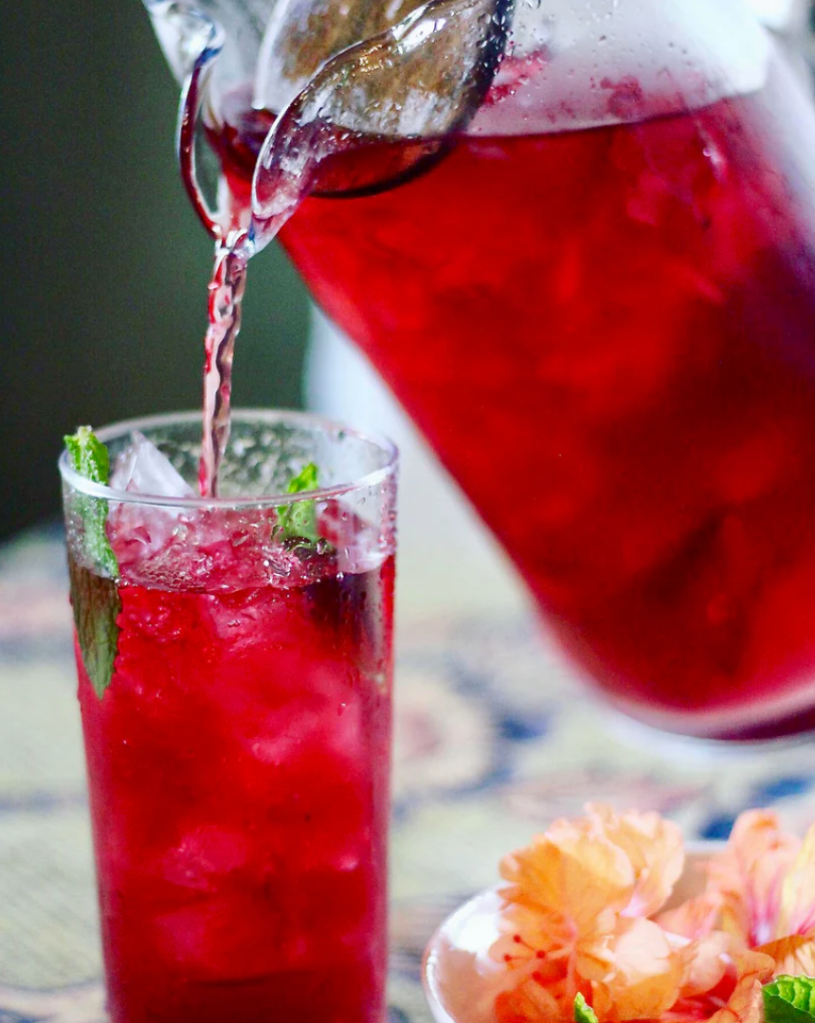
Recipe: Cooling Hibiscus Mint Infusion
Ingredients:
- 1 part dried hibiscus
- 1 part dried mint
Instructions:
- Bring water to a boil
- Add herbs (about 2-3 teaspoons total per 8 oz water)
- Pour boiling water over herbs
- Cover and steep for 10 minutes
- Strain and enjoy
Optional additions:
- Honey or maple syrup
- Fresh lime or orange
- Serve hot or over ice
This blend is cooling, refreshing, and gently supportive to the heart and digestion—a perfect daily ritual tea, especially in warmer months.
Planetary, Elemental & Dosha Correspondence
- Planet: Venus – a strikingly beautiful flower with bright, distinct flowers. Hibiscus also has action on the heart, blood sugar, and urinary systems.
- Element: Water – hibiscus is best extracted in water. To me, this speaks to the water element.
- Dosha Discussion: Demulcent and flavorful, hibiscus supports circulation and excretion, helping to move the stagnation typical of Kapha. Its cooling, moistening qualities can also soothe the heat and dryness of Pitta and bring gentle hydration to Vata
Conclusion
Hibiscus reminds us that herbal medicine doesn’t have to be complicated to be powerful. It’s vibrant, accessible, and deeply supportive – meeting us in something as simple as a cup of tea. Whether you’re working with it for heart health or just enjoying its bold, tart flavor, hibiscus is a beautiful example of how food and medicine truly overlap. A moment to slow down, cool off, and come back into balance.
Citations
- Blankespoor, Juliet. The Healing Garden: Cultivating and Handcrafting Herbal Remedies. 2022.
2. Chevallier, Andrew. The Encyclopedia of Herbal Medicine. 2023.
3. de la Forêt, Rosalee. “Hibiscus Uses and Plant Profile.” LearningHerbs
 Kawaoka Coaching
Leave a comment