Herbal medicine doesn’t require a huge apothecary or intimidating, complex recipes. Kitchen herbalism is beginner friendly, so even if you have no experience with herbs you can make simple and effective natural remedies!
Today I’m discussing three herbs that are gentle, versatile, and easy to use. These herbs support some of the most common things people experience: stress, digestion, insomnia, and mild everyday discomfort.
Whether you’re new to herbalism or here for a refresher on the basics, these three herbs deserve a place in everyone’s kitchen.
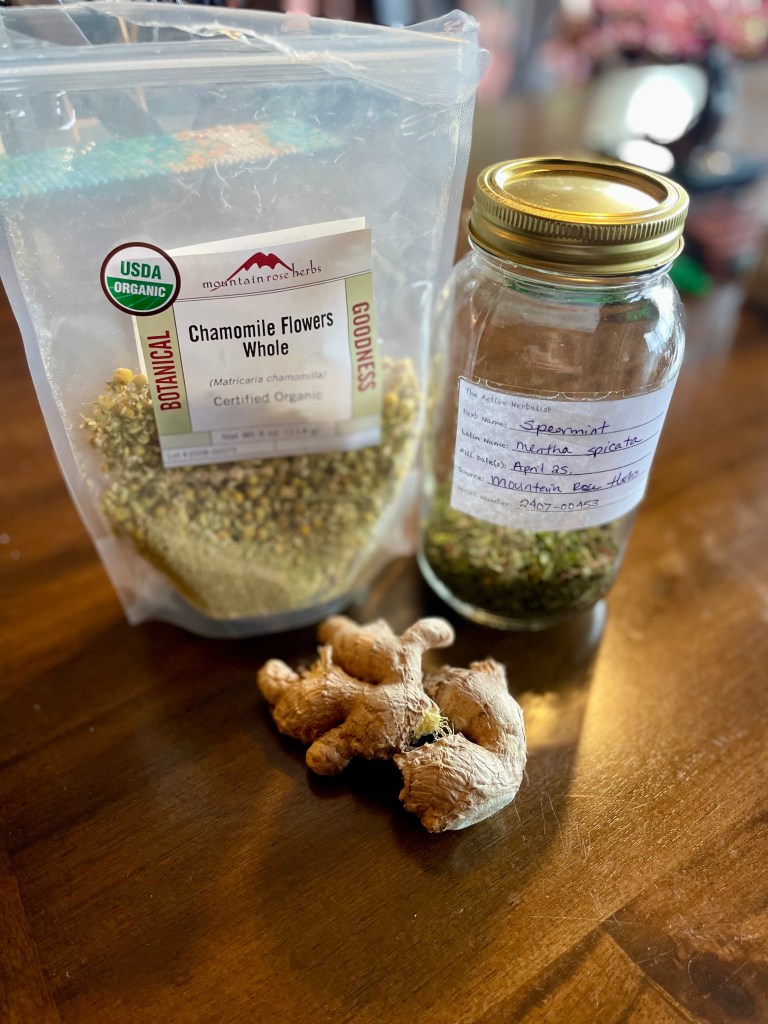
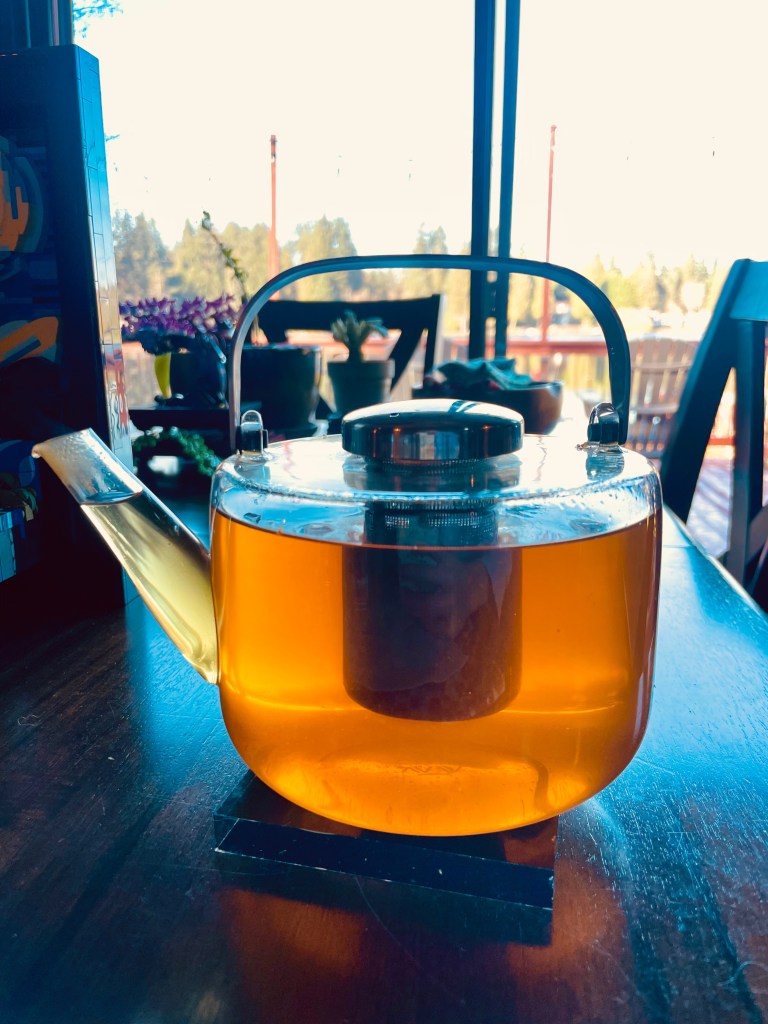
1. Chamomile: The Gentle Calming Herb
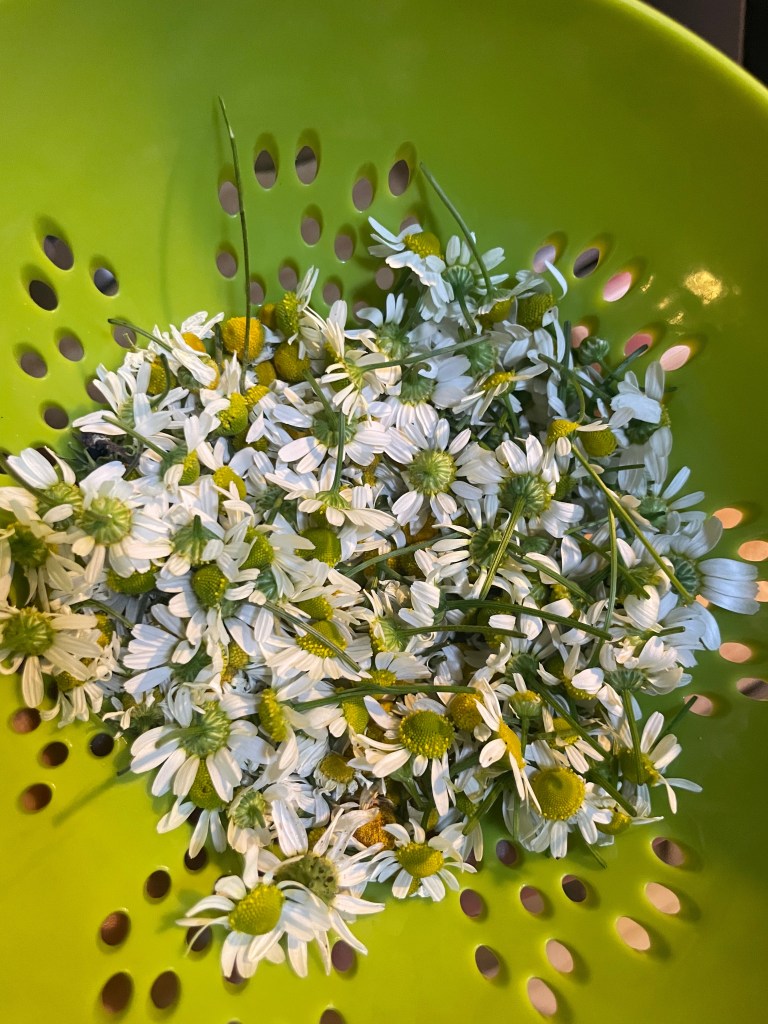
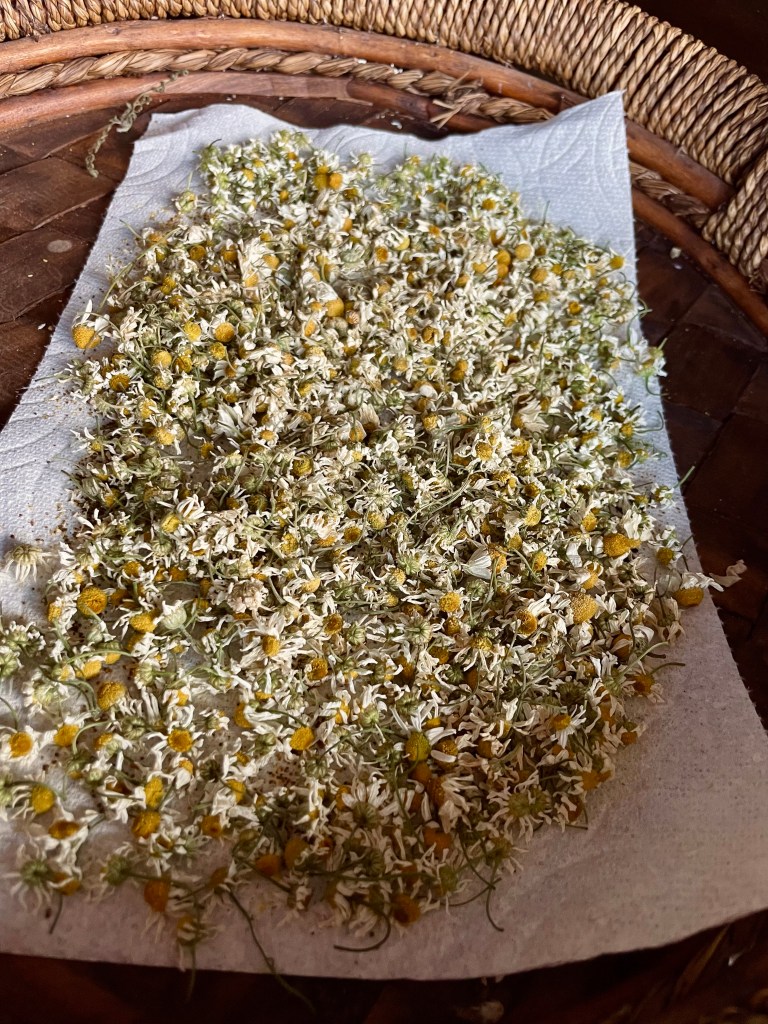
When people ask me where they should start with herbs, I usually recommend chamomile. Matricaria chamomilla is one of the most widely used herbs in the world, and for good reason. It’s gentle, effective, safe for children and elderly plus its easy to grow from seed!
Chamomile is best known for its calming digestive properties. In my opinion, picking fresh flowers from a cheerful chamomile plant is a form of stress-relieving therapy. Adding them to your tea cup is another!
Common uses:
- Calming the nervous system and supporting restful sleep
- Easing digestive discomfort and bloating, particulalry when stress or nervousness is present
- Treating angry, itchy skin conditions
- Soothing muscle tension and menstrual cramps
Preparation:
- Drink a cup of chamomile tea an hour or two before bed to support sleep
- Make a stronger, medicinal tea (infuse for 15-30 minutes) for digestive relief
- Soak a rag in a strong, strained and cooled chamomile infusion and apply as a gentle compress for irritated skin or eyes
Chamomile is widely available and familiar to many; it’s a wonderful example of how one herb can support multiple organs and systems at once.
2. Ginger: The Warming Digestive Ally
I reach for freshly grated ginger almost daily in the kitchen! Ginger root is both a food and a powerful medicinal herb. Zingiber officinale has been used for thousands of years to support digestion, circulation, and immune health.
This warming root is particularly helpful when the body feels sluggish, cold, or stagnant. Dried ginger is a bit spicier; I tend to use dried ginger for tea and fresh ginger in cooking. Experiment with both to find a flavor and method that suit you!
Common uses:
- Relieving nausea, motion sickness, and stomach bugs
- Supporting digestion (gas, bloating, constipation)
- Soothing inflammation
- Easing respiratory infections, congestion, and sore throats
- Menstrual support and relief from some types of headaches
Preparation:
- Slice fresh ginger and steep in hot water for tea. Use 1/2- 1 tsp dried ginger for a spicier, bold tisane.
- Add grated ginger to soups or bone broth, add to sauces, and use it to marinate meat.
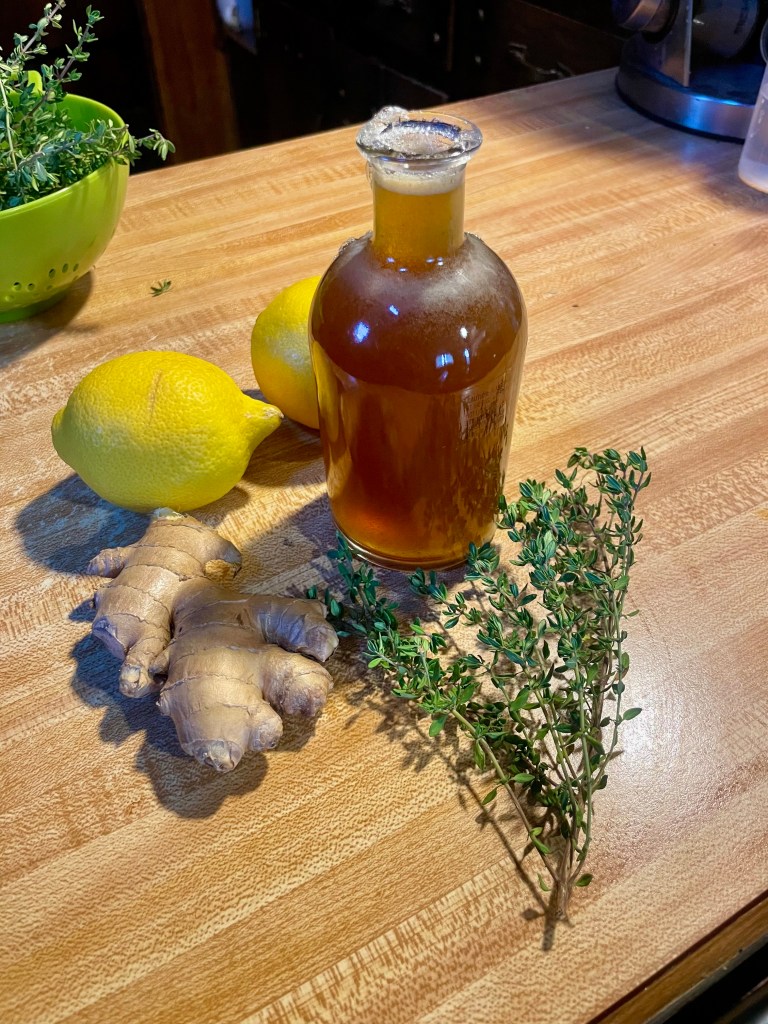
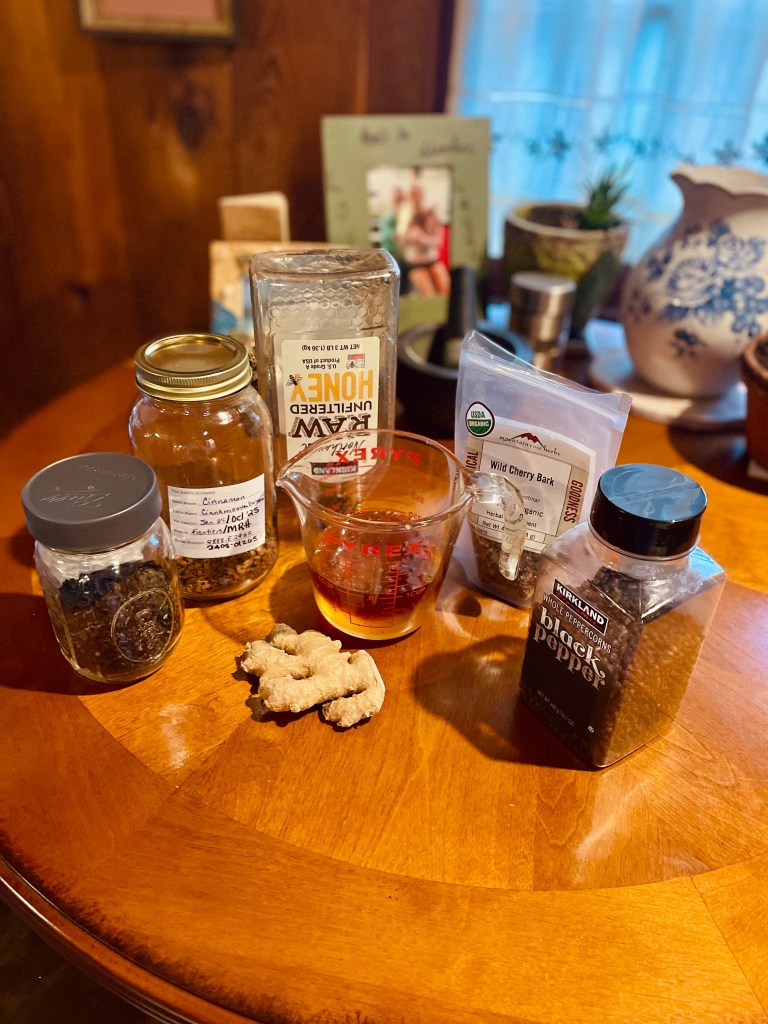
- Infuse ginger into honey or make an easy simple syrup for a tasty treat loaded with health benefits (lemon, ginger and thyme syrup is one of my favorites!)
Because of its warming nature, ginger can be especially helpful during colder months or feel people with cold patterns. Ginger is indicated for stagnant conditions given its pungent, warming “driving” energy.
3. Mint: The Cooling Digestive Soother
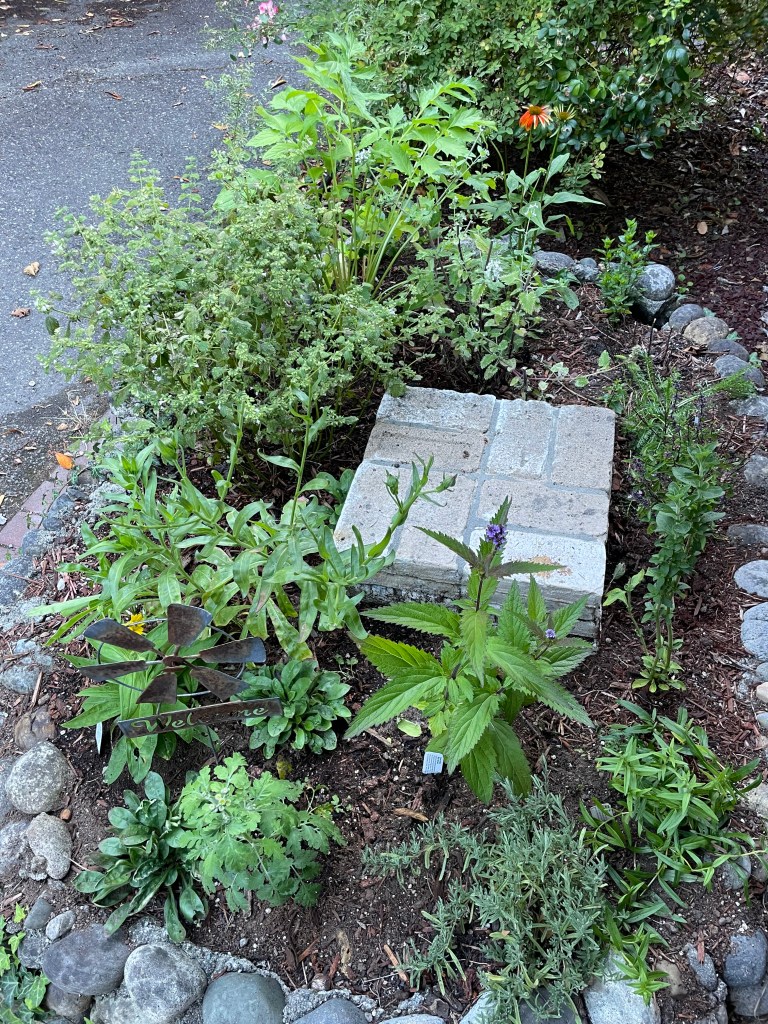
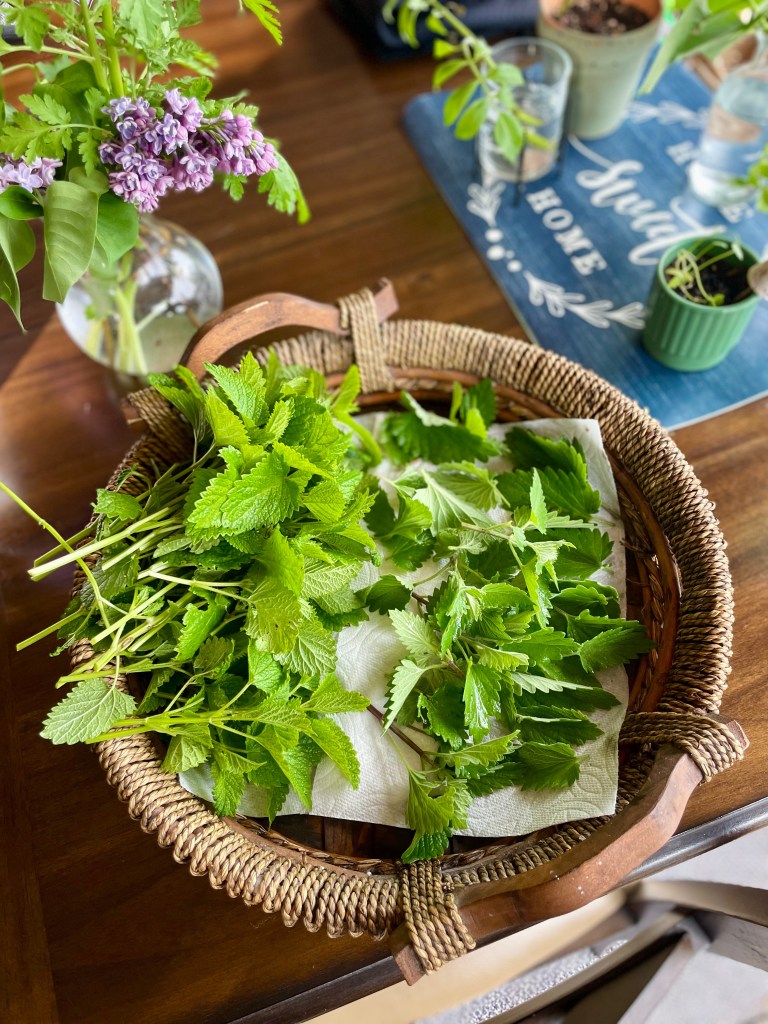
Mint is incredibly easy to grow indoors or outdoors in pots or garden beds. Fresh mint (Mentha spp.) is so much fun to harvest and throw into your tea cup! Its refreshing flavor is paired with powerful digestive and cognitive properties while offering a distinctly cooling effect on the body.
Mint works quickly and is often used after meals to support digestion. Its strongly aromatic and brews quickly (3-5 minutes!). Iced mint tea is an absolute dream in hot climates or sweaty summer days.
Common uses:
- Supporting digestion; soothing gas and bloating
- Relieves allergies and congestion
- Supports focus, memory and cognition.
- Mint may also relieve some types of headaches.
Preparation:
- Drink as a hot or iced tea after meals to support digestion
- Incorporate fresh or dried mint tea into your midmorning or afternoon ritual to increase focus without caffeine
- Add to steam inhalations for sinus congestion
- Incorporate it into fresh juices, salads, marinades and desserts
Mint is a cooling herb – reach for it when there’s patterns of heat in your body or environment.
Building a Simple Herbal Toolkit
Starting an herbal practice doesn’t require dozens of herbs or complicated preparations. In fact, starting small with a few simple herbs that you know well is often the most effective approach!
By keeping fresh or dried chamomile, ginger, and mint at home, you’ll have herbs that support:
- Relaxation and sleep
- Healthy digestion
- Stress relief
- Menstrual support
- Circulation and immune support
- Cognition and focus
These three herbs form a simple, practical foundation for anyone interested in bringing herbal support into daily life.
A Closing Question for You
What is one herb you always keep at home?
Herbal traditions are full of wisdom passed down through families and communities, and everyone has their own favorite plant allies. Let me know what yours are!
 Kawaoka Coaching
Leave a comment