Comfrey Plant Monograph
Symphytum officinale, Boraginaceae family
History & Growing
Comfrey is native to Europe but grows well in temperate regions worldwide. Often fondly called ‘knit bone,’ comfrey has a history of supporting both internal and external wound healing and bone repair that spans centuries. Classic Irish Herbalist K’Eogh, in his 1735 publication Herbal, famously writes that comfrey “heals all inward wounds and ruptures.” [2] It has been consumed as a tea, applied topically as a poultice/salve/ointment, and used as a healing bath for a range of ailments ranging from sprains, torn ligaments, bone or joint injuries, and bruising to ulcers, tissue inflammation, and mastitis. Rosemary Gladstar writes in Herbs for Natural Beauty that it is “excellent in skin care for infants and children.” She speaks firmly on her continued personal use of this plant internally despite the recent “comfrey conflict” that we’ll discuss later, but does not include it in internal preparations for others.
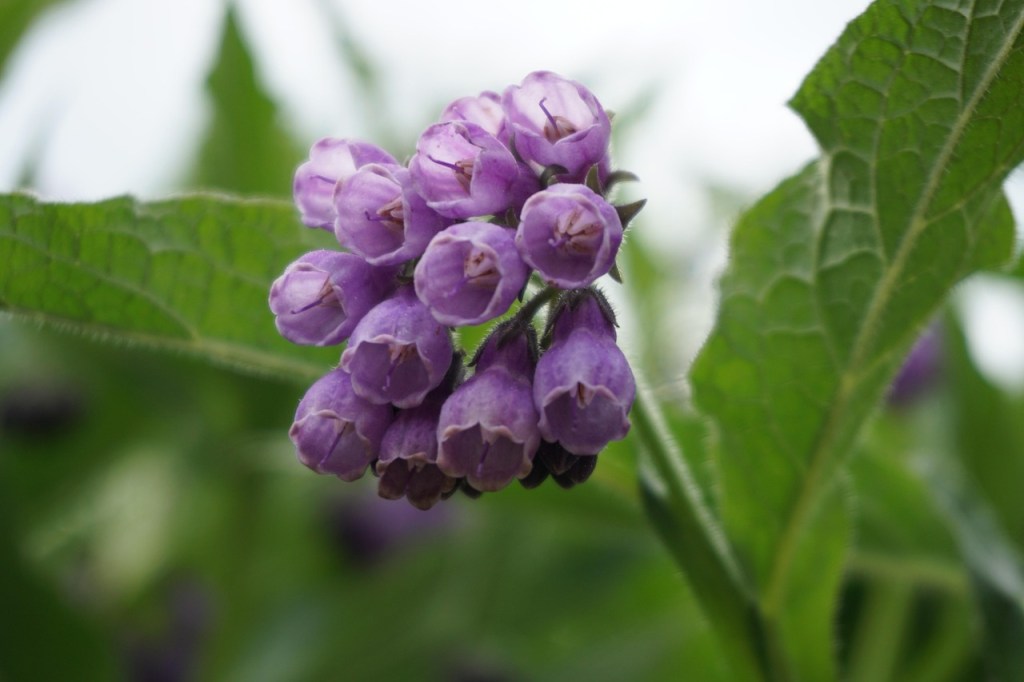
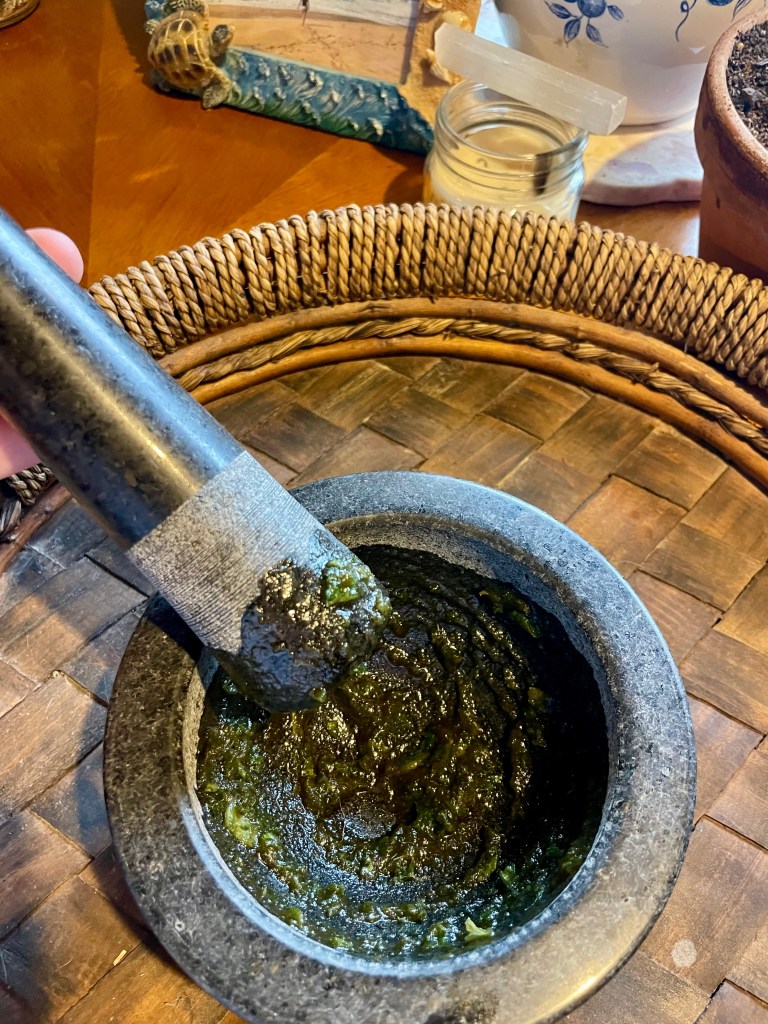
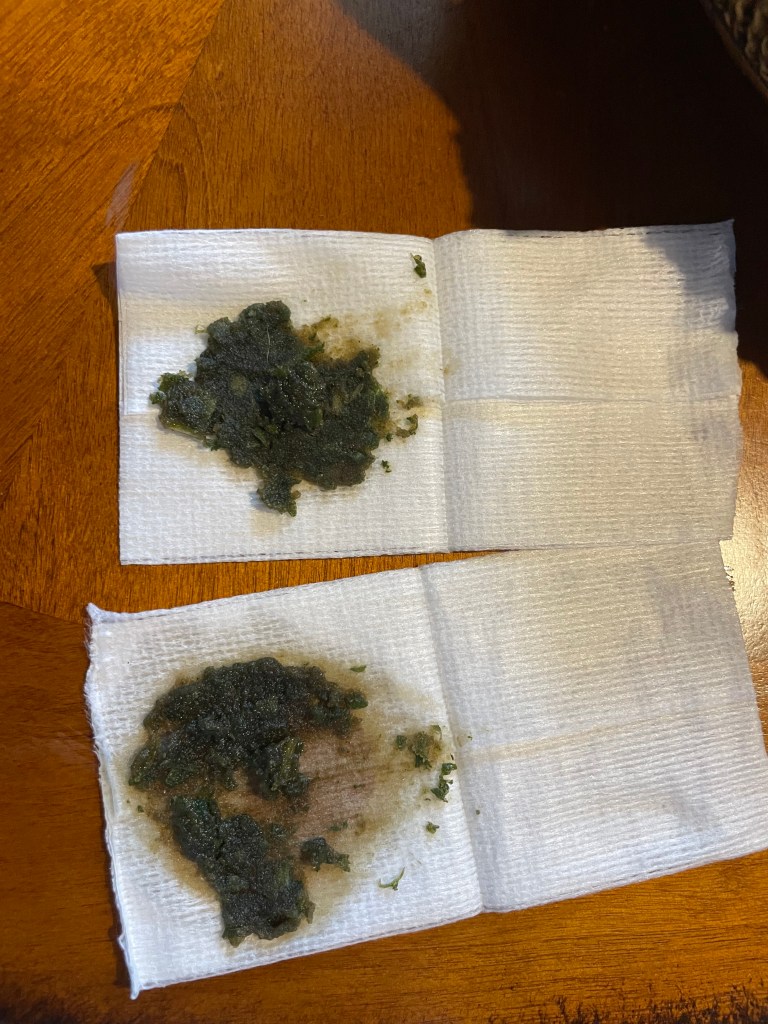
Honestly, this little wonder reminds me a bit of a fuzzy hosta! Since comfrey thrives in marshy environments, I planted mine in the shade of my magnolia tree, right at the water’s edge of the lake where we live. I harvest the leaves throughout the year as the plant produces them, grinding them into a paste fresh or hanging them to dry in my kitchen for later use. They never last long! I’ve only harvested the roots once, as I prefer the leaf in my remedies. Like most roots, they’re best harvested in the fall. This plant is tough to kill – which speaks to its regenerative properties. Even the brownest of green thumbs would have luck growing comfrey and it is a darling plant to have around! It produces bell-shaped flowers of varying colors which, again, remind me of a hosta.
Note: If you want to work with comfrey but aren’t interested in growing it, check out Frontier’s and Starwest Botanical‘s offerings on Amazon. I recommend starting with a 1-4 oz bag of the dried leaf! There are organic dried root options as well.
Taste, Actions & Energetics
• Taste: Sweet & Salty
• Energetics: Cooling, Moistening
• Actions: Demulcent, Vulnerary (regenerative/cell proliferation), Astringent, Anti-inflammatory, Analgesic, Expectorant
Key Constituents: Allantoin, mucilage, phenolic acids (rosmarinic acid), pyrrolizidine alkaloids, asparagine, tannins, triterpenoids [2]
Traditional & Modern Uses
Traditional Uses
• Topically for broken bones, fractures, wounds, burns, ulcers, and tissue damage
• Often used in to sooth coughing and irritated tissues in the respiratory, like whooping cough and pneumonia, as well as to support digestive issues like diarrhea and dysentery (infection inflammatory bowel disease). It was also used in instances of internal bleeding from the gut, kidneys, and bowels. [6]
Modern Herbal Uses
- Sprains, strains, torn ligaments, bruises
- Slow-healing wounds and chronic inflammatory patterns (plantar fasciitis, arthritis)
- Joint and connective tissue support: arthritis, osteoarthritis, oedema, improved production of collagen, connective tissue, cartilage and bone
- Skin conditions (acne, eczema, dermatitis, burns) and scarring
- Some herbalists still use comfrey internally for a short time (in appropriate doses) to ease digestive ailments, specifically when its mucilage and vulnerary actions can provide swift relief.
- [6, 7]
Dosage & Recommended Preparations
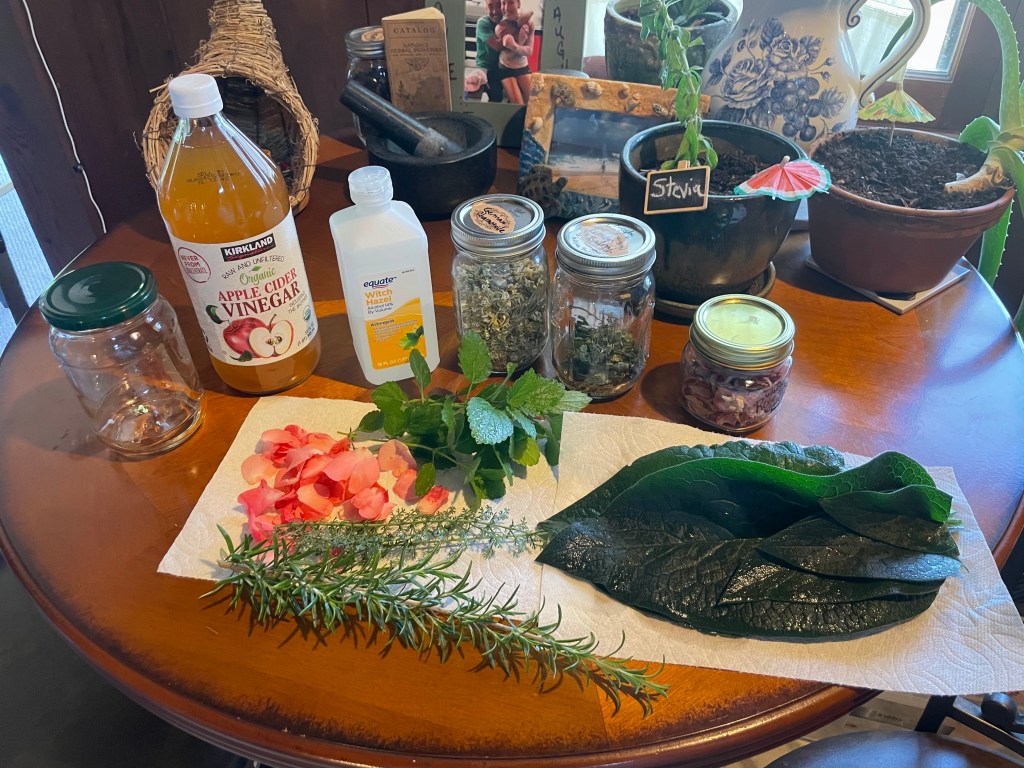
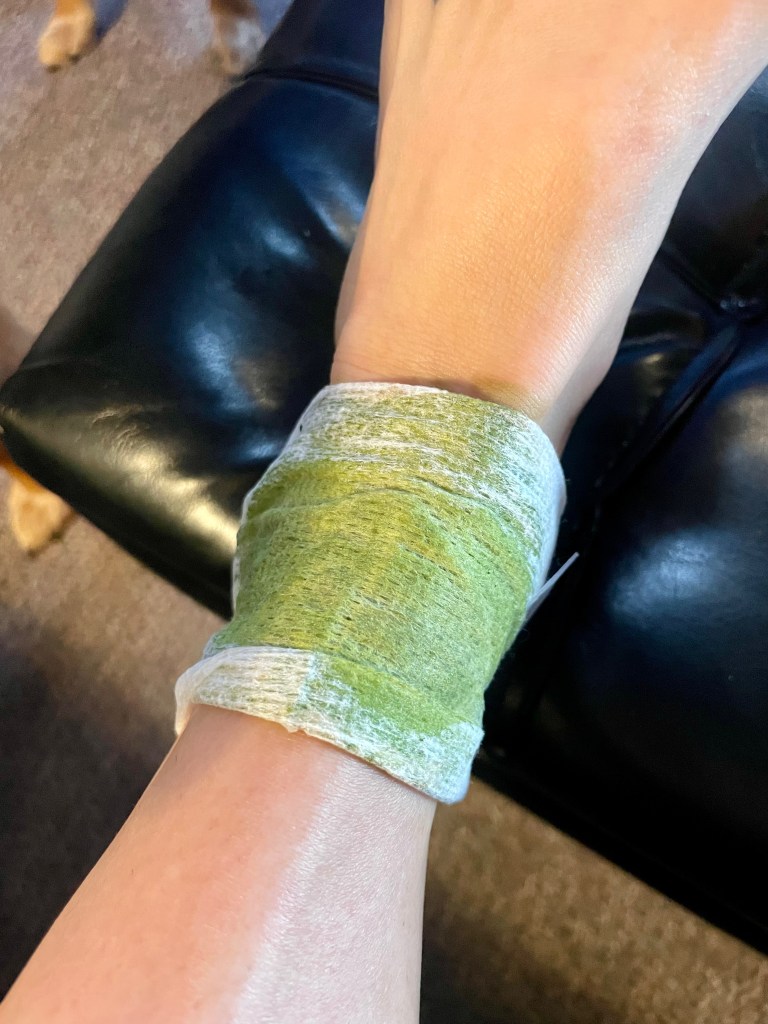
Topical applications: Use as needed 2-3 times per day for healing. I use comfrey salve almost every single day when I’m training hard and chafing a lot!
- Poultice (see below)
- Infused oil (recipe at the end!)
- Salve
- Compress
- Wash or soak in a strong comfrey tea for 15-30 minutes. Wonderful with Epsom salts in a bath!
*Synergistic allies for comfrey: chamomile, arnica, yarrow, rose, calendula
The Comfrey Conflict
Pyrrolizidine Alkaloids (PAs) in Comfrey
• Comfrey contains varying levels of a naturally occurring substance called pyrrolizidine alkaloids
• These compounds (found in other herbs like coltsfoot, grains and even small amounts in honey) are a plants natural defense mechanism against herbivores. Basically, plants (often weeds) produce PA’s to make themselves “unpalatable.”
Animal Studies
- Most of the studies that initiated modern skepticism around comfrey’s internal use come from high-dose animal experiments vs traditional human herbal practice.
- In experimental animal studies, like this, rats were fed (or INJECTED!) with large, chronic doses of comfrey or *cringe* isolated pyrrolizidine alkaloids. Per Andrew Chevallier in The Encyclopedia of Herbal Medicine: it is unclear if PA’s are toxic in regards to the whole comfrey plant as they are only present in small amounts and often absent entirely from the dried aerial portions. He notes topical applications and aerial parts are considered safe, whereas the root – which contain the highest amount of PA’s – should not be consumed [2]
- Other experiments used comfrey as a significant percentage of an animal’s diet over long periods. In this study, rats were fed comfrey as a large part of their diet to help explain how very high doses can lead to gene-expression and liver toxicity.
- Reports of adverse reactions from comfrey’s internal use do exist and vary by individual, depending on factors like dose, preparation, and pre-existing conditions. Case reports link some instances of liver injury to internal ingestion, often involving high intake or multiple substances. Importantly, this evidence does not come from controlled trials using traditional dosages or methods. These findings matter, but they reflect very specific circumstances and don’t fully capture how comfrey was historically prepared and used. If you’d like to review these reports, check out Comfrey Central.
Considerations:
• Dose and preparation matters.
• Animal models ≠ human herbal use
• Chronic, high-dose exposure ≠ short-term, low-dose, or topical herbal support
Takeaway:
There are clearly things to consider when consuming comfrey internally. Expiramental animal studies do not erase context, dose, or tradition, particularly research meant to finding the tipping point to toxicity. In fact, many herbalists still use comfrey internally in their own practice, but leave it out of internal remedies for others. Understanding both research and history allows for an informed personal choice. One thing is clear: there is no denying comfrey’s ability to heal wounds, and everyone can agree topical applications are both safe and effective. However, if wounds transpire internally – those specifically indicated for comfrey supplementation – it begs the question: would you consider employing comfrey*? *short term, dose-appropriate, well-sourced dried comfrey leaf
The leap from ‘adverse reports’ to ‘comfrey is toxic for the liver’ is almost egregious. We also need to be mindful of taking experimental conclusions out of context, such as when rats were fed very high doses to figure out HOW the mutations occurred, not just that they occurred. Research raised valid red flags, but it didn’t address what happens with traditional dosages and preparations in humans when comfrey is used thoughtfully.
The Following Populations Should Avoid Internal Use:
• Pregnant
• Breastfeeding
• Children
• Those with liver disease or compromised liver function; those consuming other PA-containing herbs or hepatotoxic medications
Long-term and/or high concentrated daily internal use is generally not recommended and does not align with traditional use.
Topical Use Is Regarded SAFE
• External use on intact skin is widely regarded and accepted as safe
• For acute injuries like sprains, strains, bruises, and tissue damage
Notes:
• Avoid using comfrey on open or infected wounds (because it can close the surface too quickly, trapping dirt or pus) or on bones that have not been set yet
Weekly Recipe: Healing Comfrey Oil
- Ingredients:
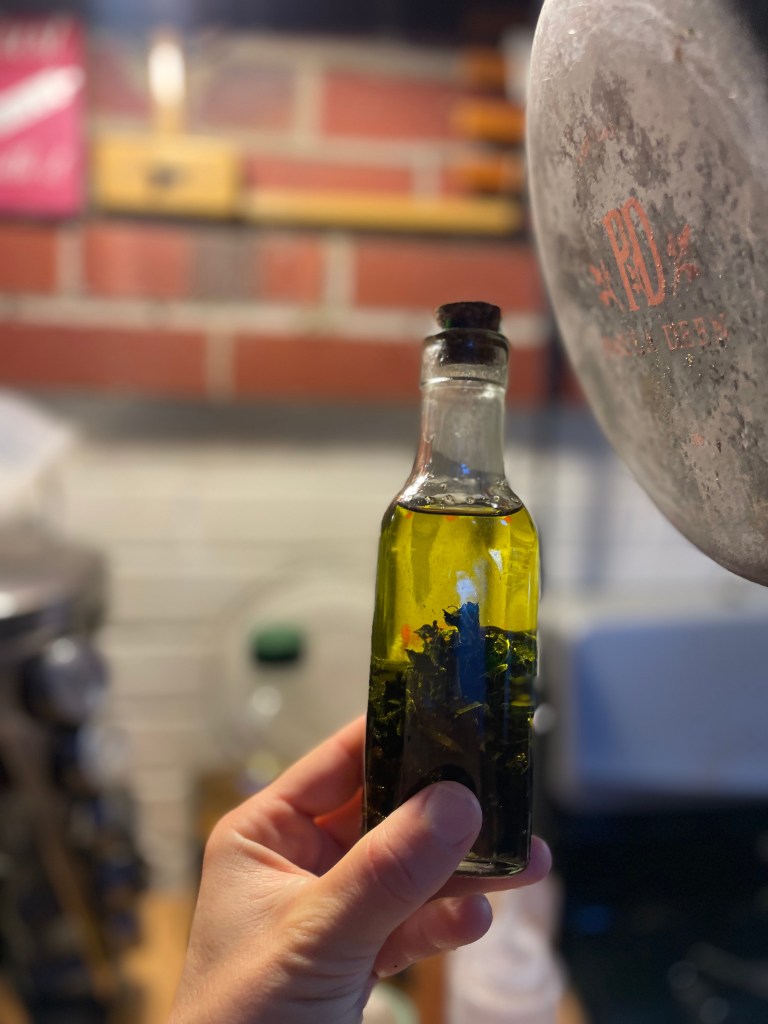
- Dried comfrey leaf or root (your choice! I enjoy working with the leaf the most, however)
- Carrier oil of choice (I like avocado for comfrey leaf oil and olive oil for comfrey root oil)
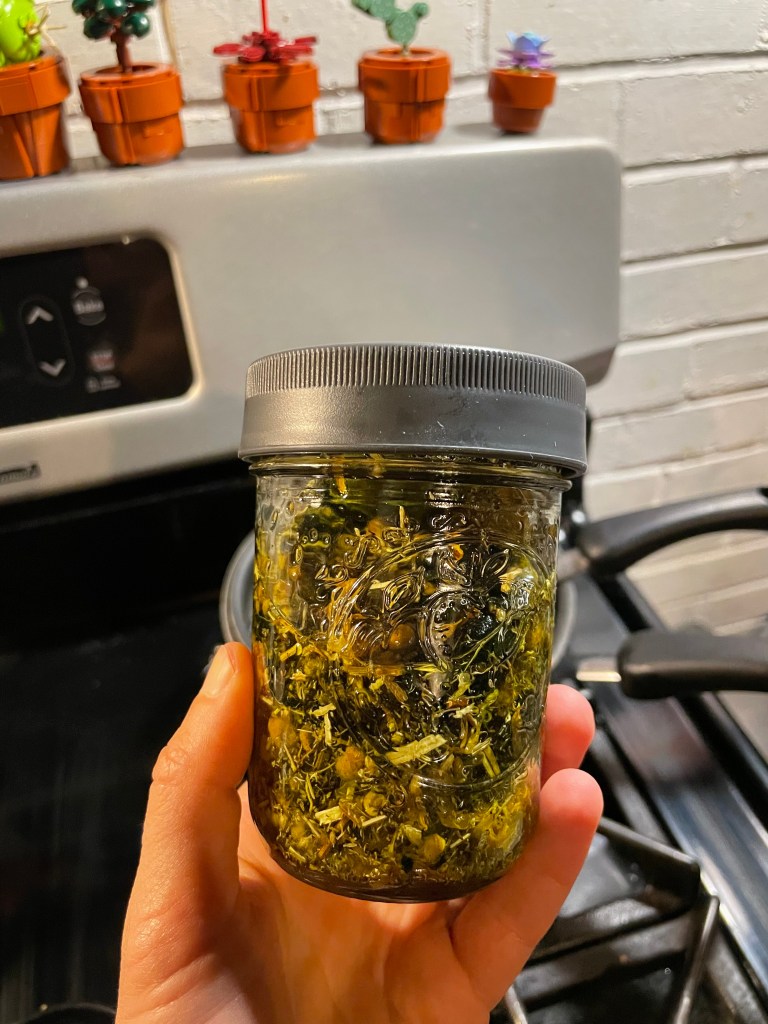
- Instructions: Combine dried herbs in a large, sterile jar. Cover with carrier oil. This is not an exact science, but the more herbs you use the more concentrated and powerful your salve will be! I tend to fill a jar (whatever size) all the way with herbs and then cover with oil by a quarter inch or so, leaving some headspace between the oil and the lid.
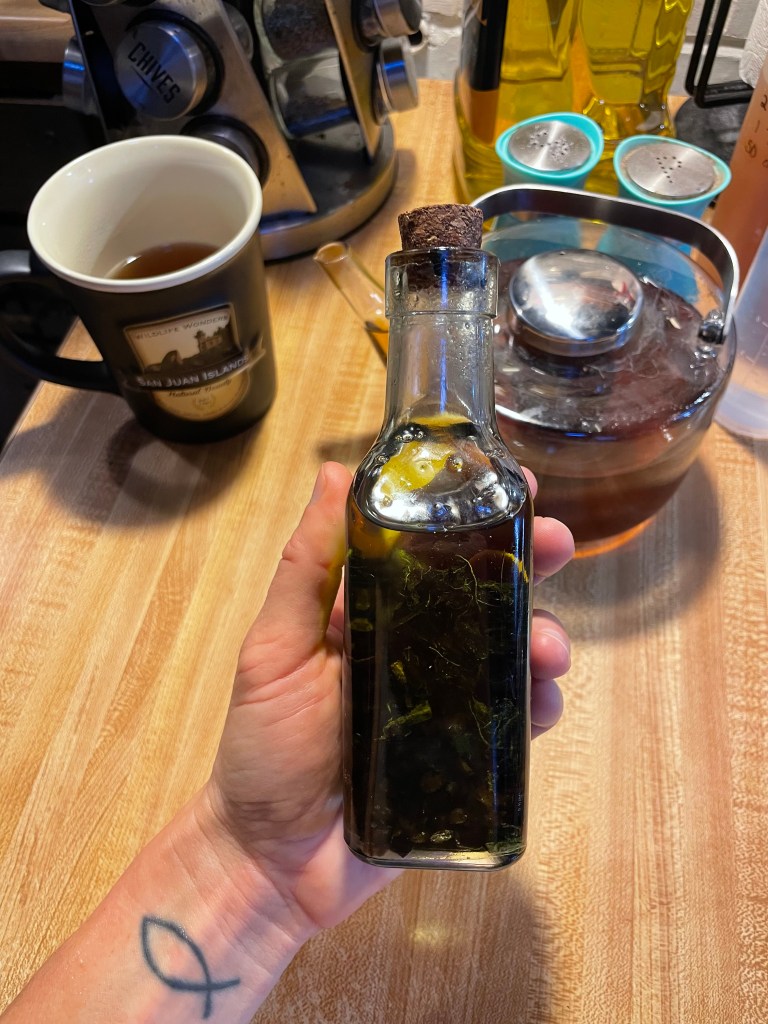
- Method: You can simply leave oil to infuse for 2 weeks, shaking every other day or so, before straining and bottling. Or, you can do a low heat extraction using a double boiler: Simmer a pot of water/double boiler with a canning ring on the bottom at the lowest heat possible. Set the herb-oil jar on the canning ring to prevent it from direct exposure to heat, and allow the low heat to extract the medicinal properties from the plants into the oil. 4-8 hours (I’ve done up to 24 hours) is a good time frame – just be sure to check the water temperature and ensure that it is always below a boil (just above bath water temp). You may need to turn the stove off and on a few times!
- Storage: Per Juliet Blankespoor in The Healing Garden, infused oil made with good quality, dried herbs can be stored at room temperature from 1 year. Refrigerate it for extended up to 2-3 year (if it lasts that long!) but be sure to check for any signs of spoilage.
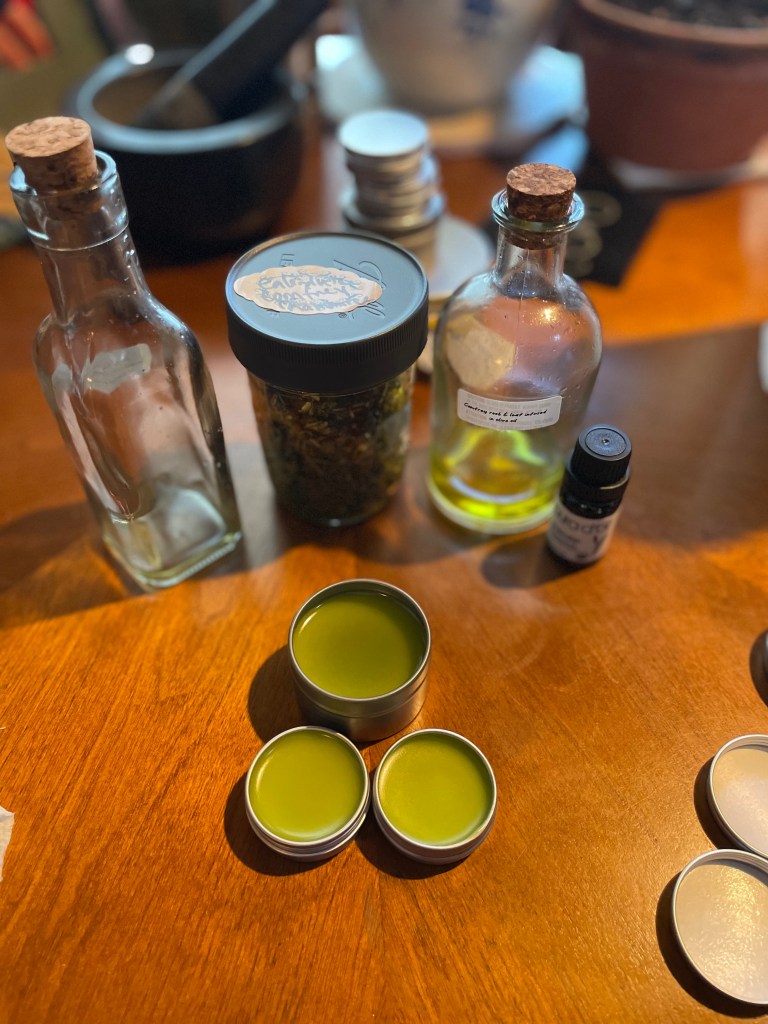
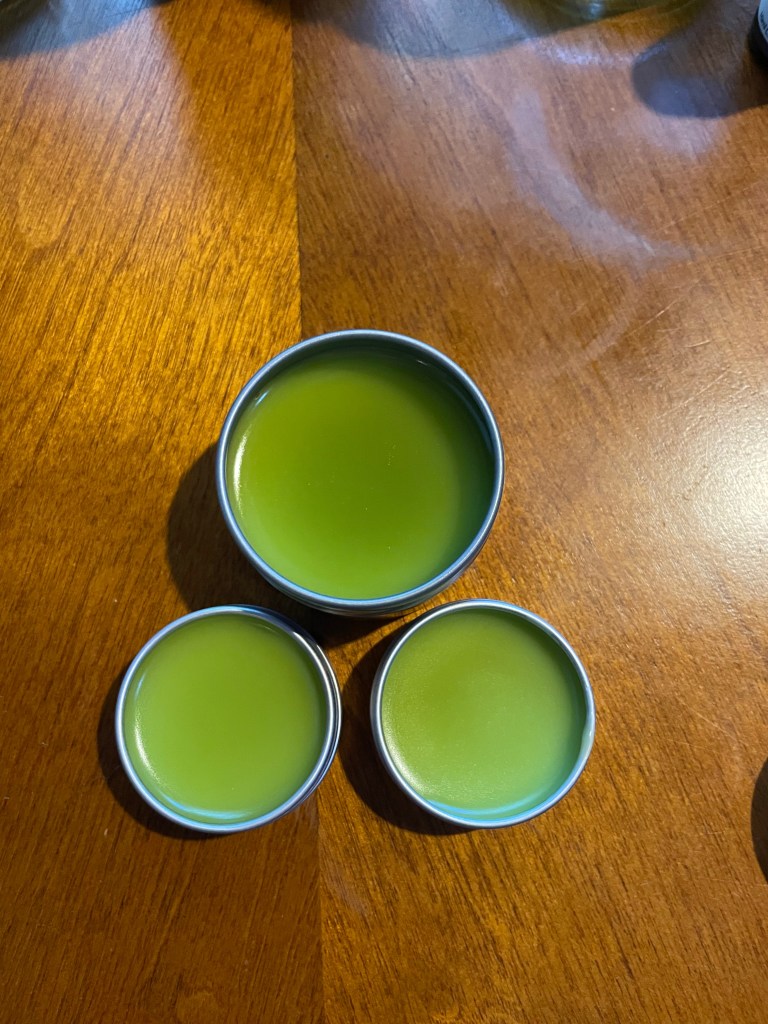
- Making Comfrey Salve: From here, you can melt beeswax and combine with the appropriate amount of infused oil to make a salve. I have found comfrey salve makes a powerful and intentional gift!
Optional add ins: Dried chamomile, dried rose, dried calendula flowers with green base intact, dried arnica
The “Woo-Woo” Part
- Planetary Association: SATURN! Affinity for musculoskeletal system
- Elemental Association: Earth (sweet taste, astringent, broad drooping leaves)
- Per Sajah Popham in Evolutionary Herbalism: Comfrey, as an Earth plant, helps strengthen the Earth element within us
- Dosha Discussion: The plant itself seems to be “kapha” in nature with its sweet and salty tastes and rich mucilage. It’s cooling, demulcent properties would balance the hot, dry pitta dosha very well! The moistening properties could be of benefit to dryness-prone vatas, but may be too cooling long term. Again, its key to note that comfrey is typically going to be a topical application, so it’s unlikely to alter a constitutional imbalance.
Conclusion
• My personal relationship with comfrey & when I reach for it
• Reminder that herbs like comfrey are powerful teachers and healers
• Listen, learn, and prepare your herbals with intention.
Citations & Recommended Reading
- Comfrey Central – a description of adverse reports in human internal consumption can be found here. Recommended by Maria Noel Groves.
- Encyclopedia of Herbal Medicine, Andrew Chevallier. 2023.
- Body Into Balance, Maria Noel Groves. 2016.
- Herbs for Natural Beauty, Rosemary Gladstar. 1999, 2014
- Herbs for Common Ailments, Rosemary Gladstar. 1999, 2014
- Comfrey, Herbal Reality monograph
- McIntyre, A. The Complete Herbal Tutor: The Definitive Guide to the Principles and Practices of Herbal Medicine. Aeon Books, 2019.
 Kawaoka Coaching
Leave a comment