Today we’re discussing herbal formulation and the “science” behind crafting an herbal remedy. We unpack herbal taste, actions, affinities, energetics, dosage and potential interactions to create plant remedies from the lens of an herbalist. Formulation is intentional, relational, and creative.
The Foundations of Herbal Formulation
Taste
- Why does taste matter in herbal medicine?
- Examples of herb tastes: Bitter, sweet, aromatic, astringent
- Emotional and sensory experience of tea
- Creating a blends people want to consume (this means choosing the right form to deliver an herbal remedy in!)
Actions
How can herbs balance physiological patterns and imbalances?
- What are herbal actions? (nervine, alterative, immunomodulation, bitter tonic, adaptogen etc.)
- Determining a primary action + affinity for a formula
- How actions guide the structure of a blend
Tissue Affinity
Where do we want the formula to go?
- What does tissue affinity mean?
- Examples:
- Organ Systems as a whole:
- Digestive system (chamomile)
- Nervous system (skullcap, lemon balm)
- Reproductive system (shatavari, damiana)
- Immune/lymph (elderberry, echinacea)
- Specific Organs:
- Liver + Gall Bladder (Oregon grape, very bitter, high in berberine
- Uterus (Red raspberry)
- Heart (Hawthorn)
- Organ Systems as a whole:
- Combining synergistic herbs to balance body systems and patterns
- Astrology: Herbs are associated with elements and planets just like we are!
- Herbal “Superpowers”: Herbs that have a unique affinity for healing an emotional patterns (sexual trauma, loss, foggy mind, overwhelming sadness)
Energetics
- What are herbal energetics?
- Warming/cooling
- Drying/moistening
- Why balance matters in a blend
- Key Constituents in plants (chemical make-up)
Dosage & Potential Interactions
Dose:
- Each herb has a recommended dosage. When you combine herbs, you’re not looking for individual dosages to add up but rather the net effect of the combined formula.
- Standard herb dose for tea is 1 tsp – 1 TB. dried herb in 8 oz water 1-3 times per day
- Nutritive herbs (like nettle, oat straw, holy basil) often make up the base of formulas. The dosage is often higher for these herbs.
- Potent, low dose (often very bitter/acrid in taste, but not always) herbs are often (but not always!) taken in tincture form. The dosage is often as little as a few drops per day.
- Duration for herbal supplementation is often 1-2 weeks for short term herbs up to 6+ months. It’s entirely up to the individual, their patterns, and the herbs. Adaptogens, for example, are often supplemented for 4-6 weeks followed by a week off.
Herb/Drug Interactions:
- There are fewer than people think!
- Per Maria Noel Groves recommendation, I use Mosby’s Nursing Drug Reference when working with people one on one who are on a lot of medications, but tend to avoid herbs like St. John’s Wort, as special as it is, when doing larger blends as it interacts with the most medications (namely due to its strong action on the liver, which essentially kicks medications right out of the body before they can be effective)
- Some herb/drug interactions can be beneficial, like in the case of hawthorn with heart conditions.
- Strong sedative herbs, like valerian, can interact with sedative or psychiatric medications
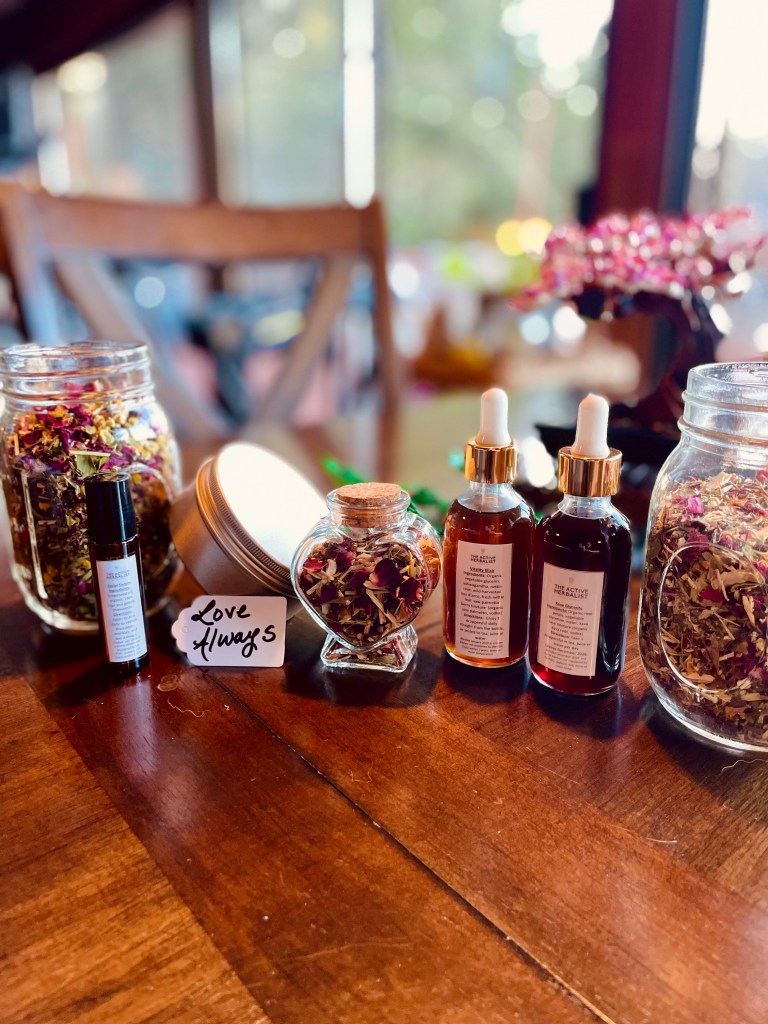
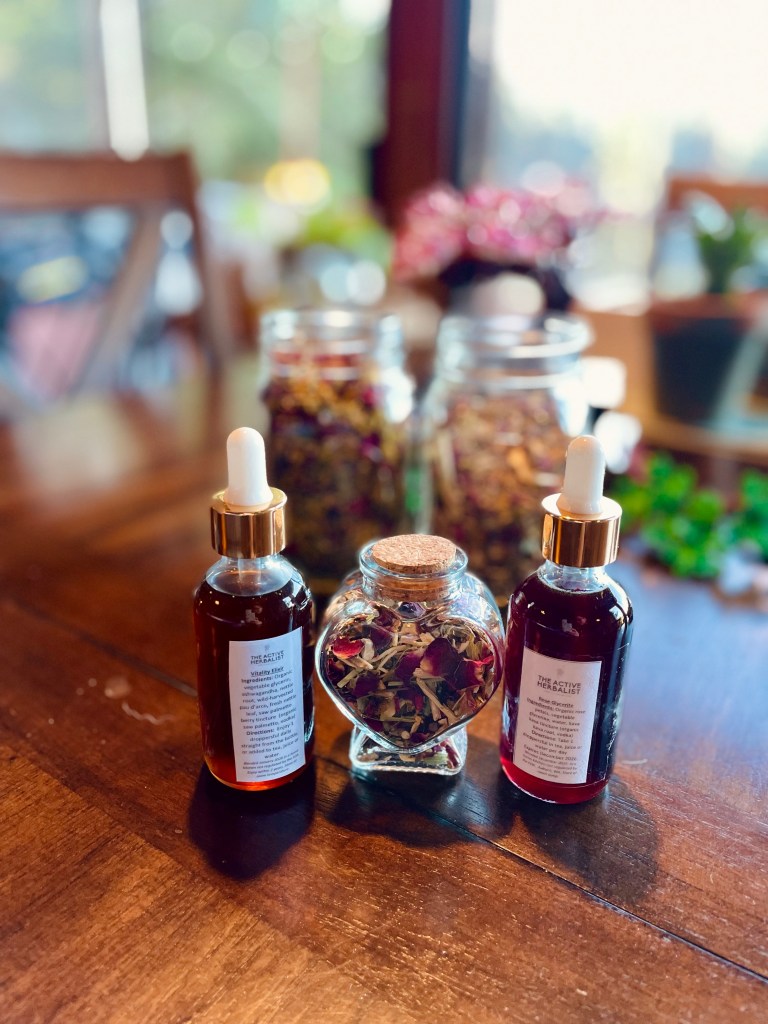
Real-Life Example: Venus Rising Tisane
- Why I chose aphrodisiacs like rose + damiana alongside of adaptogens like ashwagandha, eleuthero, and shatavari with base herbs like oat straw and pau d’arco.
- Why I chose sensual aromatics like warming vanilla, comforting cocoa and synergistic licorice root
- The energetic balance of the formula (net slightly warming & moistening)
- The intention behind the blend (taste, action, energetics, affinity, experience):
- We want connection, balance, and a shared experience for a romantic couple
- Action: We want aphrodisiacs and adaptogens
- Energetics + Affinity: We want a combination of stimulating and relaxing herbs that support blood flow to the pelvis, grounding, and sensuality
- We also want a tasty blend people will drink – a deep blend of floral aromatics, earthy tonics, and nutritive base herbs.
Closing Reflections
- Herbal formulation as relationship, not random nor “this herb for that”
- I encourage people to note how they feel emotionally and physically, and choose herbs/herbal blends based on their constitution and emotional needs.
- If you’re interested in learning more, check out Sajah Popham’s mini courses on herbal formulation, as well as Rosalee de la Foret’s courses on herbal energetics!
- Remember: Effective herbal remedies are crafted with intention
- To order a custom blend or get in on my Valentine’s Day Bundle (including the Venus Rising Tisane) email me at becca@kawaoka-coaching.com
 Kawaoka Coaching
Leave a comment