A Medicinal and Cultural Monograph
Vanilla is a slang term for “boring”- it’s a common taste we associate with sweetness, comfort, and familiarity. But the vanilla bean is far from boring or basic – it’s the cured fruit of an orchid, a plant that carries centuries of cultural knowledge, labor, and medicine. In herbal practice, vanilla gives us more than flavor: it offers warmth, comfort, and connection, especially in the darker months when the nervous system is asking to soften rather than push forward.
Vanilla planifola, Orchidaceae (orchid) family

History & Growing: Vanilla planifolia, the orchid from which the beloved vanilla bean comes, has a history as rich and complex as its flavor. Native to Mesoamerica, vanilla was first cultivated by the Totonac people of the eastern Gulf Coast of present-day Mexico. Regarded as a sacred plant, it was later traded throughout the region and often combined with cacao in ceremonial beverages. After the Aztec conquest of Totonac territory, vanilla – known as tlilxochitl – was highly prized for its aroma and flavor and reserved largely for ritual use and the elite. According to historical accounts, the Aztec ruler Moctezuma II served cacao flavored with vanilla to the Spanish explorer Hernán Cortés, a drink the Aztecs revered as divine. For centuries thereafter, vanilla remained a rare luxury, enjoyed primarily by royalty and the wealthy.
In its native habitat, vanilla is pollinated by orchid bees (Eulaema spp.), but elsewhere the plant must be hand-pollinated—a method developed in 1841 by twelve-year-old Edmond Albius—because these natural pollinators do not occur outside the region. The orchid vines thrive in tropical climates, climbing and flowering with patience – flowers appear after 2-3 years of growith, with each flower producing only a single vanilla bean pod after pollination. Fun Fact: each orchid flower blooms for only one day, making the timing of hand pollination incredibly stressful for growers! After pollination, the pod matures for nine to ten months. Once harvested, it undergoes a rigorous curing process. This labor-intensive journey reflects the plant’s slow, deliberate rhythm—a reminder that some of the most treasured medicines and flavors are earned over time, not rushed. [1, 2, 4]
Parts Used Medicinally: Ripe and fermented fruit (pod)
Taste: Sweet
Energetics: Warming
Medicinal Preparations: Extract (likely our best known tincture!), infusions, decoctions, glycerites, cordials, syrups, honeys, topical applications
Actions:
- Antioxidant
- Anti-inflammatory
- Anticarcinogenic
- Uplifting/antidepressant
- Aromatic stimulant
- Carminitive
- Nervine
Key Constituents: Vanillin (key compound responsible for iconic scent and taste), vanillic acid
Organs & Systems Vanilla acts on:
- Nervous
- Digestive
- Skin
Traditional Uses:
- Culinary
- a comforting flavor to enhance other medicinal preparations, like cacao or spiced drinks
- initually it was consumed in a hot chocolate beverage, predating coffee and tea in Europe [4]
- Thomas Jefferson learned of vanilla in France during the 1780s and helped introduce it to America, later becoming known for his love of vanilla ice cream. Fun fact: He penned the first known American ice cream recipe!
- Relax tension & restore sexual vitality
- a gentle nervine, calming the mind and easing stress
- an aphrodisiac and tonic for emotional connection
- Aztecs used vanilla to relieve depression and sooth hysteria [4]
- 18th and 19th century uses include improving muscular energy and to “exhilarate the mind” [4]
- Stomach pain
- a digestive aid to ease mild indigestion and bloating
- Coughs & Venemous bites [1]
Current Uses & Research: .
- Most popularly used culinarily and in baking!
- Baked goods, iced cream, and vanilla sugar
- Nervine / Calming
- Supports relaxation, eases mild stress or anxiety.
- Digestive Support
- Traditionally used for mild indigestion, bloating, or gas.
- Mood Enhancement / Aromatherapy
- Its aroma can promote comfort, emotional balance, and grounding.
- Culinary Herbal Medicine
- Adds flavor to teas, desserts, tinctures, and herbal infusions while contributing subtle medicinal properties.
- I infuse it in teas and syrups, in addition to making my own vanilla extract for baking and medicinal blends
- Antioxidant & Anti-inflammatory – Contains vanillin and phenolic compounds that show antioxidant and anti-inflammatory potential in laboratory studies.
- I’ve used vanilla extract in topical applications like body butter for its scent and relaxing properties
- Ritual / Sensory Practices – Used for warming, comforting, and connective qualities in winter or transitional seasons.
Dosage & Preparations:
Who measures vanilla? 😉 I use a dried, cut organic vanilla pod in a large tea blend or syrup decoction for flavor (usually 1 oz vanilla to 4-5 oz other herbs in syrup or 6-8 oz in a te blend)
Contraindications: None known
Elemental, Planetary, and Dosha Discussion:
- Element: Fire (warming) + Water (sweet, comforting)
- Planet: Venus (sweet, comforting)
- Dosha: Balances Vata (mildly stimulating for kapha)
Recipe of the Week:
DIY Vanilla Extract
Ingredients:
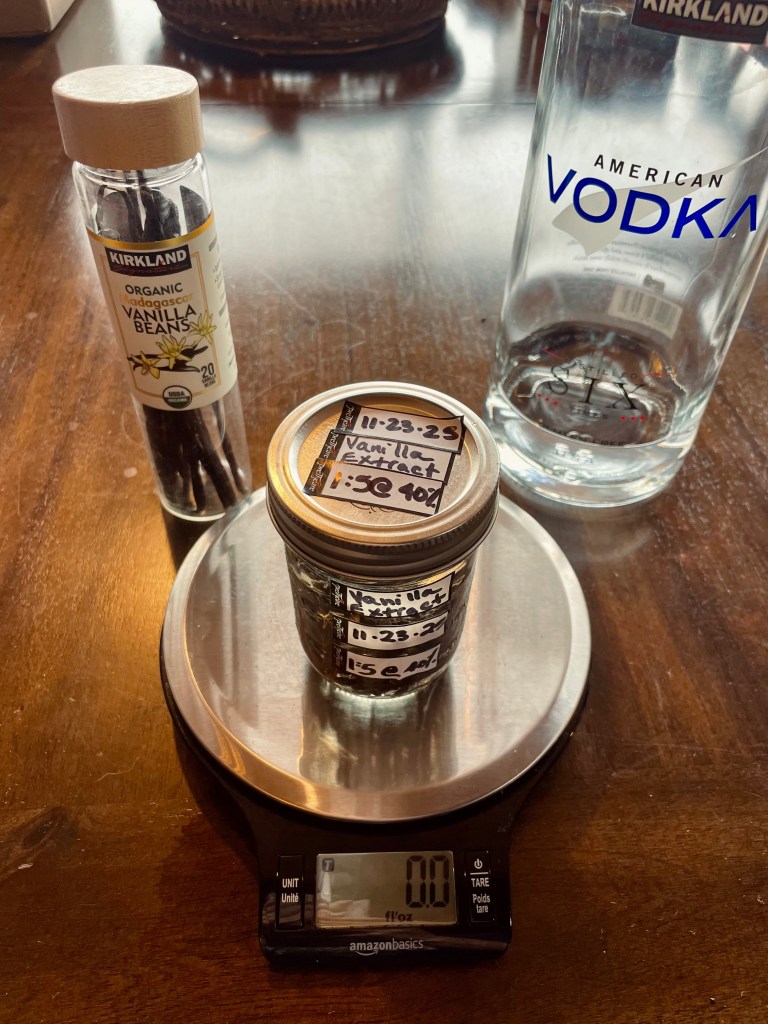
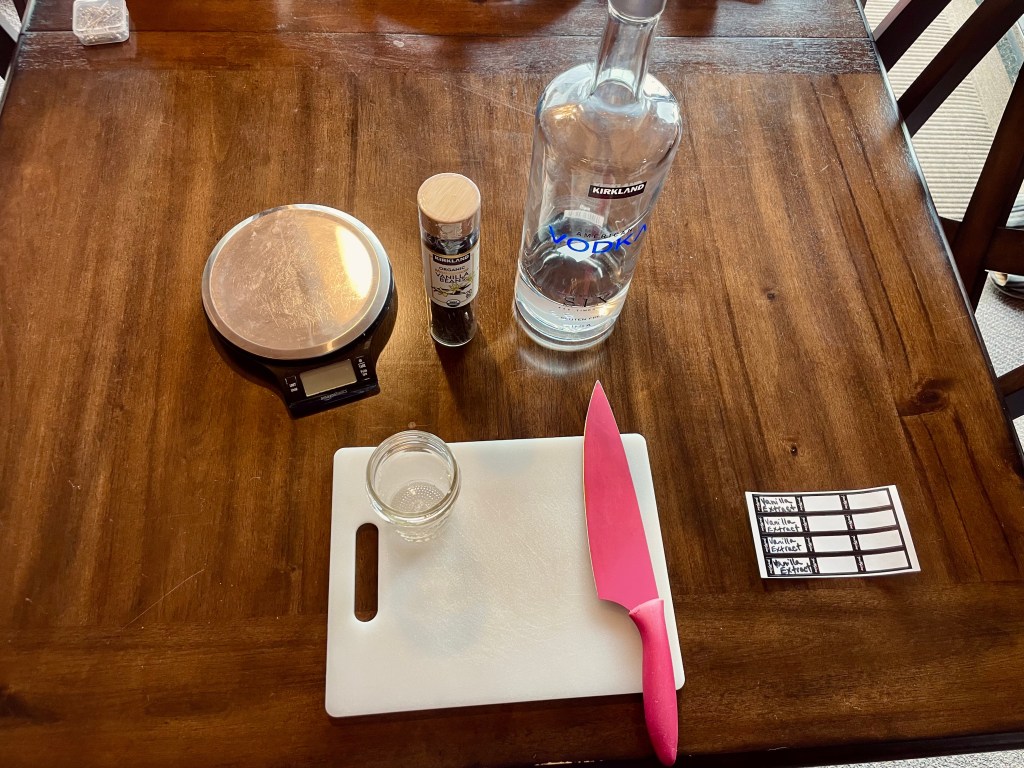
- 8 dried, organic vanilla pods, approximately 1 oz (I got mine from Costco!)
- 4-8 ounces* 80 proof vodka or rum (range varies depending on single vs double fold)
Directions:
Slice your vanilla beans lengthwise to expose the “cavier” inside. Chop into smaller peices to maximize surface area and increase your potency. Add to a sterile glass jar (I simmer my jars for 10 minutes and allow to air dry) and cover with 5-8 oz vodka or rum. The less alcohol you use, the more potent your extract will be. Infuse 8 weeks up to 1 year! Give it a good shake each day when you can.
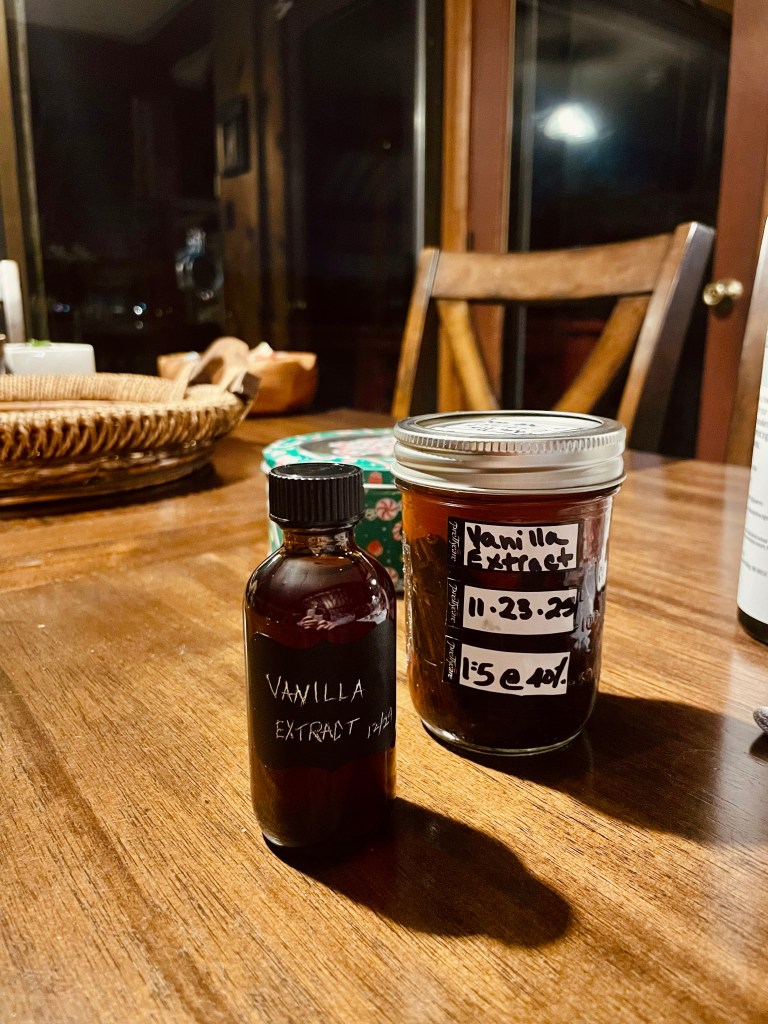
Tip: when you open the lid and you’re greeted by vanilla scent first instead of alcohol, its time to strain, bottle, and label.
*Some recipes call for more alcohol, but I made mine with 1 oz vanilla bean to 5 oz vodka. Some fancy folks call the more concentraded ratios “double fold”
Citations & Recommended Reading
- Homemade Vanilla Extract Recipe, Learning Herbs by Rosalee de la Foret
- Vanilla, Mountain Rose Herbs (product)
- Kress, Henriette. “Vanilla (Vanilla planifolia).” Henriette’s Herbal Homepage, http://www.henriettes-herb.com/eclectic/felter/vanilla.html.
- Vanilla (Vanilla spp.). Herb Society of America, 2022, http://www.herbsociety.org/file_download/inline/d24f6dc9-16ae-4f08-8295-3f20363285e9
- Bythrow, Jenna Deanne. “Vanilla as a Medicinal Plant.” Seminars in Integrative Medicine, vol. 3, no. 4, Dec. 2005, pp. 129–131, ScienceDirect, https://doi.org/10.1016/j.sigm.2006.03.001
 Kawaoka Coaching
Leave a comment