Sambucus nigra (European), Sambucus canadensis (American)
Family: Moschatel (formerly Caprifoliaceae)
History & Growing: The elder tree. (sigh) What a deeply spiritual and symbolic plant. Powerfully healing, elder is steeped in myths and legends unmatched by most herbs. For centuries, civilazation has turned to elder’s sprawling branches, billowing flowers and dark berries for protection, restoration, and seasonal transformation. The flowers of elder bloom just before allergy season while the berries burst forth as cold and flu season approaches. Elder trees are a beautiful, fast-growing hedge tree that thrives in woods and near bodies of water. Sambucus nigra are native to Eurasia and northern Africe while Sambucus canadensis is native to North and Central America. [1] Elder can reach heights over 20 feet if happy and healthy! The woody shrub is best propagated from stem cuttings, though I had little success with this and ultimately purchased a start from my native local nursery. Warning: it is wise to offer thanks or ask permission to the elder tree before harvesting to avoid the wrath of the Elda Mor (Elder Mother). Maybe that’s why my stem cuttings never took root…
Parts Used Medicinally: Flowers, berries
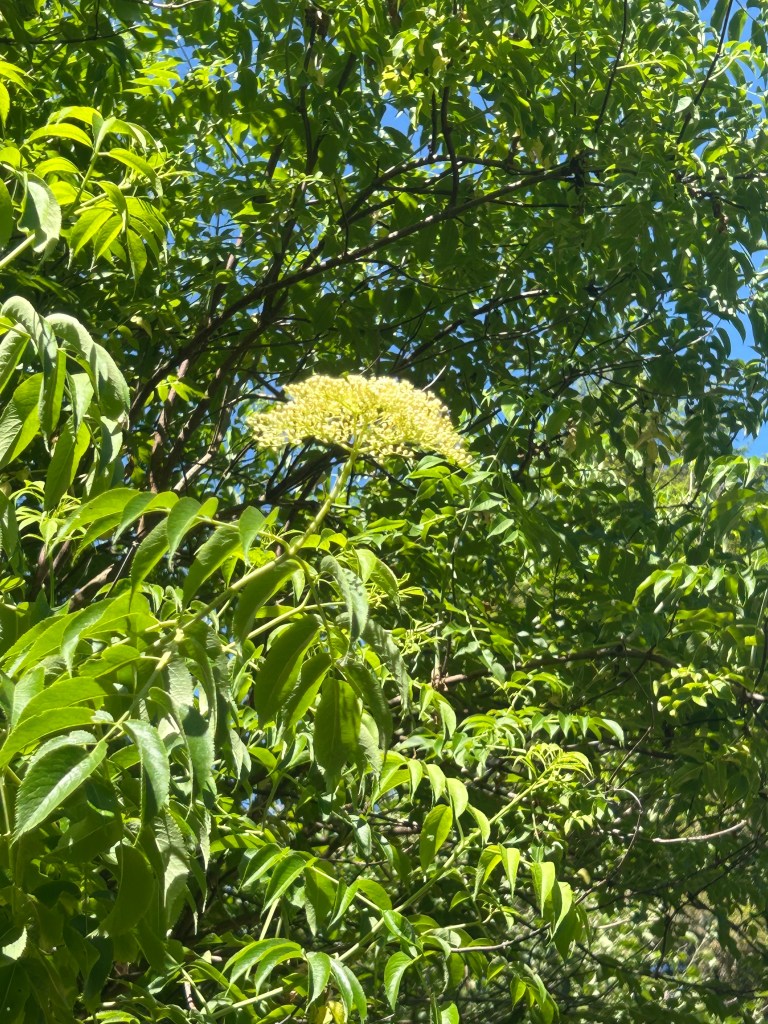
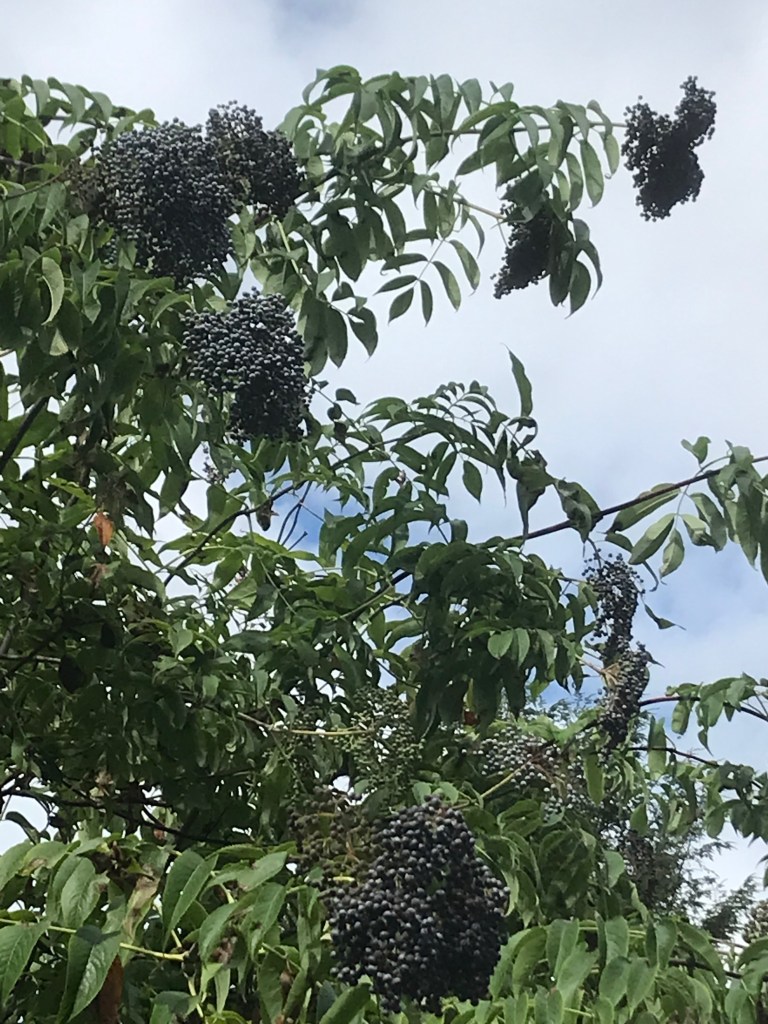
Supplementation Forms: Tincture, infusion, syrup, honey, decoction, poultice, compress, mead, oxymel, vinegar, gummies, baked goods
Taste: Bitter, Sweet, Astringent
Energetics: Cooling
Actions:
- Berries:
- Immune Stimulant & Tonic
- Cardiovascular tonic
- Anti-viral, anti-bacterial, antioxidant, anticatarrhal
- Inflammation-modulating (flavanoids)
- Antirheumatic
- Diuretic
- Diaphoretic
- Mild laxative
- Per Sajah Popham via Evolutionary Herbalism: Compounds called anthraquinones in elderberries act to limit water absorption in the intestines, enhancing pressure and encouraging rhythmic muscular contractions.
- Flowers:
- Antiviral, anticatarrhal
- Astringent
- Anti-inflammatory
- Diuretic
- Diaphoretic
Key Constituents [2]:
- Berries: flavonoids, anthocyanins, lectins, vitamins A + C
- Flowers: flavonoids, anthocyanins, lectins, vitamins A + C, triterpenes, volatile oil, mucilage, tannins
Organs & Body Systems Herb Acts Upon:
- Immune System
- Musculoskeletal
- Topical/Skin
- Heart & Cardiovascular System
Traditional Uses:
- Elder has been used for thousands of years to fight colds, fevers, and respiratory infections.
- Culinary uses include pies, jams, jellies, meads, wines, and cordials
- Spiritually, this herb has signifcant meaning in many cultures, with stories and tales ranging from the tree offering protection to sleeping under its branches to dream of, meet, or be abducted by fairies!
- Cosmetic uses of elder date back many years
Current Uses (& Studies/Research):
- Immune System
- Studies have proven elderberry is effective in treating symptoms of influenza. [1, 2] Elderberry has been shown, in vitro and in vivo, to reduce viral activity, inhibit replication, and curb reproduction.
- The antiviral actions in elderberry help expedite recovery from respiratory infections. The flowers are also effective in relieving seasonal allergies, hay fever, congestion, and ear infections. Elder flower is also commonly combined with yarrow and mint (or blue vervain) to break a fever. I’ve done this and it’s AMAZING.
- Musculoskeletal System
- Due to its anti-flammatory actions, elderberry can be used as a tonic for inflammatory conditions, like arthritis, tendinitis, fibromyalgia, and general joint pain [1]
- Elder flower, due to its diaphoretic and diuretic actions, supports the removal of waste products, which can contribute to conditions like arthritis [2]
- Topical Applications
- Elderflower is astringent and anti-inflammatory. As such, it makes a wonderful compress or wash for conditions like acne, eczema, psoriasis, burns, hives, rashes, boils, and even insect bites.
- Beauty products like facial serums, creams and body butters often feature elder flowers along side of other tonifying skin herbs (such as rose and calendula)
- Elder is a diaphoretic herb. Diaphoretic herbs promote sweating, causing pores to open and help cool the body down. I think this is a really cool way to think about natural process, and affinities for the skin too!
- Heart and Cardiovascular System
- Elder berries are rich in vitamins and high in antioxidants which support a healthy heart and blood vessels, and may help maintain healthy blood pressure.
- Anthocyanins – which give elderberries their deep blue or red colors – present in elderberry help protect arteries from damage caused by oxidative stress. This can help prevent atherosclerosis [1]
- “Scientific studies, such as cell culture studies, animal models, and human clinical trials, show that anthocyanidins and anthocyanins possess antioxidative and antimicrobial activities, improve visual and neurological health, and protect against various non-communicable diseases.”[3]
- Other Uses:
- Elder is highly nutritive and has a unique, distinct taste. Culinary uses of elder include jams, baked goods, and more. Elder flower makes many appearances on the show Great British Bake Off!
- Elder flower and berry alike can support elimination by acting as a mild laxative
- Elder flower is commonly infused into beverages, like mead. The berries are also popularly added to beverages like kombucha!
When to Reach for Herb & In What Form:
- When your sick of course!
- As a tasty tonic to keep illness at bay and inflammation at bay
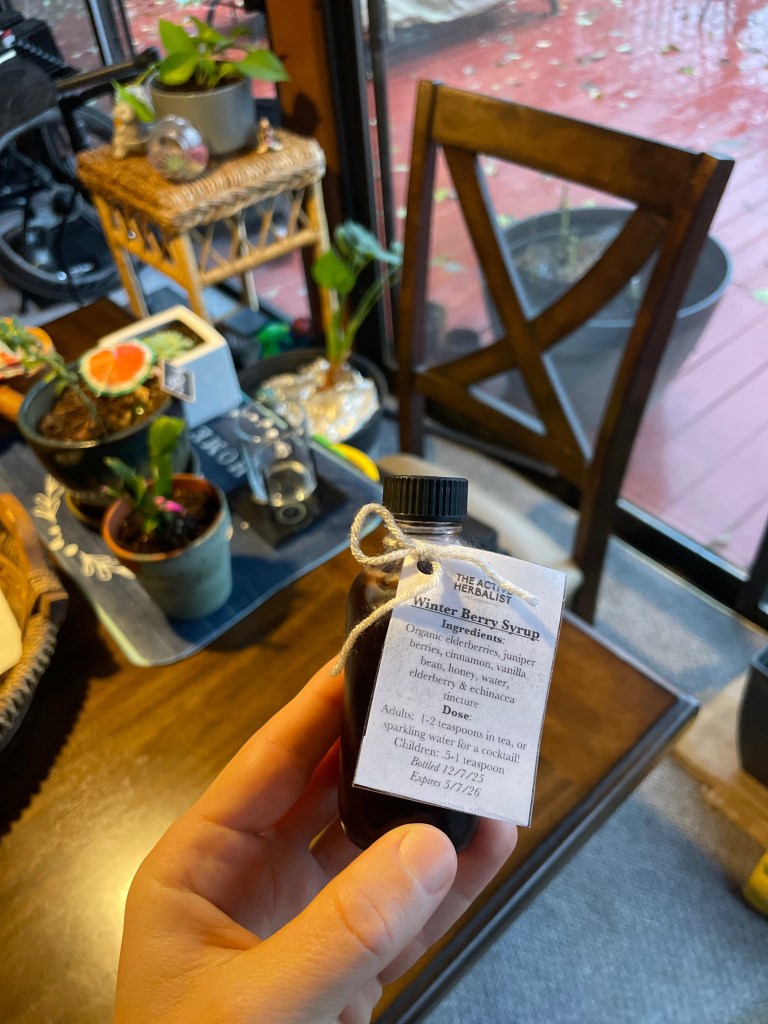
- Elder berry syrup (made with elder berry honey and fortified by elder and echinacea tincture) is 100% my favorite way to consume elder berry; I enjoy the flower in an infusion for mucosal support.
Dosage & Preparation [1]:
- Flower:
- Tea: 2 teaspoons-1 T per 8 oz of water 1-3 times/day.
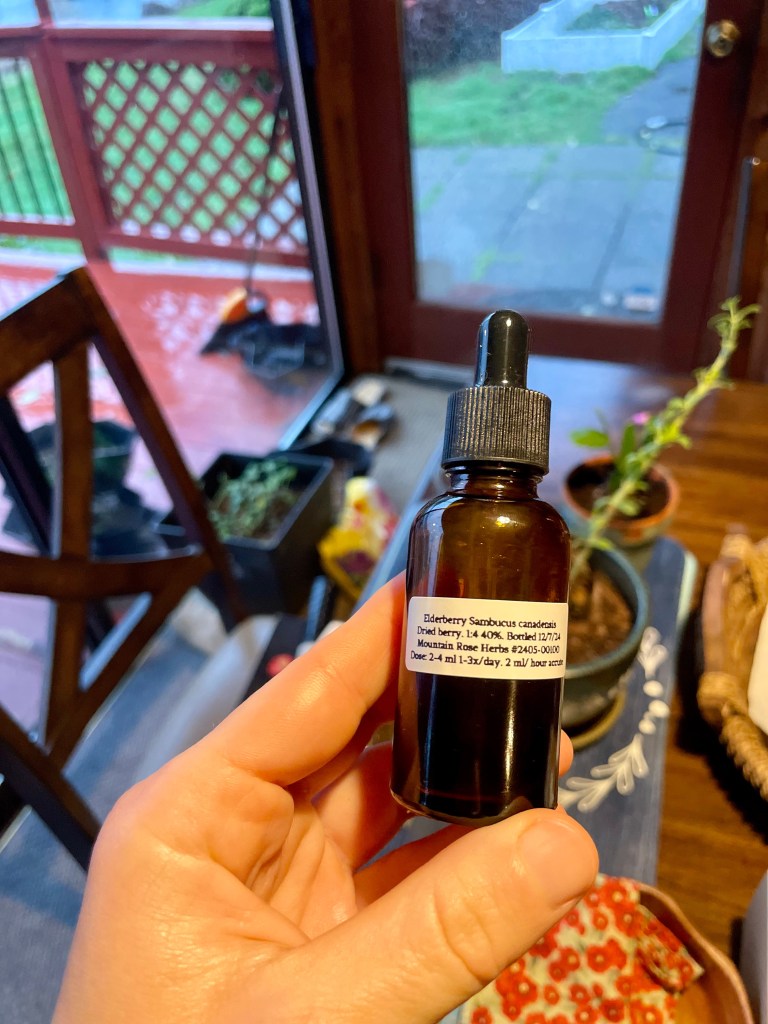
- Tincture: 2-4 ml using fresh (1:2 @ 95%) or dried (1:5 @ 70%) 1-3 times/day
- Berries:
- Decoction: 2 teaspoons per 8 oz water 1-3 times/day
- Tincture: 2-5ml using fresh (1:2 @ 95%) or dried (1:4 @ 60%) 1-3 times/day
- Honey/Syrup: 1-2 teaspoons as a tonic.
Contraindications:
- Do not consume raw elderberries or juice from fresh berries! They contain cyanogenic glycosides, which can cause nausea, vomiting, and abdominal cramps. Drying or cooking the berries neutralizes this compound and makes them safe for consumption. It is also not recommended to consume the leaves, stems or roots.
Elemental, Planetary & Dosha Discussion:
- Element: Fire (immune stimulant, anti-viral; clearly defined boundaries; sour taste) [4]
- Planet: Unpopular opinion…SATURN?!? (boundary of water and land, toxic until dried or cooked, dark berries)
- Dosha: Pitta (cooling) [4]
Citations & Recommended Reading:
- The Healing Garden, Juliet Blankespoor
- The Encylopedia of Herbal Medicine, Andrew Chevallier
- Khoo HE, Azlan A, Tang ST, Lim SM. Anthocyanidins and anthocyanins: colored pigments as food, pharmaceutical ingredients, and the potential health benefits. Food Nutr Res. 2017 Aug 13;61(1):1361779. doi: 10.1080/16546628.2017.1361779. PMID: 28970777; PMCID: PMC5613902.
- Evolutionary Herbalism, Sajah Popham
Recipe of the Week:
Elderberry Honey
4 oz dried, organic elder berry
8 oz raw or organic honey
Optional additions: dried organic ginger, cinnamon, black peppercorn, juniper berry.
Infuse the honey and elder berries (and up to 4 oz more of your add-ins, just be sure the honey can cover the herbs) in a double boiler, or saucepan and place over a larger saucepan half filled with simmering water. Infuse for a minimum of 2 hours (I use a mini crockpot on low heat for 6-8 hours! ) at low heat (try not to exceed 120*) Strain while still warm and store in a clean, sanitized jar labeled with the date. Expect a significantly less amount of honey than what you started out with! (I usually get around half) Mine usually doesn’t last longer than a month, but it should keep at room temperature for a year.
 Kawaoka Coaching
Leave a comment