“The best bridge between despair and hope is a good night’s sleep” (E. Joseph Cossman)
In today’s fast-paced society, more and more people are struggling with stress management and sleep quality. Herbs are a fantastic way to support better sleep hygiene in addition to healthy habits, like reduced screen time and/or caffeine intake after a certain time. Many herbalists (myself included) start their herbal journey in search of a soothing, natural sleep aid. Herbal remedies are not a cure-all or shortcut – they are just one peice of a larger picture of holistic health. The act of making a cup of tea is healing in and of itself; I invite you to begin the practice of an evening cup of tea utilizing one (or all!) of the herbs described below.
Today we will review four of my favorite herbs with nervine relaxant/sedative/trophorestorative actions that sooth irritation and anxiety, calm the mind, and promote restful sleep. We’ll discuss plant preparations and dosage, and I’ve included a link to Mountain Rose Herbs products as well. Let’s get sleepy!
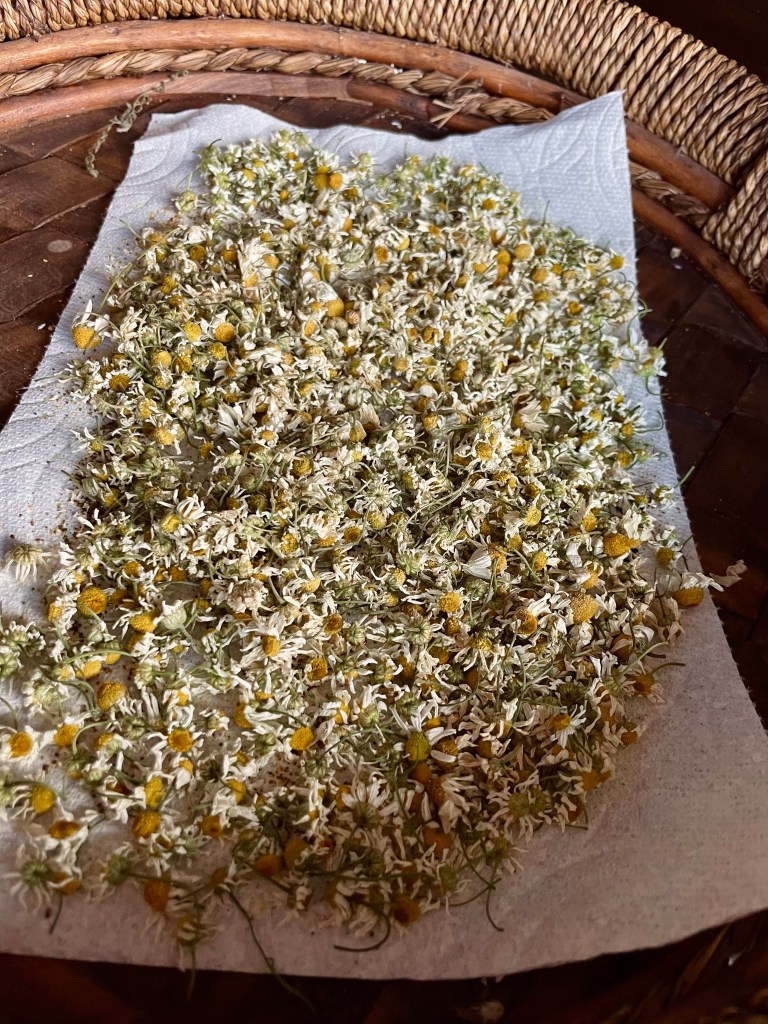
- Chamomile (Matricaria recutita)
- One of our most reliable and gentle (but effective) herbs for sleep! Chamomile is a fantastic place to start your herbal journey: it is widely available, pleasant tasting, and generally received well by the majority of the population (those with allergies to the Aster family should use caution)
- Chamomile tea is traditional remedy for sleep and digestion. It has been around for thousands of years and will likely never go out of style!
- Chamomile is a beautiful plant and easy to grow – fresh chamomile smells has a floral, apple-like scent and is my choice over dried. I have grown both Roman (perennial) and German (annual) chamomile. I had more success with German chamomile that I grew from seed; typically when I buy bulk organic herbs I get German chamomile. I dried the freshly harvested flowers myself and am using them intermittently through the winter.
- Chamomile is also used in skincare products, such as lotion, body butter, and more. Glycerites and tinctures are tasty and effective ways to consume the herb, but chamomile tea probably takes the cake in terms of popularity!
- Preparation & Dosage:
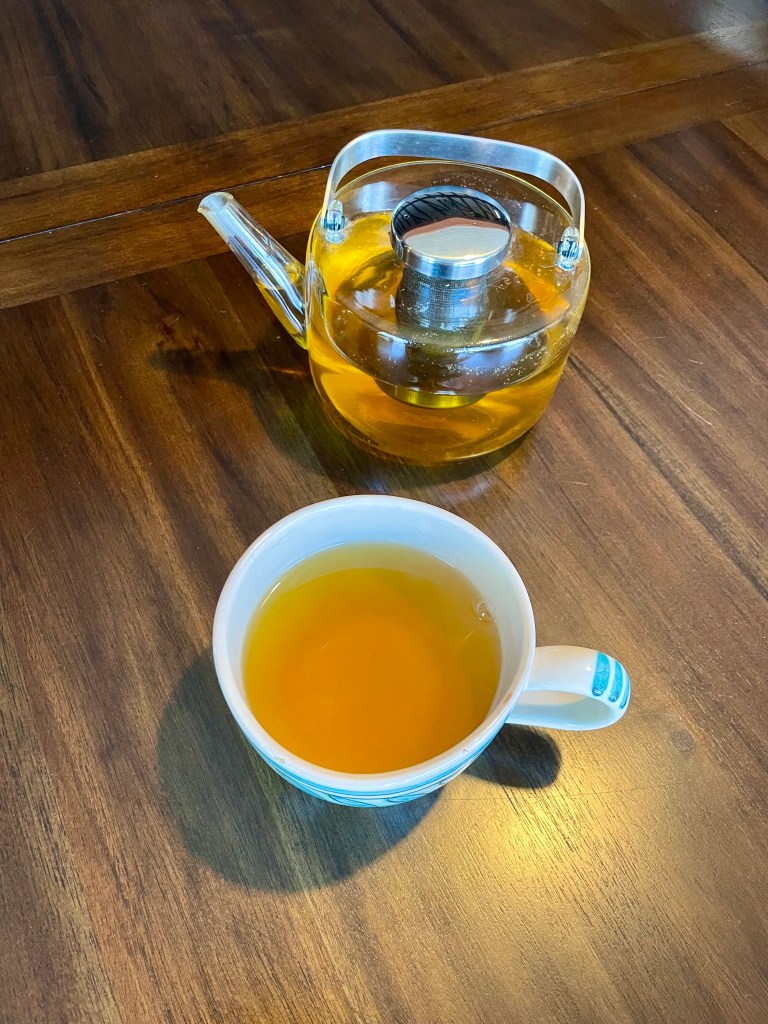
- Tea: Bring one cup of water to a boil and pour over 1 teaspoon – 1 tablespoon of dried chamomile flowers (use more flowers for a stronger infusion). Infuse for 5-15 minutes (longer infusions will bring the bitter properties of chamomile out) before straining and enjoying.
- Tincture: Standard tincture & glycerite dose of 3-5 ml per serving applies to chamomile. [1]
- Alcohol tinctures of chamomile are often prepared using dried flowers at a 1:4-5 ratio @ approx 40% ABV
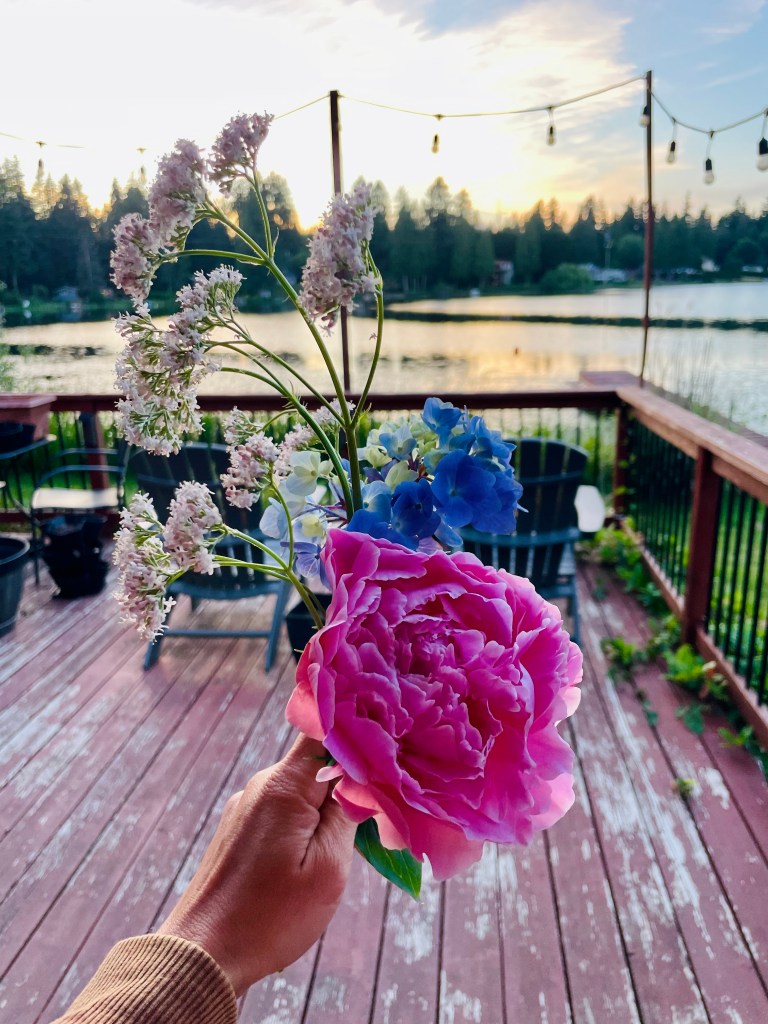
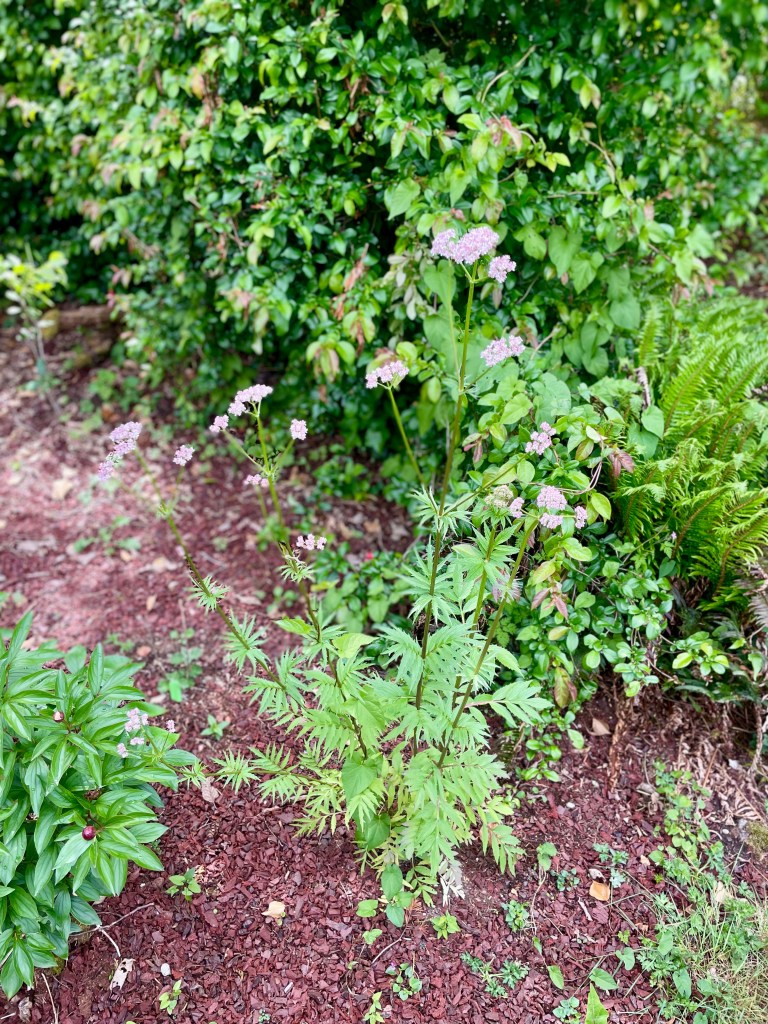
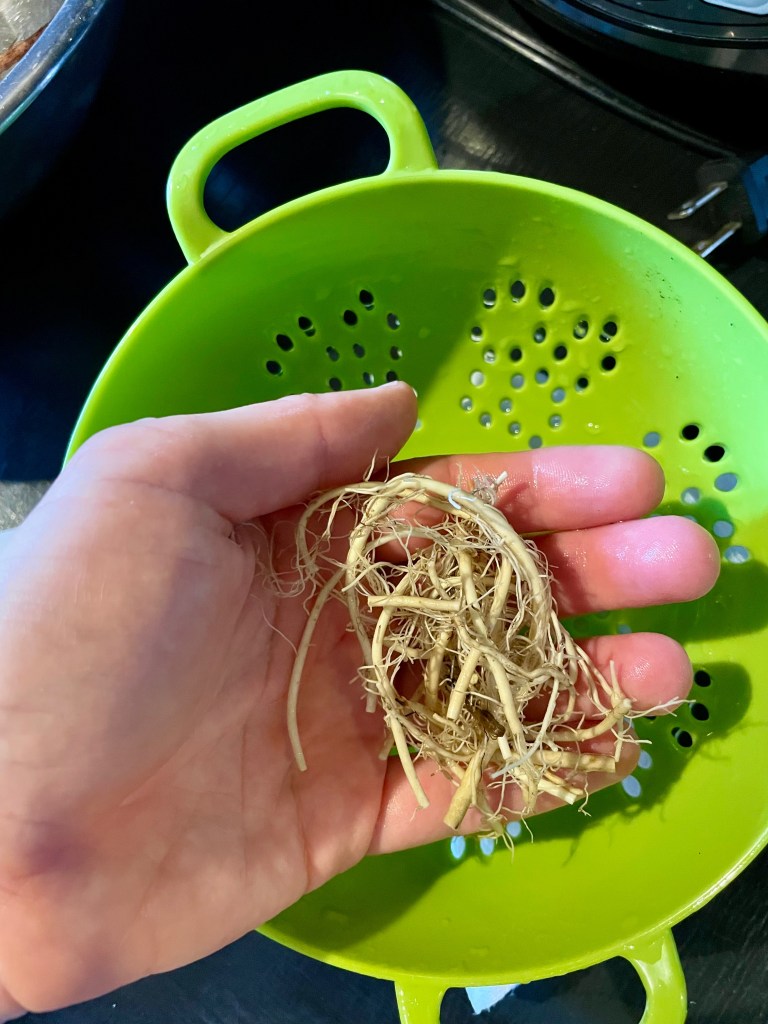
- Valerian (Valeriana officinalis)
- Valerian is a traditional remedy for insomnia and anxiety. It is a relaxing, sedative herb that can help relax tension in the body, making it a choice herb when there are spasms (muscular/menstrual) as well as pain.
- Interestingly, valerian has a stimulating effect on a small percentage of people. First time users are often encouraged to try a small amount of the herb in the afternoon to see how they respond. It is also a warming herb, so I tend to avoid use of valerian in people who are prone to heat patterns.
- Growing valerian has been a pleasure. It is a perennial plant that grows quite large with clusters of tiny pinkish-white flowers that have a pleasant smell. I used the cut flowers in a bouquet this summer. The roots (which are much more pungent than the flowers) are harvested, dried and used for medicinal preparations like tea, decoctions, and tinctures.
- I prefer using the tincture or glycerite due to its strong taste and odor. Blending it with other sedative herbs for a potent sleepy time tea is a great way to supplement valerian as well. My grandmother has used valerian tablets to reduce anxiety before flying for several years!
- Preparation & Dosage:
- Infusion :Valerian can be decocted (simmered in water for 15 minutes) for a potent medicinal blend or infused like tradition tea. Start small with 1 teaspoons dried herb per 8 oz of water and increase to 2-3 teaspoons as needed.
- Tincture: Start small with the tincture as well 1-2 ml or 10-15 drops per serving and working up to 3-5 ml/1 full droppersful as needed. [1]
- Alcohol tinctures of valerian are typically prepared using dried root at a ratio of 1:4 @ approx 40% ABV or fresh 1:2 @ approx 60-70% ABV. Glycerites are slighlty more gentle than alcohol extracts, but the same advice applies: start small!
- Skullcap (Scutellaria lateriflora)
- One of my favorite nervines, specifically a nervine trophorestorative: an herb that helps restore a depleted and/or damaged nervous system. It can also help relieve nerve-related pain and spasms.
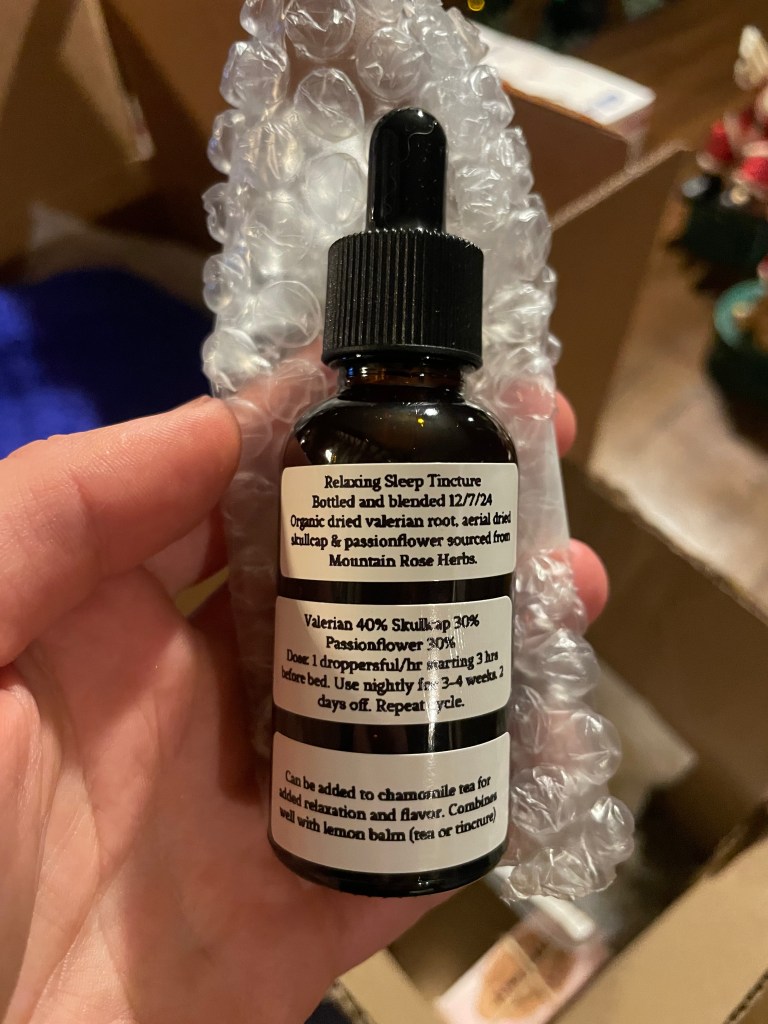
- I find Scutellaria lateriflora very sedative, and often combine it with passionflower and chamomile for the ultimate sleepy-time trio. Once, I accidentally drank some skullcap and passionflower tea in the afternoon and subsequently fell asleep – napping for over an hour!
- There are several varieties of skullcap, some grown for aesthetic more than medicinal purposes, so I recommend sourcing Scutellaria lateriflora from a trusted, organic herbal supplier using its Latin name.
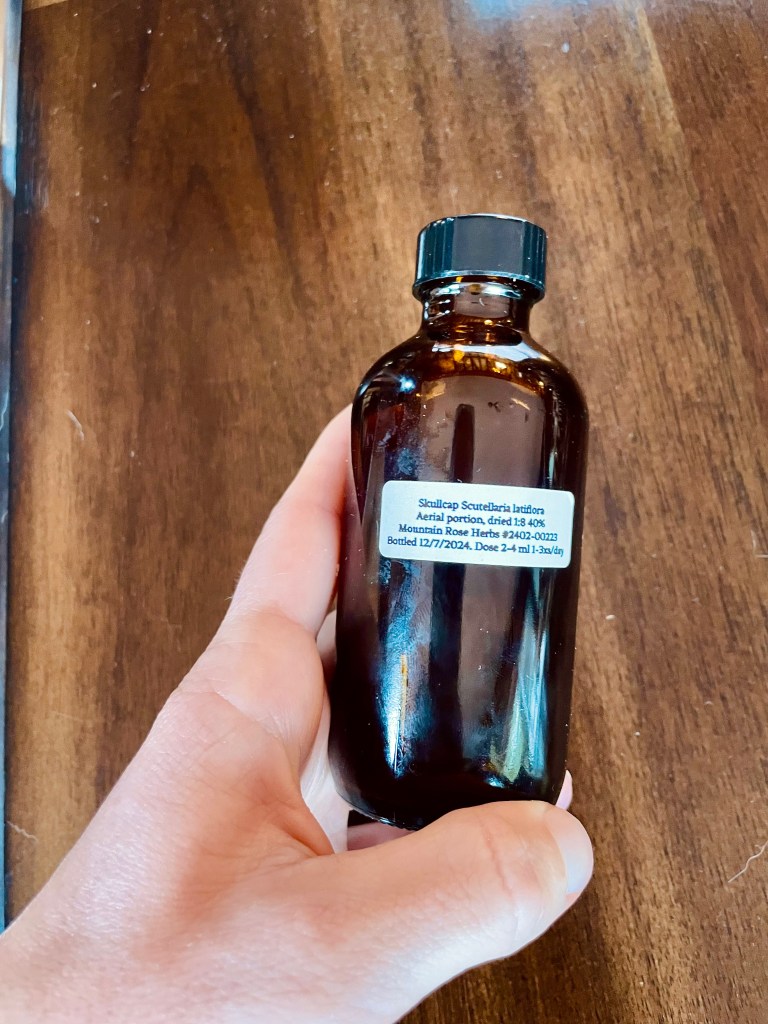
- Skullcap tincture is convenient and effective; my herbal teacher Sajah Popham has noted the tincture is best used for its trophorestorative effects. [2]
- I use the dried herb in tea form a little more commonly for soothing anxiety and calming the brain before bedtime. I’ve used the tincture in a blend that many have found helpful and palatable. The tea has an earthy, grassy taste I’ve come to love!
- Preparation & Dosage:
- Tea: 1-3 teaspoons of dried herb in 8 ounces of *hot* (not boiling) water (use more for stronger effects)
- Tincture/Glycerite: Standard 3-5 ml (approx 1 droppersful)[1]
- Alcohol tinctures of skullcap are commonly prepared using a 1:4 ratio of dried aerial portions @ approx 40% ABV
- Passionflower (Passiflora incarnata)
- Almost every night I make myself an infusion with passionflower. It is a fantastic ally for those, like myself, who struggle with circular thinking or racing thoughts/anxiety.
- Its a nervine sedative, so it will certainly make you sleepy after consuming!
- This herb is gentle enough for children to drink in tea form, and I’m currently working on a glycerite that could be of benefit to energetic children that struggle to wind down (and aren’t really tea drinkers!)
- Passionflower is cooling and calming, ideal for tightly-wound or wound-up folks. It has whirly flowers that reflect its affinity for whirling thoughts.
- It has a mild, earthy, grassy taste that combines well with chamomile, skullcap and/or licorice root.
- Preparation and dosage:
- Tea: Steep 1-2 teaspoons of dried herb in 8 ounces of hot water for 15 minutes before straining and enjoying.
- Tincture/Glycerite: Standard 3-5 ml (approx a droppersful) per serving. [1]
- Alchohol tinctures of passionflower are often prepared at a ratio of 1:4-5 dried, aerial portions @ approx 40% ABV
Other categories of herbs such as nutritive herbs (oat straw) and adaptogens (holy basil, ashwagandha) can help support sleep and/or round out a formula as well depending on the individual, their constitution, and the cause of disturbed sleep.
I hope these herbs can support you and your journey to better physical, emotional, and spiritual health. Wishing you a good night’s sleep!
What herbs or herbal topics are you interested in learning more about? Let me know in the comments, or shoot me a message, and I’ll do my best to center an upcoming blog & podcast on your area of interest.
Citations & Recommended Reading:
- Learning Herbs by Rosalee de la Foret Passionflower Chamomile Skullcap Valerian
- Herbal Remedies for the Irritable Mind by Sajah Popham
 Kawaoka Coaching
Leave a comment