Thymus vulgaris
Family: Lamiaceae
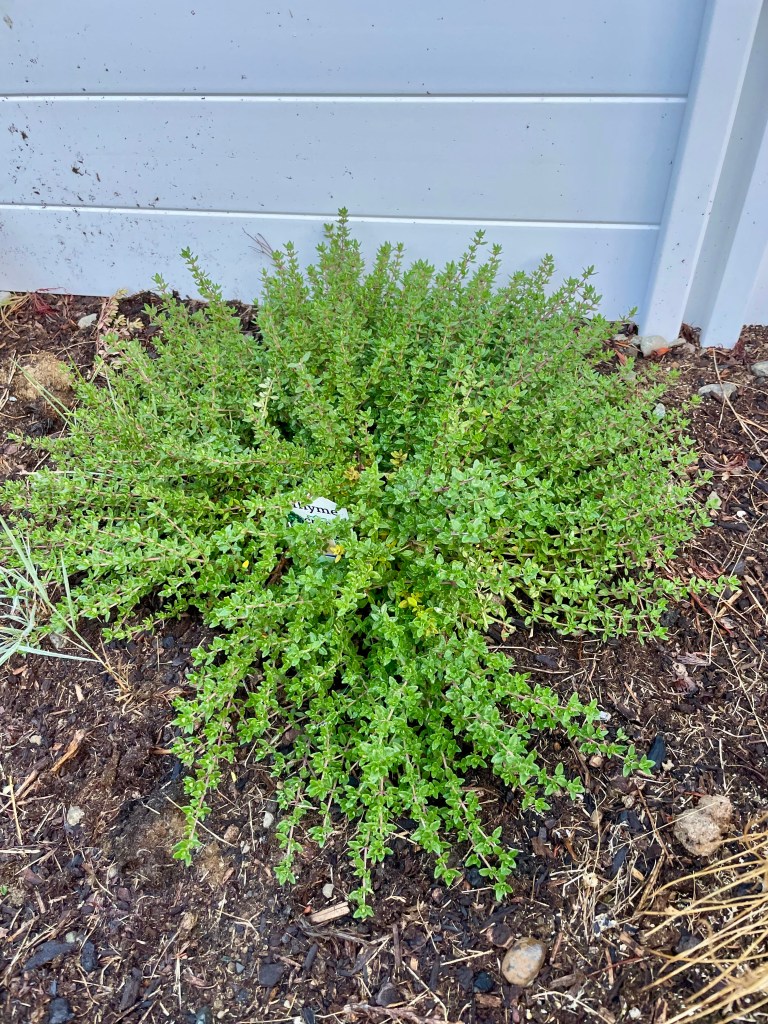
History & Growing: Mediterranean herb that loves sun and thrives in dry – even chalky or sandy – soil. It is a low-growing, perennial shrub (1-1.5 ft in height) with woody stems that grow upward in spikes. Its water needs are minimal, and thyme enjoys full sunlight. This plant thrives in Mediterranean-like conditions, such as loamy, sandy soil and can even grow over rocky terrain in some areas of the world. Thyme is fairly hardy in light frosts and through summer droughts. Small green aromatic leaves boast pinkish/purplish flowers that attract pollinators. Aerial parts are harvested in summer for use as a culinary herb. Medicinal uses center on cold, damp stagnation states, as thyme is warming and drying with strong antibacterial and antiseptic actions. Thyme is high in many vitamins, namely vitamins A & C, and minerals, such as calcium, potassium, iron, manganese, magnesium, and selenium [2]
Parts Used Medicinally: Aerial portions
Supplementation Forms: Infusion, vinegar, honey, oil, steam inhalation, syrup, tincture, essential oil, salve, poultice, soak, culinary herb
Taste: Pungent, Bitter
Energetics: Warming, drying
Actions:
- Antiseptic
- Antimicrobial
- Antibacterial
- Antioxidant
- Antispasmodic
- Antifungal
- Carminative
- Circulatory stimulant
- Diaphoretic (stimulant)
- Expectorant
- Emmenagogue
- Uplifting Tonic
- Vermifuge (destroys/releases worms from intestines)
Key constituents: volatile oils (namely thymol/carvacrol), flavonoids, phenolic acids [1]
Organs & Body Systems Herb Acts Upon:
- Thyme has an affinity for the RESPIRATORY system
- Thyme is an warming expectorant and is great for encouraging a productive cough. It may be used for conditions such as bronchitis, asthma, hay fever. Thyme can also help relieve coughing. Despite being a hot, drying herb, it’s an effective relief for dry cough conditions, like whooping cough. [3]
- Thyme supports the digestive system
- As a carminative herb, thyme helps dispel wind, gas, and bloating. It is also used to relieve IBS, diarrhea and stomach spasms. Thyme extract has been used for more digestive complications, like stomach ulcers.
- Thyme may also be used to support / encourage sluggish digestion or a “cold stomach”
- Due to its antibacterial/antimicrobial action, thyme has been used as a strong vermifuge to treat / expel worms and parasites. It’s less used today as a first line of against such things today, but is still considered a “gut health & cleansing herb” and may make an appearance in blends for this reason.
- Reproductive System
- Relieving period pain & cramps
- Vaginal douche/suppository
- 2014 Iranian study with thyme and ibuprofen showed both treatments effective in relieving period pain [1]
- Skin & Topical Uses
- Can be used as an antiseptic wash for bites & stings as well as lice.
- Effective for treating fungal infections like athletes foot, thrush, ringworm. Can be used as an antimicrobial gargle for oral complaints and herbal dental treatments.
- May be effective for rheumatic pain and painful, achy joints when applied topically (infused into oil or diluted essential oil) or used as a bath soak. Other general aches and pains may be soothed by thyme applications. [3]
- Tonic
- Like many mint-family herbs, thyme can be an uplifting tonic. A 1990 Scottish study suggests that “thyme and its volatile oils support bodily functions and may counter the effects of aging… Research shows thyme is strongly antioxidant and may help maintain higher levels of essential fatty acids within the brain.”[1]
Traditional Uses:
- Early texts from the Roman era through Renassiance era, such as Pliney the Elder, Dioscorides, and Nicolas Culpeper, praised thyme’s medicinal benefits.
- Namely used for coughs, congestion (bronchitis) and slow/cold digestion or “cold stagnant” conditions/pain. Generally believed to support the immune system
- Supports digestion (slow/stagnant/cold) and helps relieve stomach/digestive/intestinal spasms or gas
- Used as an antifungal for worms/ringworm/lice etc. treatment
- Painful conditions such as gout, sciatica, menstrual pain, and general aches and pains
- Used as part of the 4 Thieves Vinegar formula that kept the notorious villians alive during the Black Plague (in addition to sage, lavender and rosemary)
- Burned as incense
- Roman soldiers were said to bathe in thyme before battle to instill bravery and courage
When to Reach for Herb & In What Form:
- For respiratory support: medicinal tea or Infused honey!
- As a regular food herb (soup & roasted vegetables) to support immune system.
- Consider diffusing thyme essential oil in a diffuser when you want to help purify the air, improve your clarity, and instill a sense of bravery.
Dosage & Preparation [3]:
- 1-2 teaspoons dried thyme per 8 oz hot water for an infusion (2-6grams/dried plant day)
- Tincture: 1:5 dried @ 35% ABV 2-4 ml 1-3 times per day
- Essential oil: 1% or less (1 drop essential oil in 100 drops carrier oil)
Contraindications:
- Due to its emmenagogue properties, pregnant and nursing mothers should avoid higher/medicinal doses of thyme.
- Be aware of the chemotype and the appropriate dilution to safely use and benefit thyme essential oil.
Elemental, Planetary & Dosha Discussion:
- According to Nicolas Culpepper, thyme “belongs” to Venus
- While Culpepper assigned Venus to thyme (emmenagogue, purplish flowers) an argument could be made for Mars ruling thyme due to its signatures of heat, dryness, and protection against infection while uplifting, stimulating and fighting infections. Roman soldiers bathing in thyme to instill courage certainly speaks to its association with the Warrior (Mars/Fire)
- Like many mint-family herbs (particularly bitter, pungent, astringent mints, per Sajah Popham), thyme shows signatures of the Air element (uplifting, grows upward in spikes, pink/purple flowers, carminitive + expectorant actions on respiratory system/coughs, instills clarity of mind). It’s warm, dry nature (circulatory + stimulant diaphoretic, used in stagnation states) could also link it with the Fire element.
- Acute respiratory symptoms call for thyme despite potential conflicting constitutional patterns (hot/dry). Generally it would be a great long-term herb (cooking, low dose tea blends/diffuser) for the kapha dosha (Earth element, cool/stagnant). Vata (Air element, cold/dry) may be aggravated by the drying aspects of this herb if supplemented long term, but simple formulation eliminates potential imbalance. Vata dosha’s may benefit from the warming, digestive, immune & respiratory support of thyme in acute and chronic symptoms. Pitta doshas (Fire element, hot/oily) may be aggravated by the hot nature of thyme, so careful blending is needed. Thyme as a medicinal supplement may be apt namely during acute symptoms for this dosha.
Citations & Recommended Reading:
- Encyclopedia of Herbal Medicine, Andrew Chevallier
- A Focused Insight into Thyme: Biological, Chemical, and Therapeutic Properties of an Indigenous Mediterranean Herb Hammoudi Halat D, Krayem M, Khaled S, Younes S. A Focused Insight into Thyme: Biological, Chemical, and Therapeutic Properties of an Indigenous Mediterranean Herb. Nutrients. 2022 May 18;14(10):2104. doi: 10.3390/nu14102104. PMID: 35631245; PMCID: PMC9147557.
- Thyme Uses and Plant Monograph, Learning Herbs, Rosalee de la Foret
Recipe of the Week:
- Thyme, Sage and Lemon Tea: an uplifting blend that supports respiratory health & clears mucus
Ingredients:
- 1-2 teaspoons each: dried or fresh organic thyme & sage leaves
- 2 slices of organic lemon
- 6-8 ounces boiling water
Directions: Add dried or fresh herbs to a tea bag or ball, or simply add to your teapot of hot water once it boils. Allow herbs to infuse for 5-15 minutes (depending on strength preference) Strain herbs from water, composting the used herbs, and squeeze lemon slices into infused water, adding them to the cup afterwards if desired. Optional: sweeten with honey. Enjoy!
- Thyme, Sage and Lemon Syrup: Great for sore throats, coughs, or as a culinary drizzle. Inspired by Rosemary Gladstar’s recipe. Adapt and use what you have!
Ingredients
- 1 cup water
- 2-3 Tbsp organic dried or fresh sage
- 2-3 Tbsp organic dried or fresh thyme
- 1 Tbsp organic lemon zest
- 1 Tbsp fresh peeled, grated organic ginger (2 tsp dried cut & sifted ginger would also be worth a try if you don’t have fresh ginger!)
- Juice from 1 lemon (approx 1-2 Tbsp)
- 1 cup honey
Directions:
- In a saucepan, bring water, lemon zest and herbs to a gentle simmer.
- Cover and simmer on low for 15-20 minutes.
- Strain herbs from liquid and return the liquid to the pot (I recommend washing the pot to keep any plant material out of your finished product.
- Add honey and heat on medium-low het, stirring constanty, just until disolved and thorougly mixed. I get mine to bubble just a little!
- Remove from heat, stir in lemon juice, and let cool.
- Store in a clean glass jar in the fridge for up to 2 weeks.
Use & Dosage:
- Adults: 1 Tbsp as needed for sore throat or cough
- Kids (over 1 year old): 1 tsp
- Can also be added to tea or flat/sparkling water
Note:
- Avoid giving honey-based syrups to children under 1 year.
- Sage & thyme in large amounts are not recommended during pregnancy or breastfeeding.
 Kawaoka Coaching
Leave a comment