Melissa officinalis, Lamiaceae family
History & Growing: With origins in Europe, Asia and Northern Africa, lemon balm is now grown all over the globe. It can be grown from seed or cuttings and, once established, grows vigorously! I am absolutely smitten with lemon balm – who can resist its glowing charisma? I have several photos of my delightful little plant on my camera roll. Luscious, aromatic leaves with serrated edges grow upwards. If allowed to go unchecked, lemon balm can reach up to 4-5 feet tall! The pungent, lemony leaves are harvested throughout summer until the plant flowers. When it does go to flower, lemon balm produced small white flowers. It can often get woody after flowers emerge, so multiple “hair cut” harvests are recommended to keep the plant producing before going to flower. It is easy to divide the plant once established. This plant holds a special place in my heart: it is the plant that “stood up in the forest and called my name”. Falling in love with this plant plunged me into the world of herbal medicine and the magic of plants!
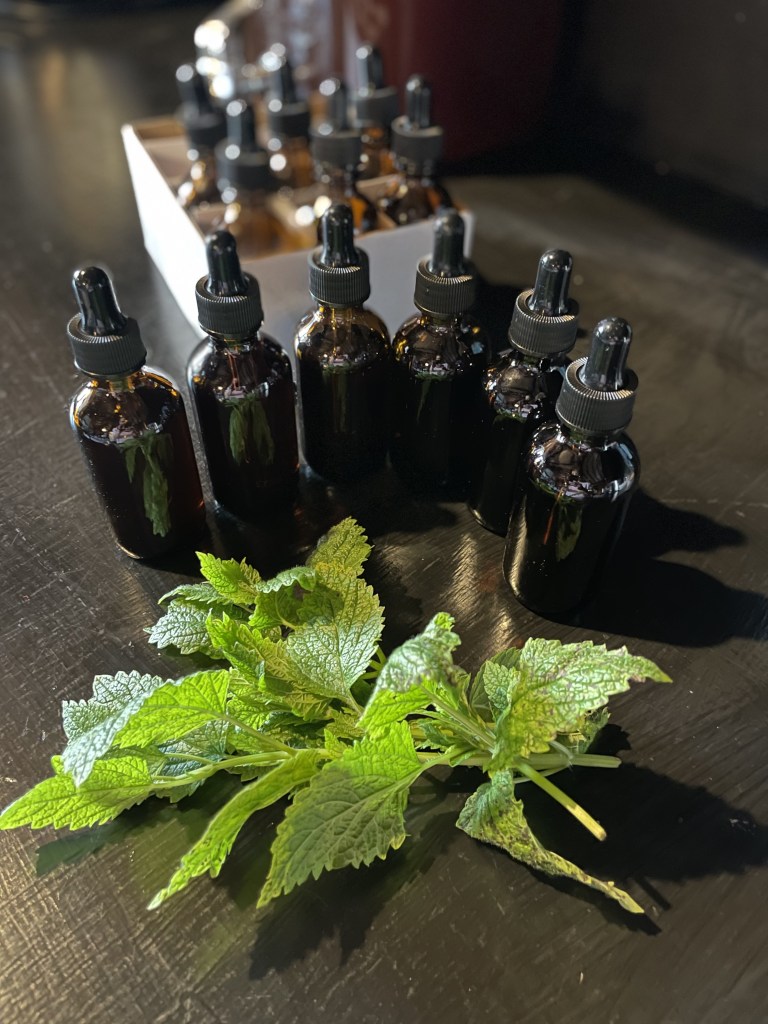
Parts Used Medicinally: Leaves
Ways to Supplement Lemon Balm: Tea, tincture, juice, essential oil, honey, vinegar, oxymel, ointment/salve/lotion/infused oil, culinary (pesto, finishing salt, compound butter, condiment)
Taste: Sour
Energetics: Cooling, drying, relaxing
Actions:
- Antiviral
- Antibacterial
- Antianxiety
- Antidepressant
- Antioxidant
- Antispasmodic
- Cardiotonic/Cardiac nervine
- Carminative
- Diaphoretic
- Nervine relaxant
Body Systems & Organs Lemon Balm Acts Upon:
- Heart & Cardiovascular System
- Endocrine system
- Nervous System
- Digestive System
- Skin
Traditional Uses:
- “Balm is sovereign for the brain, strengthening the memory and powerfully chasing away melancholy.” – John Evelyn 1620-1706
- Lemon balm has been an uplifting, longevity tonic for hundreds of years.
- Greeks firmly believed bees and lemon balm had a close relationship, holding the belief bees would not abandon their hive if lemon balm grew nearby. Bees that had traveled away from the hive could navigate home by using the herb as a sort of marker. They would rub lemon balm stalks on the hive to make bees feel welcome. The Greek word for bee is, in fact, melissa. Lemon balm does attract a generous amount of pollinators, bees included! This makes lemon balm a great companion plant for garden or herb bed.
- Popular strewing herb and culinary herb
- Dioscorides used lemon balm for dog and scorpion bites as well as to sooth patients
- Ancient Arab uses of lemon balm included treating heart disorders
- Memory tonic
- Wound healing
- Palpations
- Menstrual complications
- Digestive remedy
- Toothache remedy
- A key ingredient in “Queen of Hungary” water
Current Uses:
- Dementia treatment
- Lemon balm was found to be “valuable” in managing mild to moderate Alzheimer’s in an early Iranian 2000’s study. Supplementation of the herb also had seemed to have positive impacts on symptoms like agitation in the patients.
- “Lemon balm has been shown to have anticholinesterase activity, maintaining levels of cholinergic neurons that have become depleted in Alzheimer’s.” (Chevallier).
- Lemon balm was found to be “valuable” in managing mild to moderate Alzheimer’s in an early Iranian 2000’s study. Supplementation of the herb also had seemed to have positive impacts on symptoms like agitation in the patients.
- Anxiety, Depression & SAD
- Clinical trials support its use to relieve anxiety and depression symptoms.
- Lemon balm can ease nervousness, tension headaches, insomnia, restlessness, irritability, palpations or a “nervous racing heart”, as well as panic attacks
- Lemon balm is especially indicated when nervousness causes digestive upset or impacts appetite. These symptoms could include indigestion, acidity, and nausea. It is gentle enough for children and breastfeeding mothers- it can help soothe colic in babies.
- Digestive Support
- Relieves gas and bloating, namely when stress is the root cause
- Cold Sores & Herpes
- Lemon balm, thanks to its antiviral polyphenols, is effective in treating cold sores quickly while reducing chances of future infection.
- The herb can cut treatment time in half! Most studies indicate using concentrated topical applications for 5 days alleviates the issue
- Other topical uses: Cuts, stings, soothing itchy & inflamed skin conditions
- Heart Health
- Lemon balm is a RELAXANT, and supports the cardiovascular system by relaxing blood vessels
- Colds, Flus and Fevers
- By relaxing pores, lemon balm demonstrates its diaphoretic actions by opening the body up and encourages sweating during a fever. The soothing properties may help with sleep during high fevers as well.
- Endocrine Support
- Lemon balm helps treat mild hyperthyroidism. Understanding hyperthyroidism is helpful to understanding the patterns lemon balm is so indicated for. Hyperthyroidism means an overactive thyroid, which is a sped up metabolism. This can lead to numerous problems in the body, like rapid cell breakdown, and can manifest as high heart rate, sweating, weight loss, fatigue, nervousness/anxiousness, heat intolerance, thinning brittle hair. Lemon balm supplementation, along with its herbal thyroid sidekicks bugleweed and motherwort, inhibit an overactive thyroid by binding to TSH receptors, inhibiting thyroid production, and preventing thyroid hormone conversion from T4 to T3. In Graves disease, lemon balm has shown its ability to prevent autoantibodies from binding to TSH receptors. In addition to their actions on the thyroid, Lemon balm and motherwort are both cooling herbs with cardiotonic/cardio relaxant properties, so it’s easy to understand why combining them to help cool, relax, and soothe symptoms associated with an overactive thyroid are especially beneficial. (Groves, Blankespoor, Popham)
Lemon Balm’s Superpower: Lemon balms ability to instill joy is astounding. Just looking at the happy little herb is enough to soften your heart, but breathing in its aromatic scent is like a cleansing, soothing spirit flowing into your entire being. It imparts a sense of childlike glee; seemingly easing our burden so that we can open up, grow and expand. I have often handed over a remedy of lemon balm to my friends and family simply saying “Just try this – Everyone needs lemon balm!” with no further explanation
When to Reach for Lemon Balm:
- Nervous digestion!!!
- “Sweaty palms” nervousness, as lemon balm helps relax a nervous/fluttering heart
- A good cup of fresh lemon balm tea is most potent for nervous affliction, though I use the tincture from fresh lemon balm leaves in its stead during the winter as dried lemon balm loses its potency notably fast!
- Topically, I’ve used it infused into an oil for skin and hair treatments (lovely!) and in the culinary aspect I’ve used it in a frosting for cupcakes. While the fresh tea/tincture is my go-to for digestive and nervous support, it’s hard not to reach for it in other contexts-its just SO GOOD!
Dosage:
- 2 teaspoons-1 tablespoon dried leaves 3xs/day
- 2-4 ml of tincture 3xs/day
Contraindications:
Lemon balm may lower thyroid levels, so use caution in hypothyroidism or with thyroid hormone replacement.
Planetary, Elemental, and Dosha Discussion:
- Air plant (carminative nervine growing in spikes upward) under Jupiter rulership (expansive/joyous; rosmarinic acid constituent directly supports liver and liver is ruled by Jupiter!)
- The cooling energetics of lemon balm help relax the excess heat/excitation (irritability/inflammation) of the pitta dosha, and its relaxing, antispasmodic qualities help relax the wind/tension excess of the vata dosha. Lemon balm may aggravate the kapha dosha, as its cooling and relaxing in nature…something kapha tends to be in excess!
Citations:
- The Encyclopedia of Herbal Medicine, Andrew Chevallier
- The Healing Garden, Juliet Blankespoor
- Evolutionary Herbalism, Sajah Popham
- “Lemon Balm: The Happiest Plant on Earth” by Sajah Popham
Recipe of the Week: Lemon Lover Tisane
1-2 teaspoons each of dried organic lemon balm, lemongrass, and lemon verbena. Combine in a tea infuser or mug and cover with hot water. Steep for 15-30 minutes, strain and enjoy!
 Kawaoka Coaching
Leave a comment