Urtica dioica
Urticaceae family
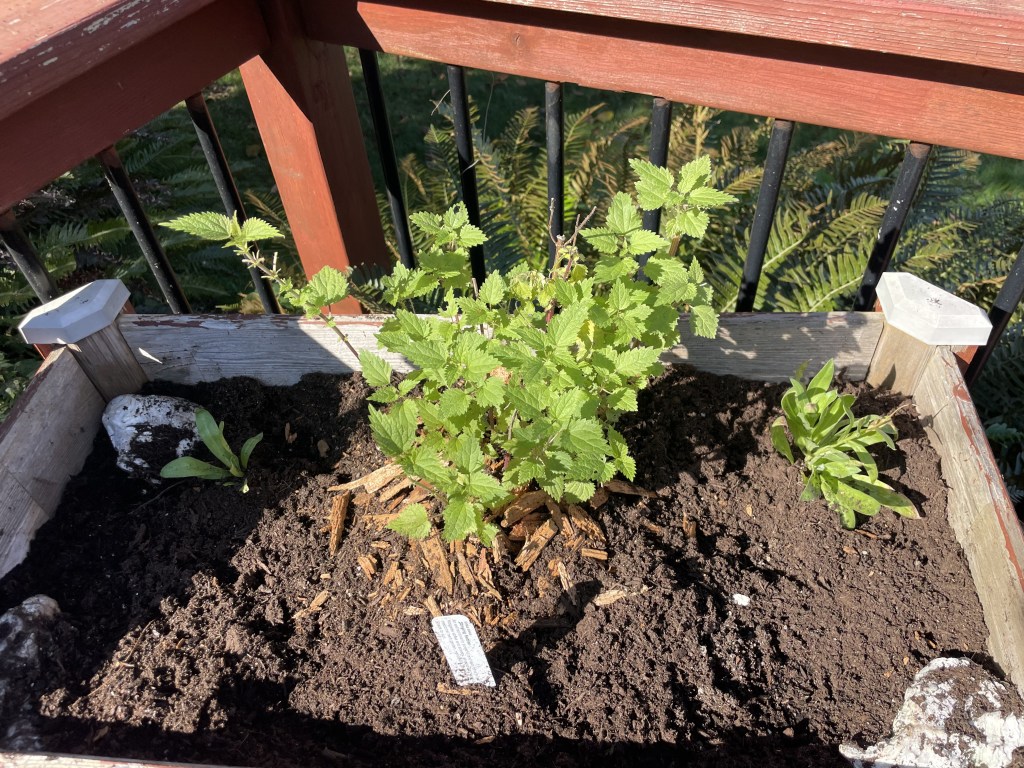
History & Growing:
- The stinging nettle plant is native to Eurasia, northern Africa, and North America, but can be grown anywhere that is temperate. It was and continues to be used widely as a food herb. There is a fascinating publication from around the 6th Century by a well-known herbal author Dioscorides featuring a drawing of the plant along with a lists of the plant uses during that time. Nettles seem to enjoy temperate, moist conditions and are easy to grow. Once established, they thrive and are known to spread vigorously. Use gloves when harvesting – she really does sting!
Portions of Nettle Used:
- The aerial portions (namely leaves), seeds, and roots are used medicinally.
Forms of Nettle:
- Tea made from the leaves is popular, nutritive and tasty
- Decoctions of the root are another way to consume nettle
- Seeds are consumed fresh, in a tincture, or in a powder
- Tinctures of the leaves, root and seed are popular in either alcohol or vinegar (vinegar maceration can extract the minerals)
- The leaf is also popular in capsule form for seasonal allergies
- Topical ointments of the leaf are used for a range of skin conditions
- Widely used as a food herb in soups, stir-fries, egg dishes, and more
Taste:
- Earthy & minerally
Energetics:
- Cooling & drying
Actions:
- Alterative (helps restore through eliminating waste and stimulating metabolism, blood cleanser)
- Antirheumatic (musculoskeletal pain relief)
- Anti-inflammatory
- Antihistamine
- Galactagogue (encourages lactation)
- Astringent (tightens mucous membranes and skin)
- Diuretic
- Nutritive tonic
- Vulnerary (wound healing)
- Seeds: adaptogen (said to be quite energizing!)
- Root: kidney trophorestorative
Body Systems:
- Kidneys and urinary system
- Reproductive system
- Musculoskeletal system
- Respiratory system
- Skin, blood & mucosa
Traditional Uses:
- Topical treatment for wounds and nosebleeds
- Menstruation stimulant
- Historical and native uses included using nettles in clothing, rope and fishing nets as well as a form of dye
- Nettles were used as a textile as early as the Bronze Age. If you’d like to see a burial shroud discovered in Denmark that is approximately 2,800 years old, click the link in the show notes!
- It was used reportedly used in 16th and 17th century Scotland as a textile, as well as during both world wars as an alternative to cotton (similar to flax) for soldier’s uniforms and camouflage.
- Generally used widely as a food herb and vegetable in addition to ceremonial uses.
- Some cultures used nettle as a nutritive animal feed, traditionally fed to pigs and poultry. I found it is still used as and endoparasite in poultry in British Columbia!
- There are records of Julius Caesar’s troops using nettle lashes to stay alert and awake.
Current Uses:
- Primarily known as a tonic herb for its cleansing and detoxifying properties with affinity for the kidneys and liver. It is often included in formulas for those suffering from fatigue, general malaise or malnourishment, hypothyroid, diabetes, and insulin resistance, diminished metabolism, those with lactation woes, UTI’s, asthma, arthritis, allergies,
- With its high mineral content, nettles are often indicated for those with low iron or anemia, which is often associated with heavy menstruation and/or in athletes
- Nettle is high in calcium, Vitamin C and Vitamin A, iron, protein, carbohydrates, fatty acids, magnesium, potassium, chlorophyll and silica.
- Nettle can support the alkalinity balance of the body.
- Because of its astringent, wound healing properties, nettles have and still are used to slow bleeding from wounds, slow nosebleeds and to aid those with heavy menstruation.
- Because of its antihistamine properties, nettles make a tasty companion to those who suffer from hay fever or seasonal allergies.
- Nettle root has been widely used and researched in treating enlarged prostate and benign prostatic hyperplasia.
- Nettle seed is thought to have hepatoprotective properties and kidney supportive properties. It may be used in treating those with severe diseases under the support of a qualified medical professional.
- Because of its alterative and cleansing properties, nettle can help topical conditions such as acne and eczema when taken in a tea and used topically in an ointment.
- Due to its diuretic properties, nettle may be used in the treatment of gout.
- Nettle lashes/flogging “urtification”: Fresh stinging nettles are loaded with tiny barbs. Upon lashing the body with fresh nettle stalks, hives appear on the skin. The body then releases anti-inflammatory compounds and, as a result, chronic inflammation like joint pain may temporarily ease.
- Nettle is a dynamic accumulator, meaning it has the ability to mine nutrients from the soil into its leaves. The stored nutrients are released back into the soil when the plant dies or loses its leaves, enriching the soil/bed for neighboring plants. Gardeners may use the leaves as compost or use the tea as fertilizer. (The Healing Garden, Juliet Blankespoor)
Research & Studies:
- Nettle is proven to help relieve the symptoms of benign prostatic hyperplasia.
- Studies support the use of nettle in allergy relief
- Using a “nettle slurry” can also be an effective, natural botanical pesticide
When to reach for nettle:
- When you’re feeling depleted and/ or prickly!
- Add the 1 Tablespoon dried or fresh a handful of the fresh herb as a tea, and/or make a nourishing soup by tossing in handfuls of the fresh or spoonfuls of the dried herb. I use it in my Moon Cycle Support tea, alongside red raspberry leaf and chamomile, to nourish the body during times of depletion.
- If you suffer from seasonal allergies, the capsules may be the most convenient, though I tend to prefer teas and tinctures to store bought capsules in terms of freshness and potency.
Contraindications:
- Nettles are a drying herb, and can aggravate those with dry constitutions when consumed regularly in higher doses unless combined with a moistening herb. Nettles may alter blood sugar levels, so diabetics should monitor glucose levels upon consumption. (The Healing Garden, Blankenspoor)
- Many herbalists recommend harvesting leaves in the spring and throughout the growing season up until the plant has flowered. These herbalists argue against harvesting leaves after the plant has flowered, stating the older leaves may irritate the kidneys in some cases.
Elemental, Planetary, and Dosha Associations:
- Stinging Nettles is a fascinating plant in terms of planets and element associations. Her sharp stingers and serrated leaves are a Fire element & Mars signature, along with her alterative, blood cleansing properties. Nettle also displays Air/Libra traits in the seed action and organ affinities, demonstrating the Libra/Air polarity. The root, harvested during Scorpio season, displays Scorpio signatures in the actions on the male reproductive system. This is written and described beautifully in detail by Sajah Popham (whom I refer to as my herbal teacher) in his book Evolutionary Herbalism. I strongly recommend reading this book if you love plants and planets! Nettle is clearly a wonderful demonstration of varying rulership, remedies, planets, elements and seasons.
- Nettle is wonderful for cooling excess heat and dampness, making it a remedy appropriate in the short or long term for all 3 doshas. Perhaps nettles would be the least indicated for the vata dosha, who tends towards cold and dryness. Because nettle is drying, regular consumption can aggravate dry constitutions and doshas, so formulation with an appropriate moistening plant is wise.
Citations:
- Body Into Balance, Maria Noel Groves
- Wild Remedies, Rosalee de la Floret & Emily Han
- The Healing Garden, Juliet Blankespoor
- Evolutionary Herbalism, Sajah Popham
- Encyclopedia of Herbal Medicine, Andrew Chevallier
 Kawaoka Coaching
Leave a comment