“The expert in anything was once a beginner.” – Helen Hayes
Rookie. Beginner. Newbie. First-Timer. Intimidated. Nervous. Afraid. Determined. Brave. Reflections of 2024 thus far…
Prelude: I’ve competed in triathlon, running, cycling, and swim events for the last 7 years or so, with triathlon being my main focus. With that comes expectation: the more you train and compete, the better you get. Eventually, it became my expectation that if I didn’t win, I had failed. So, after an amazing 2022 season and an undefeated 2023 season, I decided to take make the jump to professional triathlon along with run events where I could meet the elite standard. It has been both stressful and successful; I’ve improved a ton and landed in the money despite some uncontrollable variables. As expected, it’s been VERY different. I went from going for the win to basically the lowest man on the totem pole, which I wanted from a growth perspective. Pro racing feels much more subjective, more about the storyline. It’s more free-flowing and dynamic; less about holding “X” power or pace, and more about making decisions to go with other athletes while amateur racing felt more objective, more like a solo time trial you win or lose. While there’s more pressure and more on the line (seemingly the harder you race the more things seem to go wrong) I have enjoyed the new lens of the sport and adopting a beginners mindset. Ultimately, it’s same sport I’ve been doing for years, but a completely new experience. I needed a new stimulus if I wanted to maintain my commitment and passion for endurance sports.
Which leads me to how I found myself on an island at the start line of a monster new adventure on a rainy Sunday morning in September.
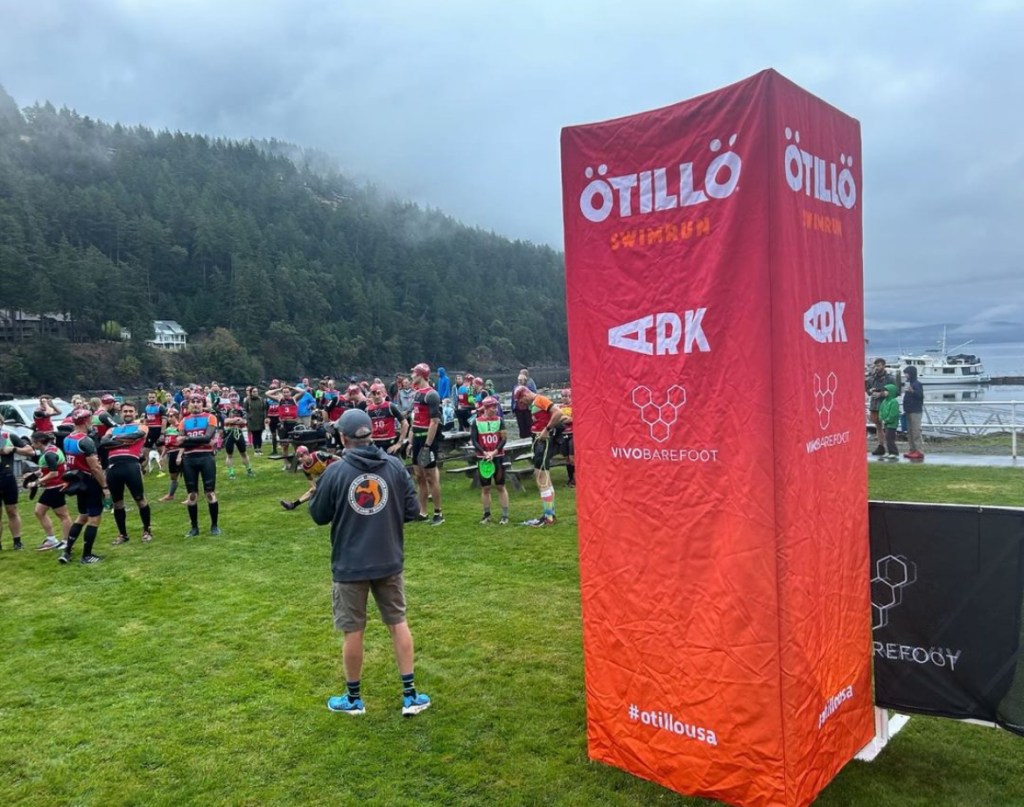
Photo from Otillo Instagram Story
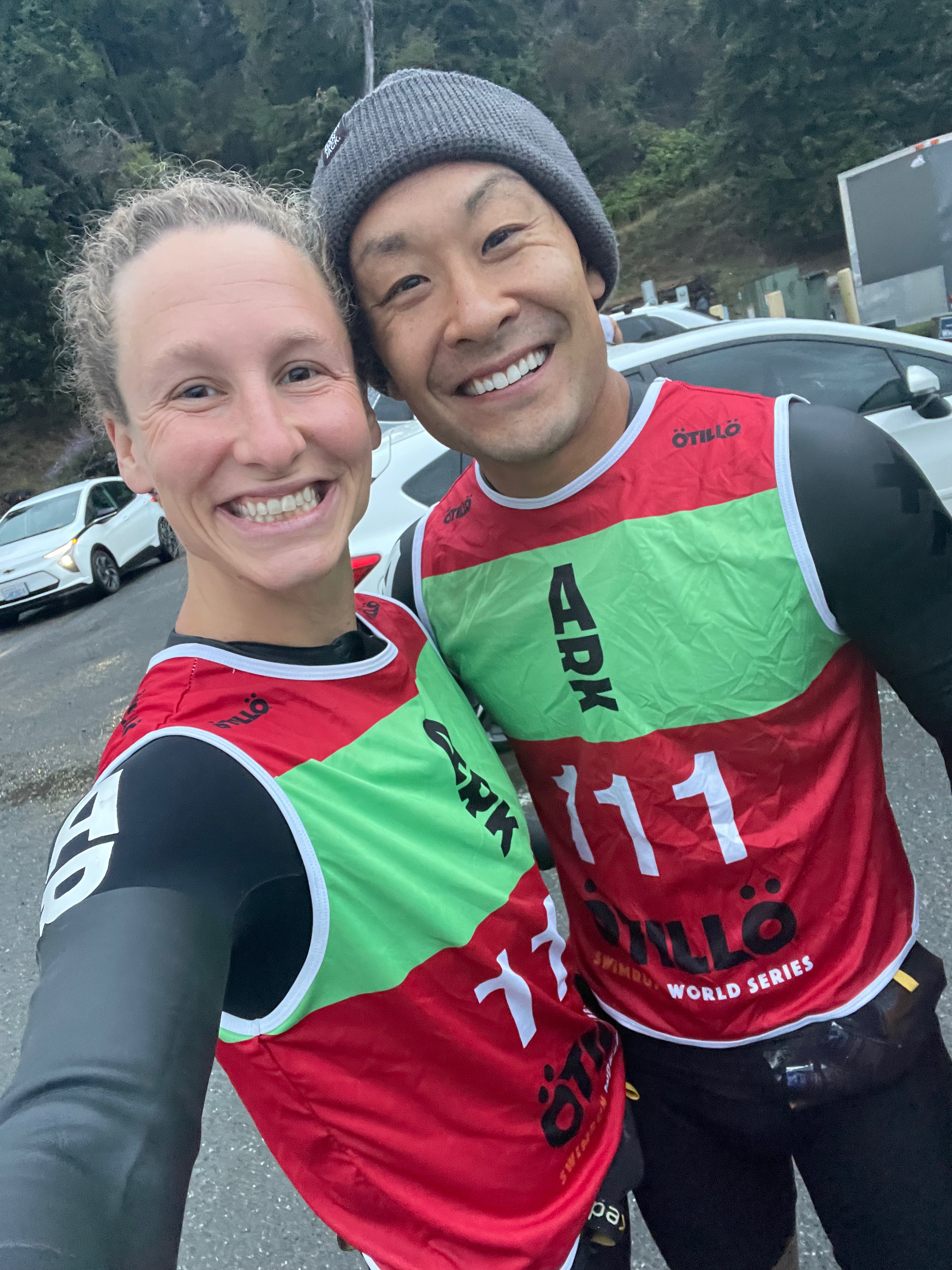
Our First SwimRun Adventure: Elliot (my husband and coach) signed us up for our first swimrun as a team. He had heard about the sport and wanted to try something new and hard, and we liked the idea of traveling without our bikes! We wrapped up our triathlon season 3 weeks prior at Ironman Penticton, where the swim was unexpectedly cancelled due to 13.9*C (57*F) water temps. This left a sour taste in our mouths. I tend to downplay my swim ability (I didn’t grow up swimming) but truthfully we are both strong adult-onset swimmers. We swim train a lot, live on a lake and are well-prepared for cold. As athletes, we sign up for hard events to be challenged. We would rather try and fail when conditions are tough versus not getting the chance to try at all, and that’s another reason the Otillo swimrun got our attention: notoriously grueling events in stunning, secluded places with tough terrain and climate!
As defined by the Otillo race organization: “Originating in Sweden, ÖTILLÖ translates to “island to island” in Swedish, reflecting the essence of the sport where participants traverse across a series of islands by swimming and running, often in challenging and picturesque environments.” Fun fact: there is an optional cliff jump on every swimrun course! VERY COOL! We signed up for Orcas Island: World Series distance, 21 total miles of trail running, featuring 4,000 ft of elevation gain, and 3.3 miles of open water swimming, mainly in lakes with one short, cold ocean swim early on. Air and water temps ranged from the mid 50’s to low 60’s, making it a cooler race venue.
To clarify: you go back and forth from running to swimming multiple times, which means you swim in your run gear and run in your swim gear. You need to carry everything you need for the event – there is no transition zone. There are a variety of distances, but we chose the longest one to start because we are stupid 😉 Athletes can compete solo or on a team (male, combined male/female, or female). If you compete on a team, you can choose to race with or without a tether, but you must start, race, and finish as a unit. Elliot and I train together often so we’re keen to each other’s abilities, moods and pacing needs, which translated to a good dynamic during our inaugural swimrun.
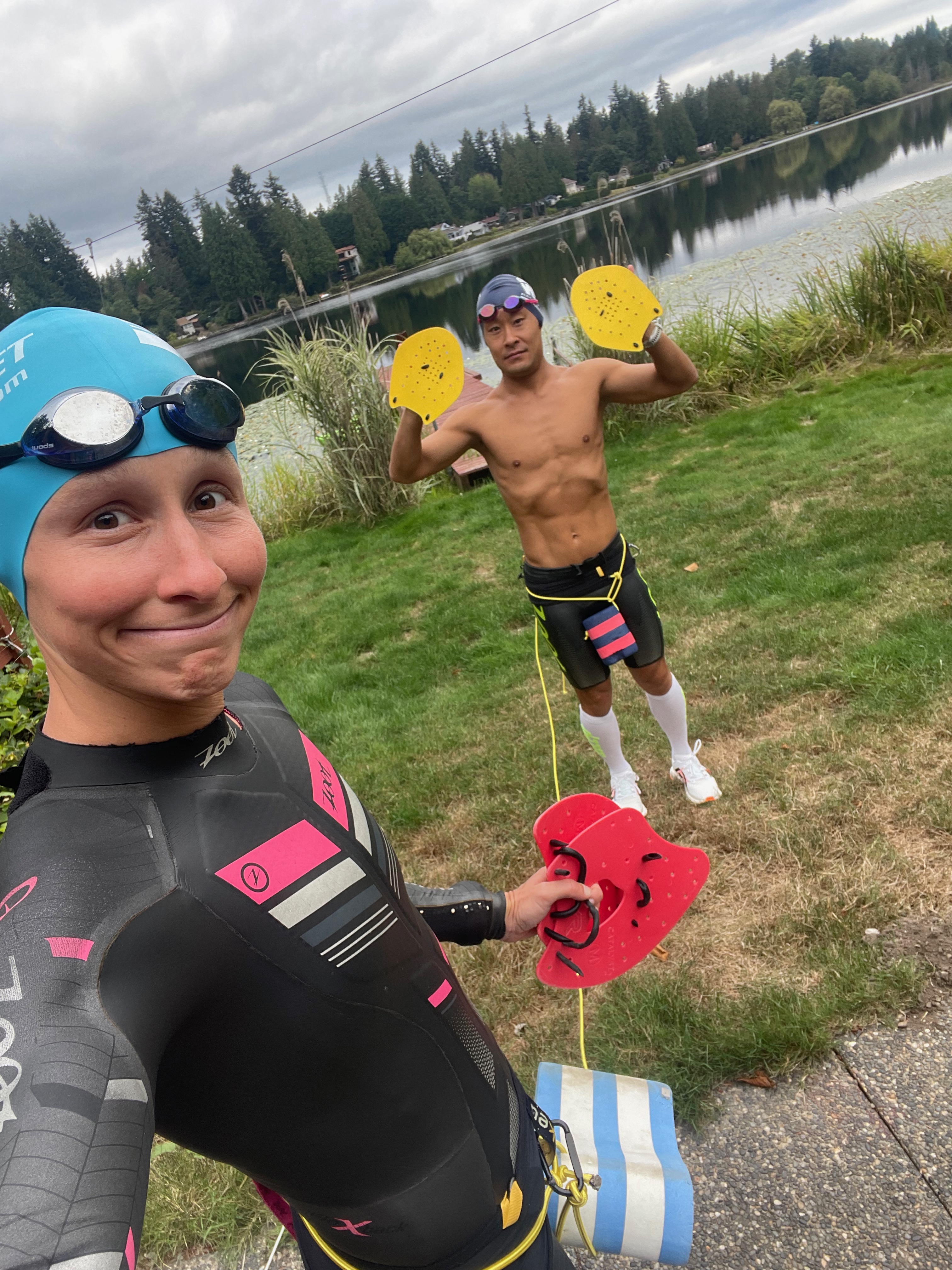
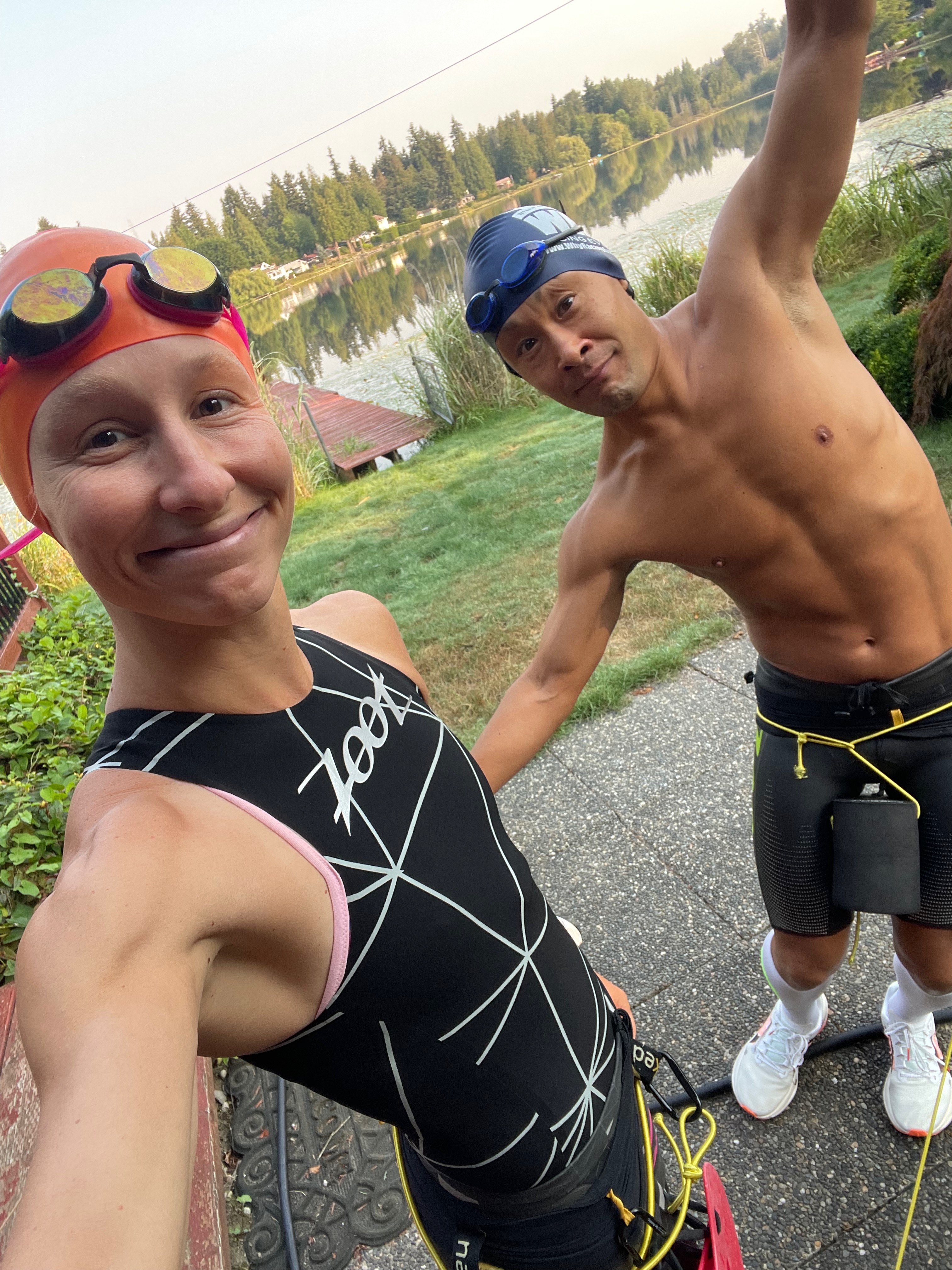
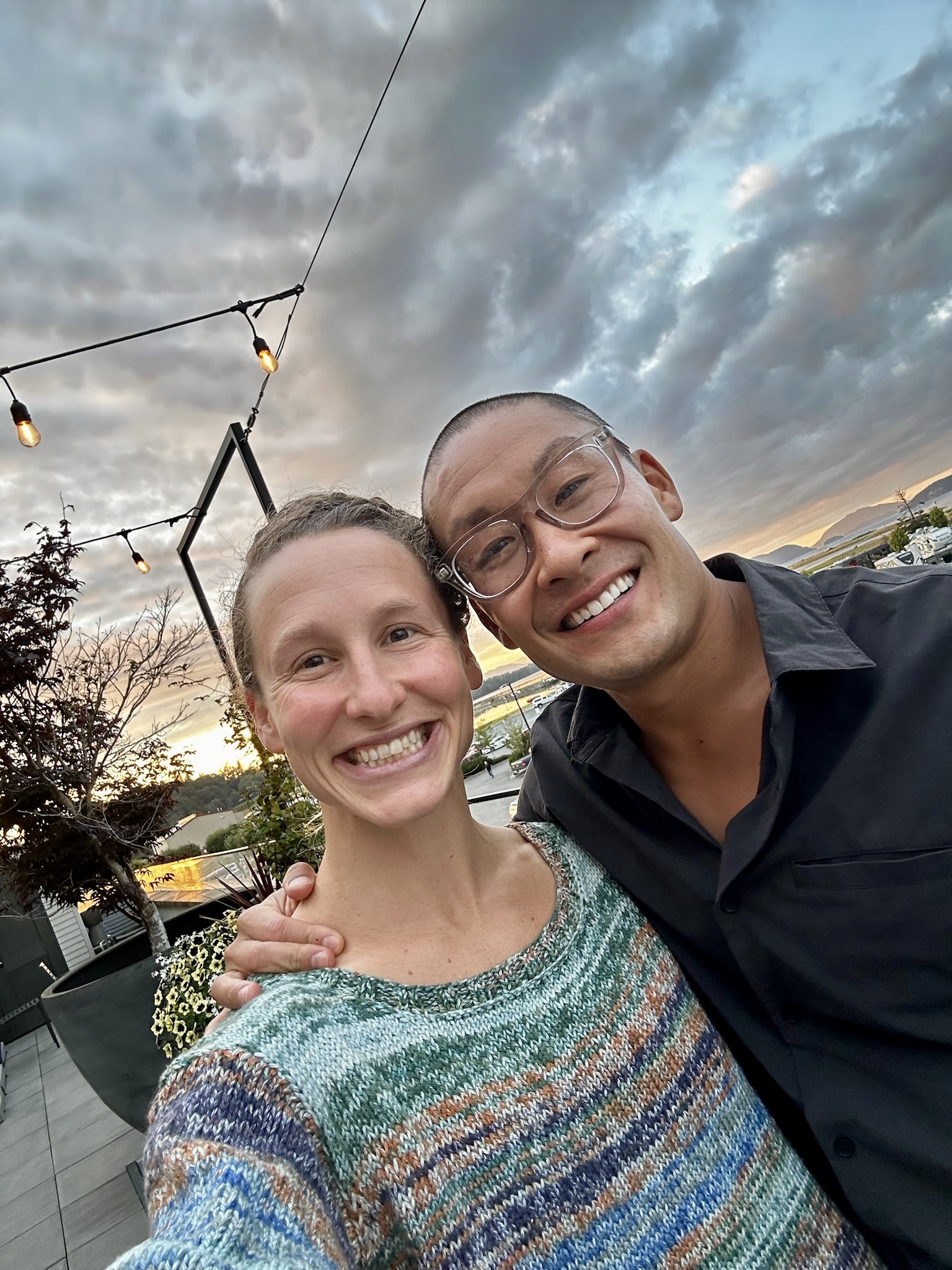
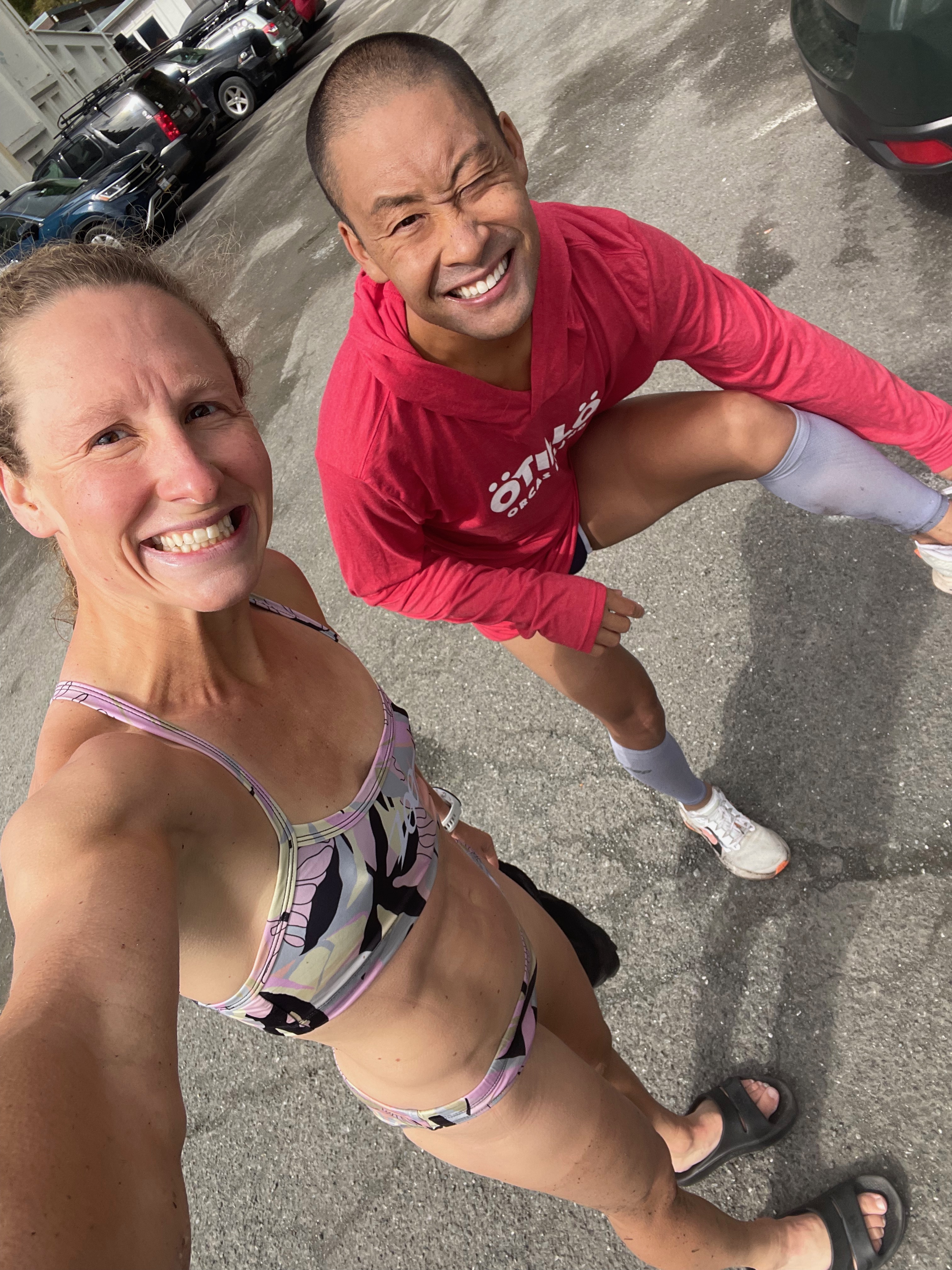
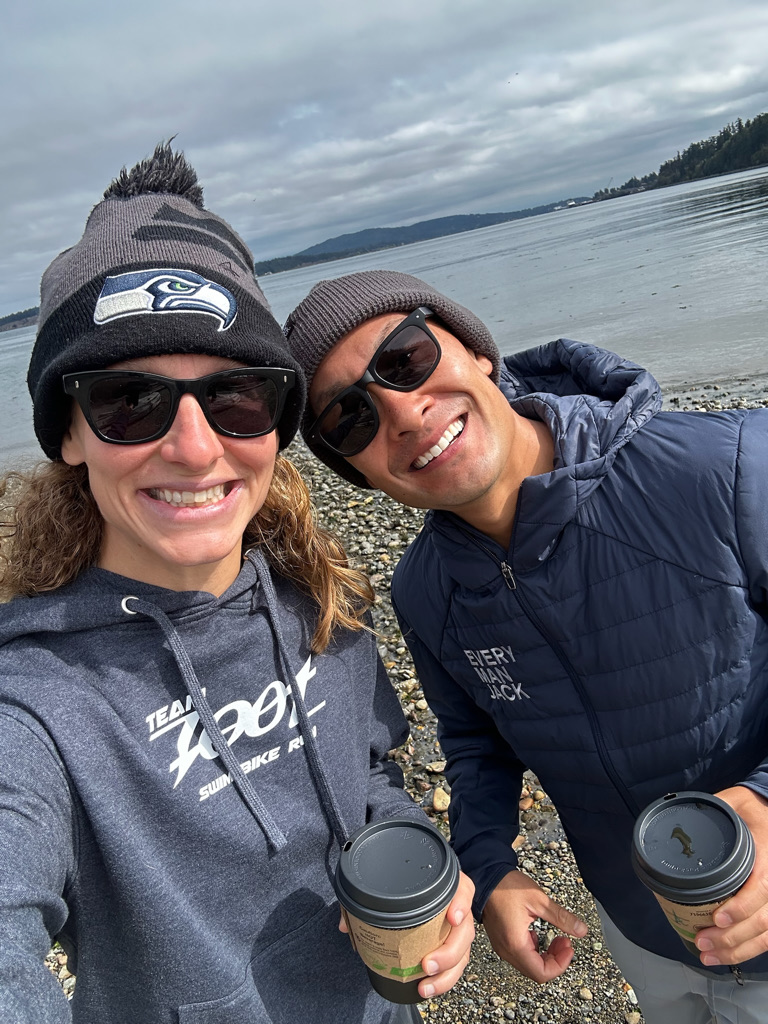
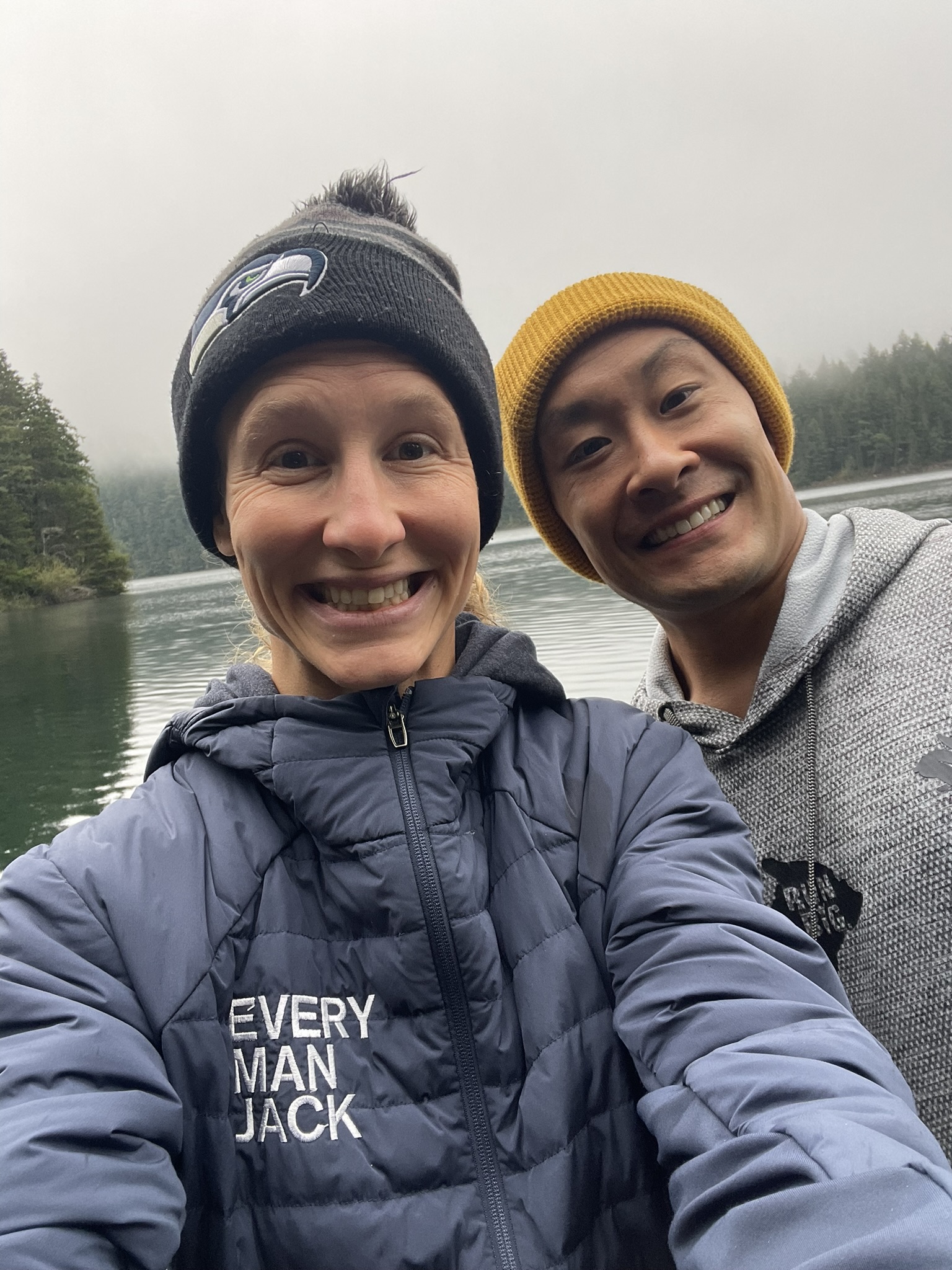
Our two swimrun practice sessions!
Other than a quick chat with Elliot’s coach and watching a few YouTube videos, we had no idea what to expect. We’re strong open water swimmers and exceptional road runners, so we naively thought we had the potential to compete for the win in the combined male/female team division. It was a small event after all (approx 250 total participants). Who could beat us?! We thought. LOL. Do not be fooled – it turns out there are some really competitive and experienced people in swimrun! Little did we know the athletes we would face included former D1 swimmers, a fellow professional triathlete, avid distance open water competitors, experienced trail runners, and several swimrun World Championship experienced athletes.
Ignorance is bliss; we were relaxed heading into this event. We explored the area and ate out (something we don’t usually do before big events) but admittedly got nervous just before starting. In the days prior to the event, we had run on some of the harder trails and swam in the ocean/lakes a bit to get a feel for the water, so we knew we were in for a tough day…to what extent, though, we had no clue. Folks were so kind, though, and that made us feel more at ease! Orcas Island is a magical place. Quiet, remote, quaint, homey.
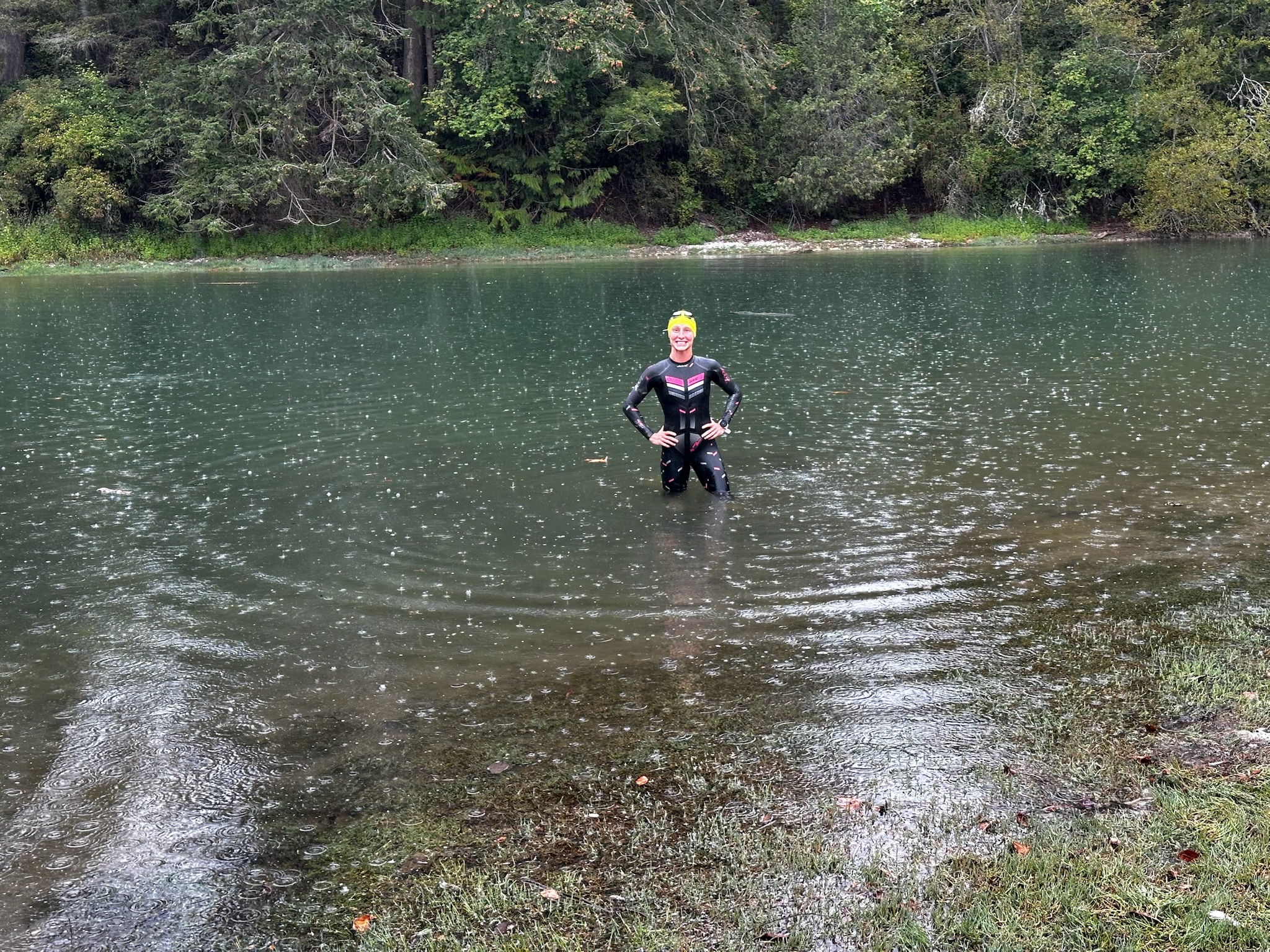
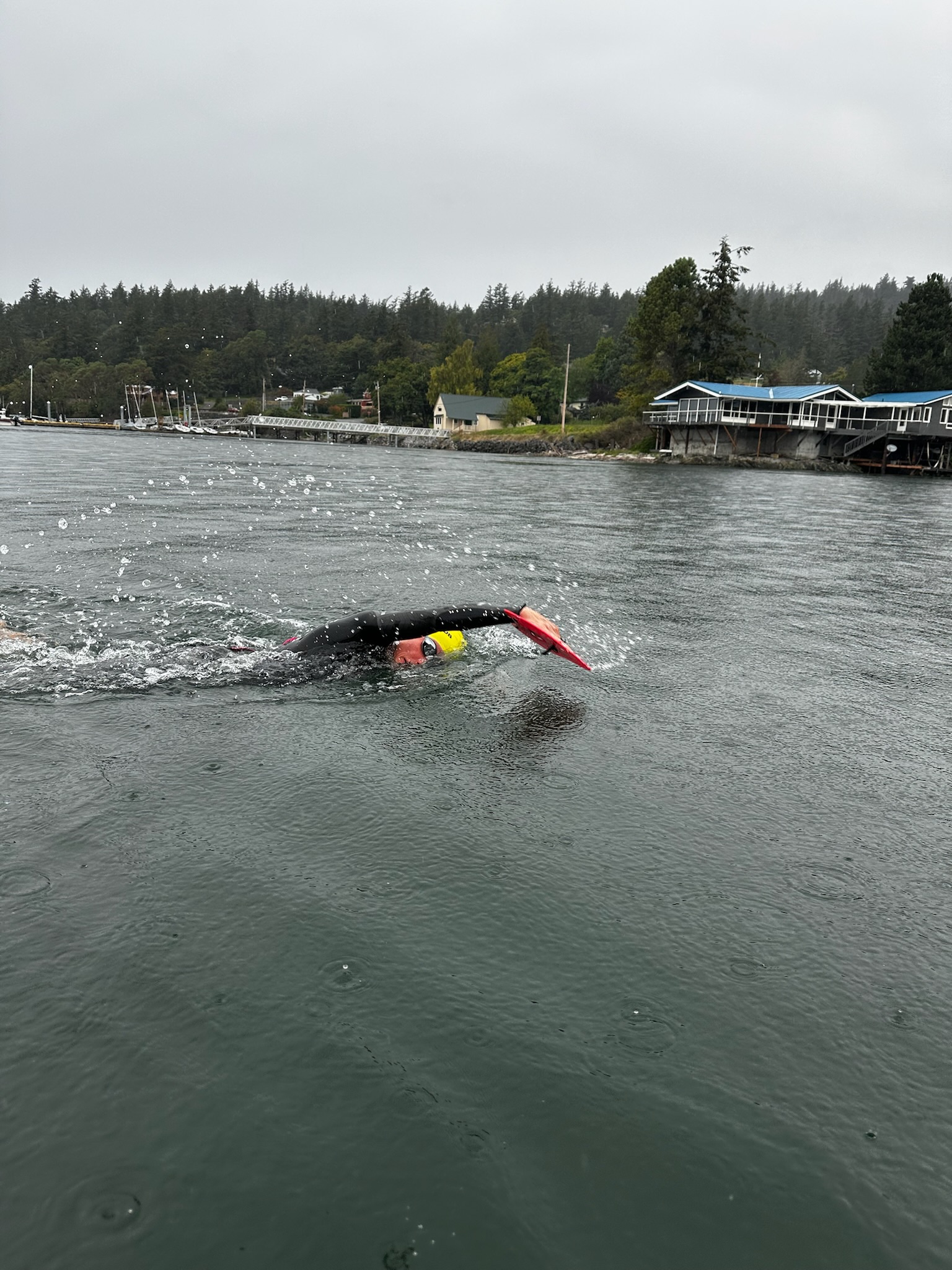
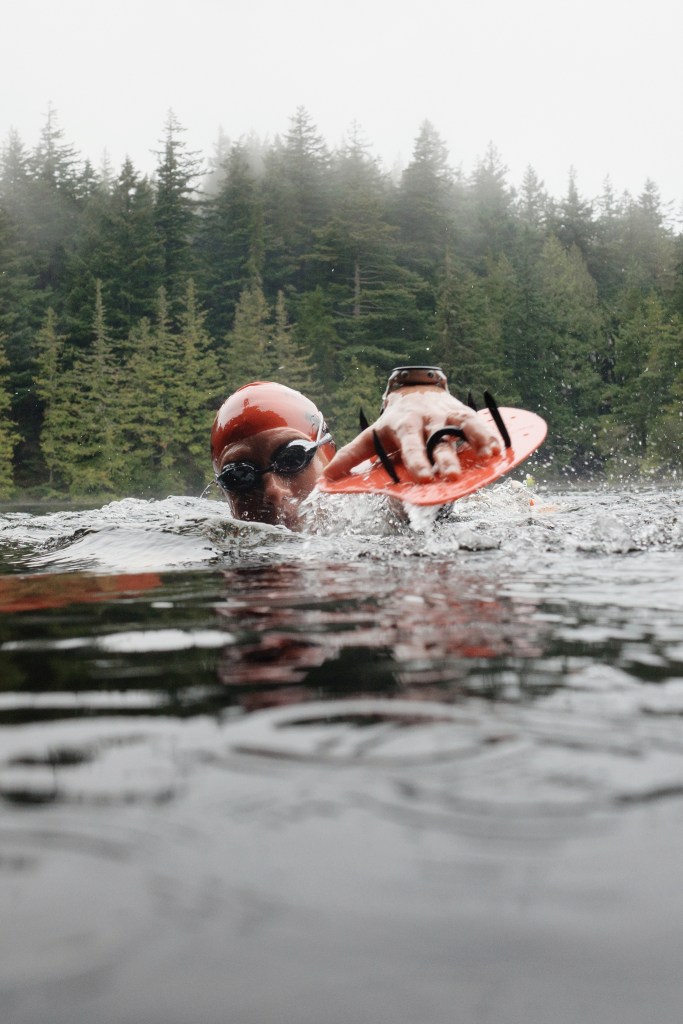
What We Did Wrong: Looking back, we made a mistake using pool gear instead of swimrun specific swim gear. We were told it doesn’t really matter, that you can get away with using pool gear, but we noticed early on that all the competitive teams and soloists passed us immediately and easily on the swims. Later, they clued us in: the large swimrun pull buoys and paddles are a must. You swim in your run gear (shoes and all) so your legs sink a lot. Plus, the swimrun wetsuits (we rented ours) do not have any flotation past the midsection- this enables you to run in the suit and stay cool, but offers no buoyancy like a full wetsuit would. The swimrun pull buoys (which you squeeze between your legs and then tie to your thigh or back during the runs) lift your feet out of the water which reduces drag from your shoes. The swimrun carbon paddles are lighter, stiffer, and designed for long open water swims. Our dinky swim buoys (which are smaller and made for the pool) and pool paddles felt slow, like resisted swimming, especially when our rental cold gear sleeves slid down and bunched up at our wrists on the first long swim (we ditched them after that!). We knew from our practice sessions we were swimming slowly, but we assumed everyone swims slower at these events…We were wrong! While some chose to race in pool gear like us, we noticed the competitive teams all had the right gear. They also chose to tether, which we chose to ditch after I got tangled a few times. We lost time and energy, frantically trying to stay with other athletes while swimming. This drained us physically and emotionally, which showed in the final miles. We tried to push the runs early on to make up lost ground, which we paid for late in the race with our lack of trail fitness. Our transitions left much to be desired, too.
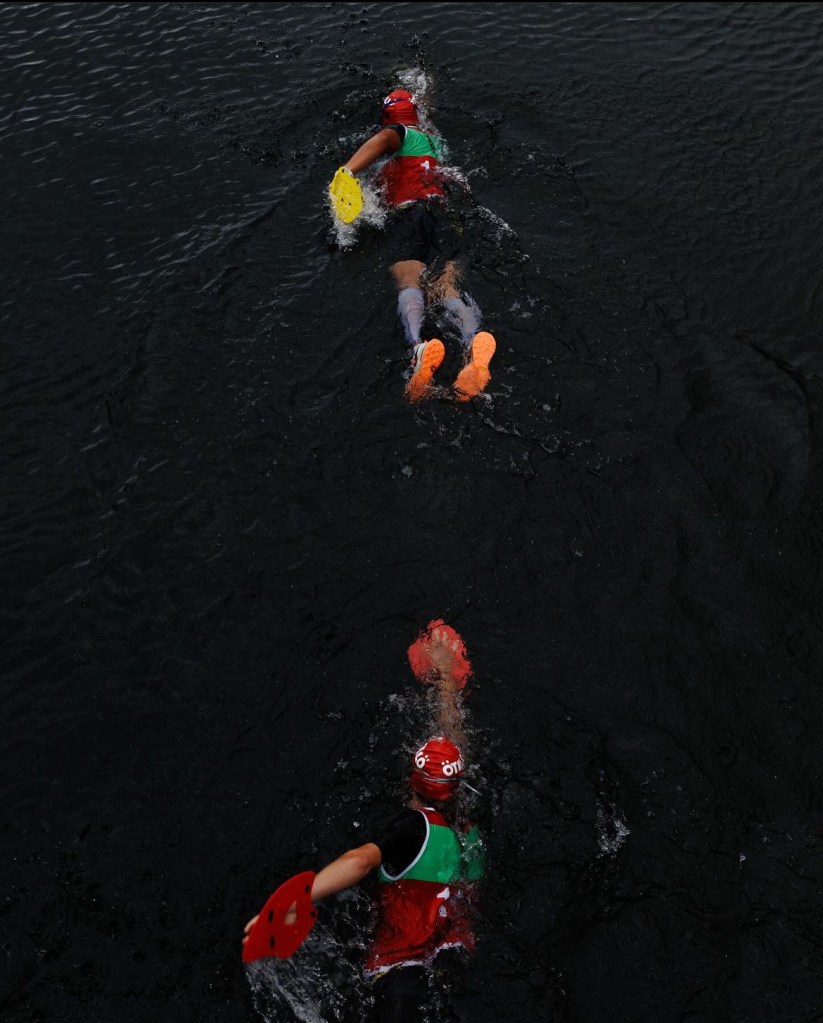
Photo by Mark Simmons (Instagram)
Despite getting owned in the water, we were in the mix at the front of the race most of the day, battling for second for the majority of the race. I’ve never competed in trail running, nor have I ever run on REAL trails, so I had a lot to learn. While I have a lot of run fitness and strength from racing loads of long, hilly road races, I was unaccustomed to the specific muscular fatigue from trail running: steep uphills into steep, slippery downhills … for several hours. We faced what the race organizer described as both “brutal” and “technical” in terms of elevation gain and trail difficulty. As a coach, I was angry at myself for not preparing more specifically for the demand of the race. I’ve coached a few trail runners and incorporate trail runs with many of my athletes who have trail access; obviously you need do trail workouts if you’re doing trail races! I got frustrated when other athletes passed us on technical downhill sections but we gained a lot of ground during the uphill sections. Elliot and I both took some big falls but luckily only minor sprains, cuts and bruises (normal in trail running, or so I’m told). In hindsight, we should have started with a shorter distance AND done some specific trail prep. While we kept training after our Ironman so that we wouldn’t die here, we lacked specificity. Thinking back, we didn’t have much time after IM Canada to both recover and prepare for this. Irregardless of our swim gear, I think we would have struggled quite a bit with this course – it was a BEAST.
While we’re being honest…I became emotionally unhinged towards the end of the race. I struggled to keep my body temperature up in the water, probably because I was getting tired and trying to use the final, longer swims to rest instead of working hard (which helps you stay warm). I stopped fueling and started shivering badly. I’ve learned from racing MANY cold events that this will lead to a disaster, but this is a lesson I had to relearn. I’ve never fallen to such a low point during a race, physically or emotionally, but it was my own fault and I knew it. I’m a rookie trail runner and started off with a doozy 21 miler combined with over 5km of swimming, AND I expected to be more competitive. It was hard not to panic a little anytime we got passed. I know… I need get over myself! Elliot and I started cramping a lot at the end, mainly climbing in and out of the water, which I’m sure was just extreme fatigue, poor fueling and colder elements. Sheer aerobic capacity, leftover Ironman fitness, and pure determination got us to through! We could barely walk at the end (we basically tripped our way to the finish line) and are still wobbling around on sore legs days later!
What We Did Right: TEAMWORK! Elliot was an awesome teammate. We struggled at different times, so we took turns leading the swims and runs. We waited for one another during low energy moments, wiped mud off each other after falls, and encouraged one another throughout the day. I’ll never forget face planting twice in a row on the final mile of the run… it was an easy section but I was exhausted, shivering, and crying – tripping over my own feet. Elliot picked me up, walked with me, told me I was doing amazing, and pulled me to the finish. He reminded me that we’re here to have fun, to which I tersely replied “I am NOT having fun!” We can laugh about this now, sure, but in the moment I was hurting a lot. I did a great job staying on top of fuel and hydration the first 5 hours, but ultimately succumbed to fatigue and elements despite Elliot begging me to eat.
He was especially crucial in navigation: he had the distance of each leg written on his paddles so we could pace the upcoming segment and time our transitions. This was definitely helpful! I knew when to put on my cap, goggles and paddles at the end of a run leg, and counted every 100m in the water to as a sort of countdown to each swim exit (my watch buzzes every 100m). That helped when I got tired and felt like I was in the middle of nowhere! (which we were)
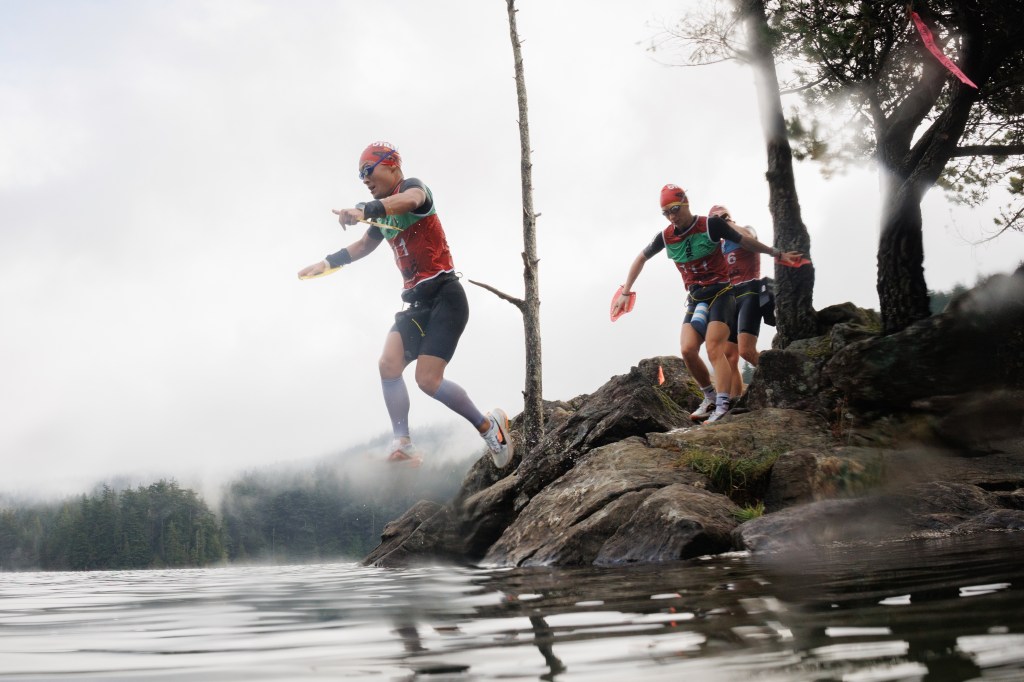
Elliot had to remind me often during this event that this was about far more than winning – it was about getting out into nature and experiencing it in one of the most harsh and beautiful ways. In many ways, it was a release. Over the years I’ve tightened my grip on the control endurance sport has offered me; gotten caught up in the objective nature of it. I’m disciplined, obsessive, driven, composed- all attributes a good endurance athlete needs. As such, I produce consistent, strong results. Out there in the wilderness, however, at the very depths of my exhaustion, none of that mattered. Everything I thought I had control of (namely my emotions and my body) felt completely out of my control. I just had to focus on surviving. Get up off the ground. Put one foot in front of the other. MOVE! I remember apologizing to Elliot for not being better, for not being the best… He hugged me, took my hand, and said “This is about more than any of that. You’re doing so great. You will be so much stronger for this!” I’ll never forget that, or our combined willpower to finish. Experiences like this change a person.
Basically, this race was therapy.
What Makes SwimRun Unique: We worked with another long distance team (they ended up getting 2nd and we finished 3rd) and some solo athletes throughout the day. This is something you don’t find often – competitors working together and helping each other. They even stopped and helped Elliot when he fell once – true sportsmanship! It was fun to leap frog them on uphill sections just to have them catch us in the water or after a downhill technical section! They informed us we needed better swim gear 🙂 and to incorporate a few trail runs into training. I was happy to give back to them a little: the gal on the team lost her cap so I gave her my spare. She waited for me at the finish to hug me and return the cap, which made for a touching memory. When we crossed paths with the short distance athletes they were incredibly uplifting too, which meant a lot. This seems to be the essence of the swimrun community: Help one another so we can accomplish a feat otherwise impossible alone. It’s competitive but not cutthroat.
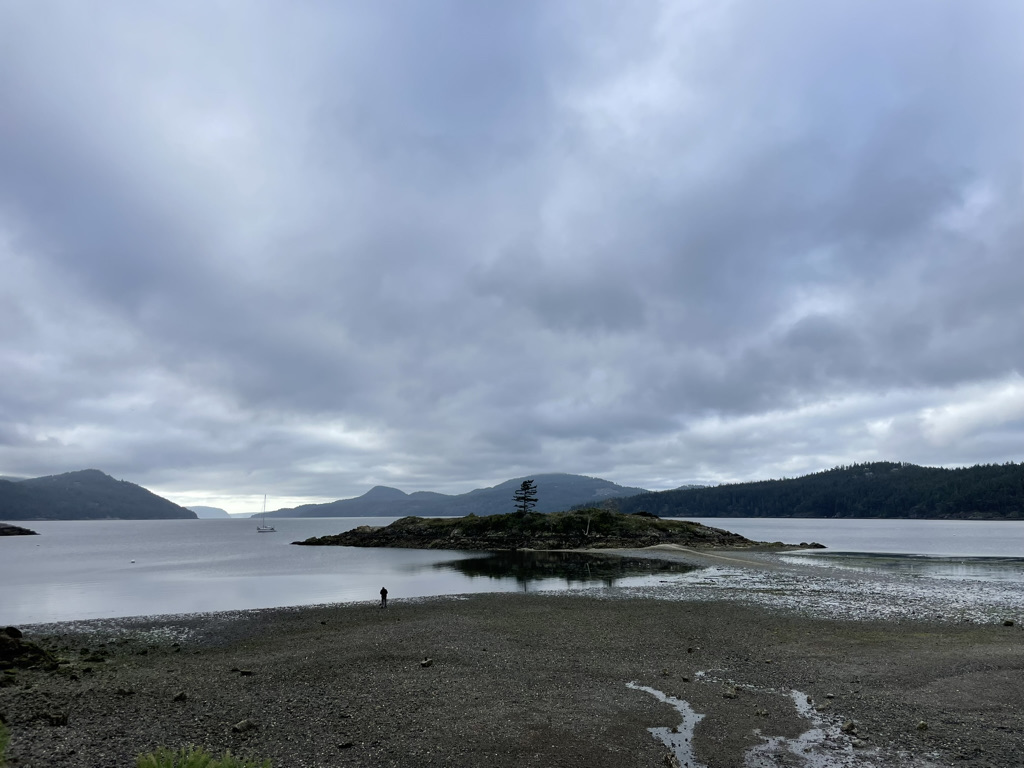
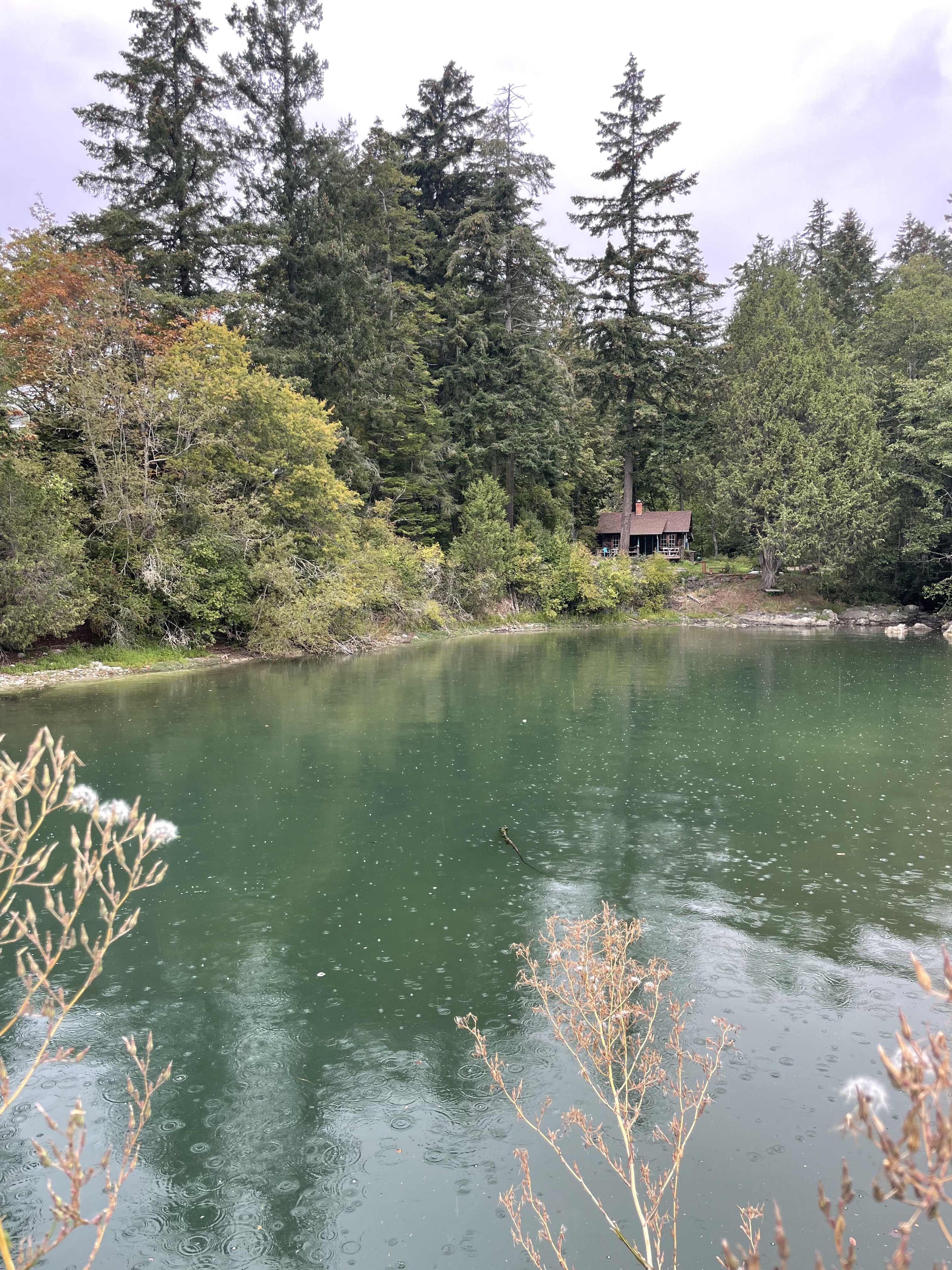
The course was BEAUTIFUL albeit challenging. The trails were perfectly marked every 100m or so with Otillo flags, so we never got lost. A mysterious and haunting fog settled high up in the mountains; I’ll never forget the scenery of running through the woods there. The lakes were pristine, uninhabited, and clear with green-blue water all lined with trees. It was special to swim to islands in the middle of the lakes, scramble over the short rocky banks and dive back in to swim to shore. Despite being in a remote area on Orcas Island (mainly in Moran State park) we never felt alone. The volunteers were awesome directing us, the course was well marked and supported with aid stations at key moments, and other participants helped keep us uplifted and on-course.
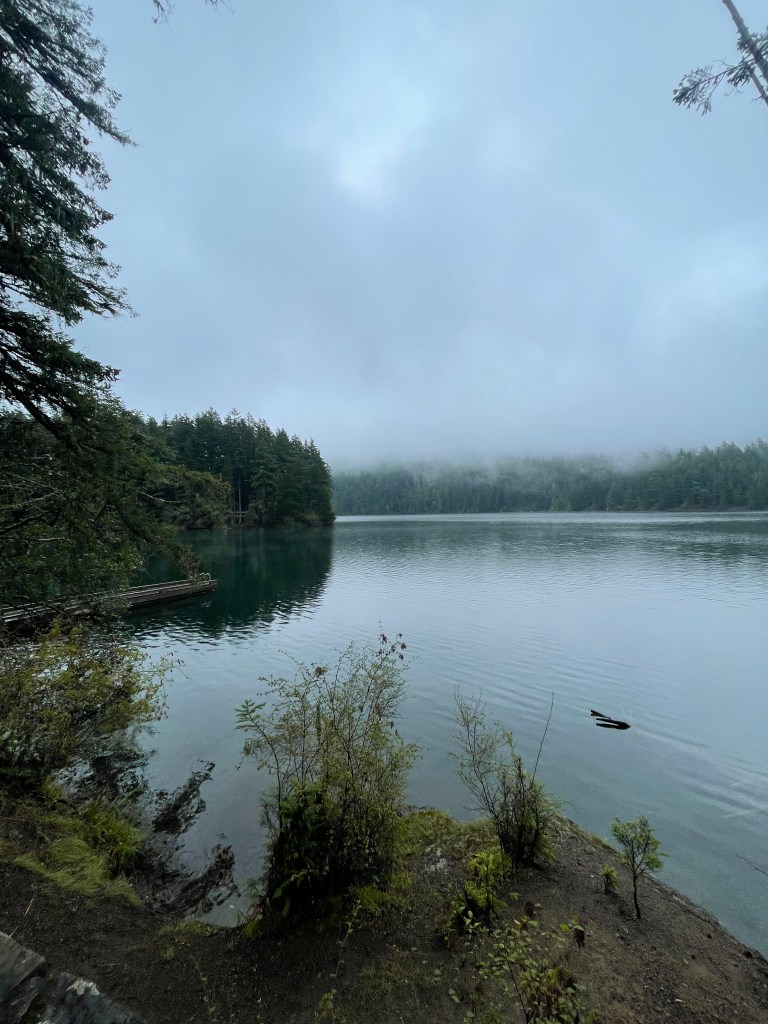
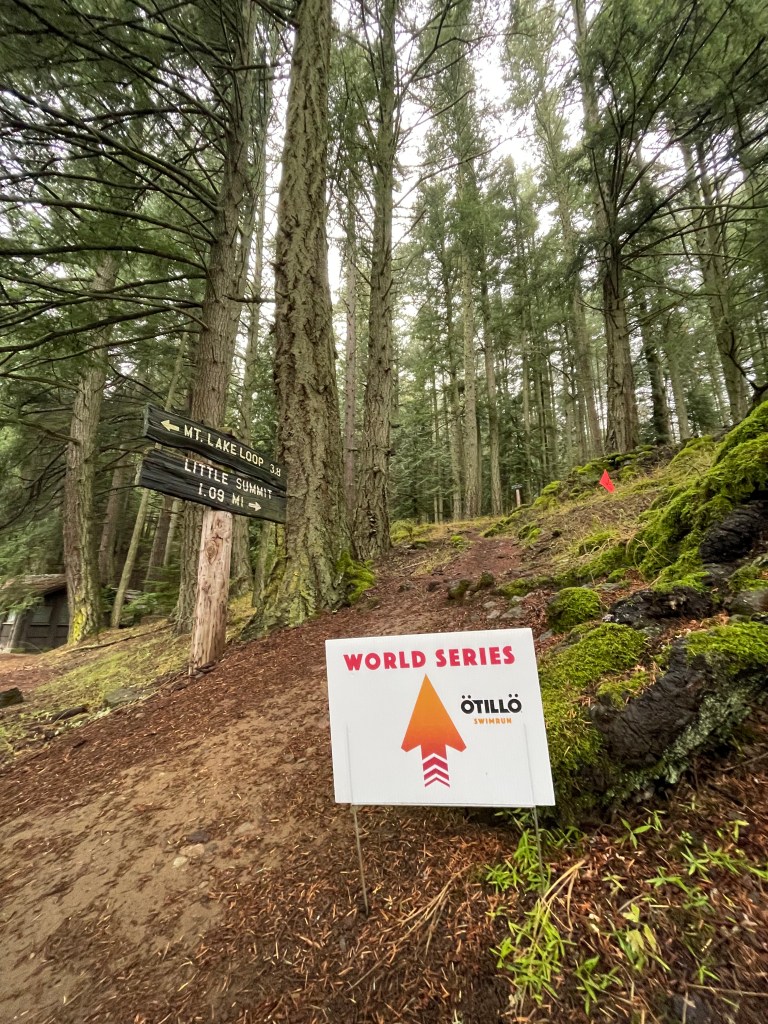
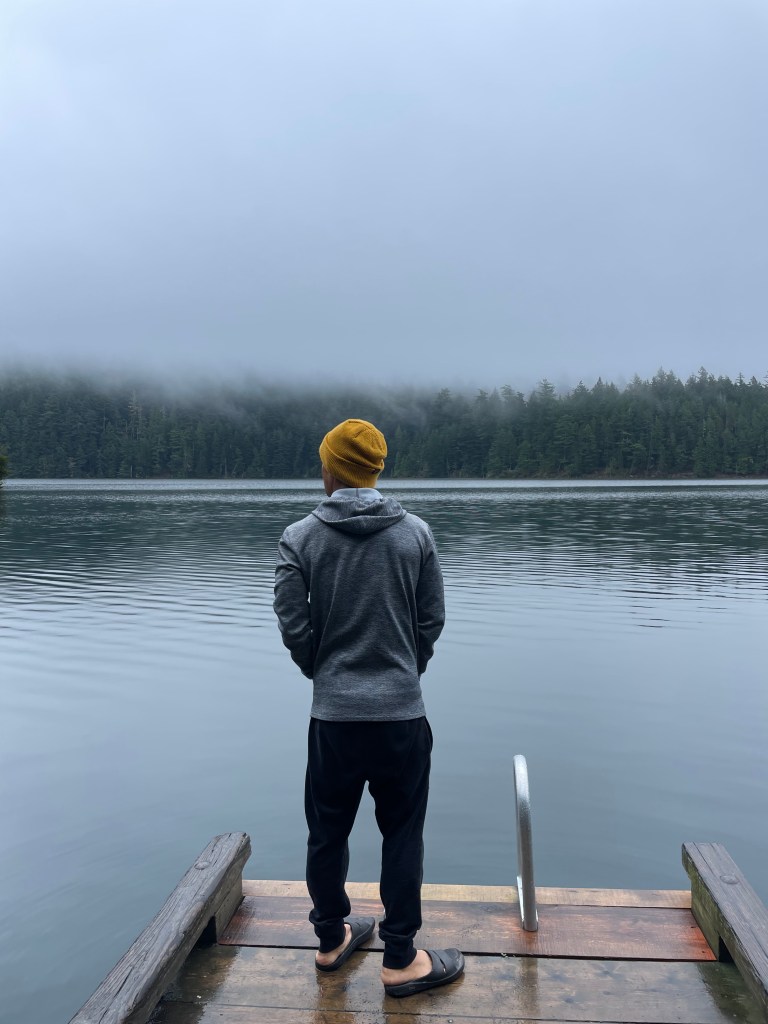
Stunning scenery.
Did we make mistakes? Without a doubt. It comes with the territory of “new experiences.” It actually felt kinda good to be the ‘new guys’ at a race! We’re excited that we could do better at our next event now that we know what to expect, how to prepare, and what gear we need.
We finished in 5 hours and 54 minutes: 3rd place mixed gender team and 4th team overall. It ended up being a competitive mixed team event! Both teams in front of us seemed to be very experienced, and gave us great advice after the race on how to improve. Side bar: We stuck around post-race for 2 hours chatting and meeting new people, something we have NEVER done! That’s how nice and cool swimrun people are.
What’s Next: We have ordered appropriate gear, identified some trails/trail races near us to get some technical work in, and have found our next off-season adventure: Otillo SwimRun Austin in 6 weeks! Without a doubt, we will continue to compete in swimruns together as a wonderful way to challenge our minds and bodies. I can see the benefit to these events during my off-competition phase not only because of the physical benefits, but also for the mental fortitude and team building components. Lastly, I admit I can be a bit of pretentious prick when it comes to sport. I’m there to be competitive and I’m not ashamed of that. However, swimrun athletes go about being competitive while helping each other and being positive. I noticed the best athletes there didn’t lose their cool or unravel. This was probably my biggest takeaway for becoming a better athlete and person.
The takeaway: Get out there and do new things, scary things, things you’re not great at. It will hurt, it won’t always be fun, and you will get humbled. But you will be so much stronger for it.
 Kawaoka Coaching
Leave a comment